EconomyHigh
Why was the US Treasury chief moved to a military base?
US Treasury Secretary Scott Bessent was relocated to a military base after Iranian threats over sanctions. Here is how financial blockades impact global prices and your money.
By Betini Udom Published Last edited 4 min read Editorial Policy Report a correction
Why was the US Treasury chief moved to a military base?
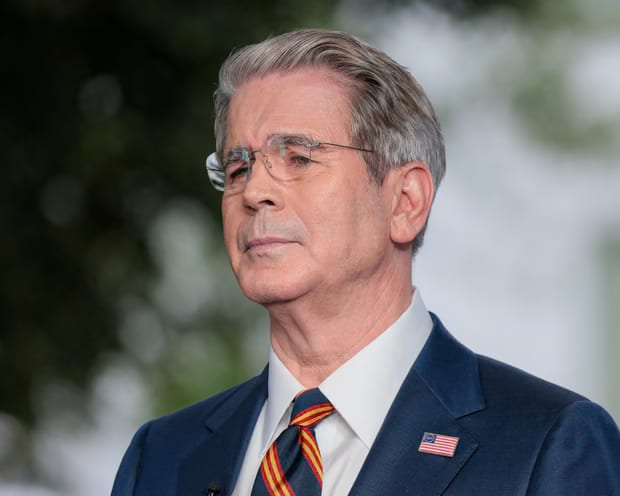
The top finance official of the United States government, Treasury Secretary Scott Bessent, was forced to leave his home in Washington, D.C., and relocate to a secure military base. Security officials made the decision after intelligence reports indicated that foreign state operatives had developed advanced plans to target him directly.
Security concerns grew significantly sharper after media published aerial photographs of his private home, revealing its exact location. While public officials in Washington regularly travel with security details, moving a cabinet minister into a fortified military installation is an extraordinary measure reserved for moments of acute physical danger.
How does a finance minister become a target in a war?
In modern conflict, the weapon of choice is often financial rather than conventional firepower. As Treasury Secretary, Bessent serves as the chief designer and executive officer of the government's economic warfare strategy. He leads an aggressive enforcement program known as "Operation Economic Outcast," which uses administrative power to cut off targeted nations from the global financial system.
Instead of relying solely on military force, the strategy uses severe economic sanctions to shut down trade, freeze foreign bank accounts, and choke off state revenues. By targeting the financial networks that fund foreign military operations—specifically the economic institutions managed by foreign military forces—the finance ministry effectively acts as a frontline command centre. When an economic campaign severely damages a country's revenue, the official executing those measures becomes a high-priority target for retaliation.
How does an economic blockade actually work?
An economic blockade operates by shutting down the pathways through which money and goods flow across international borders. Understanding the mechanism requires looking at three distinct layers of enforcement:
First, direct physical interdiction prevents commercial vessels and cargo ships from entering or leaving key sea ports. Second, specialized inter-agency task forces monitor land borders, coastal waters, and transit corridors to confiscate prohibited goods, technology, and raw materials. Third, and most importantly, financial sanctions block target institutions from using international banking communication systems.
When financial regulators prohibit global banks from processing transactions for specific overseas commercial branches, those entities can no longer convert local currencies into US dollars or complete cross-border payments. Foreign suppliers refuse to ship grain, machinery, or industrial inputs because they cannot receive payment through international bank clearing houses. Over time, this mechanism starves an economy of foreign currency, causing national output to shrink—in this instance, driving a projected economic contraction exceeding 25%.
Why does financial warfare in the Middle East affect your money in Nigeria?
Even though this conflict takes place thousands of kilometres away, its economic consequences travel directly to local marketplaces, retail bank accounts, and small business balance sheets in Nigeria and across Africa.
The global economy relies heavily on standardized pricing for essential commodities, particularly crude oil and agricultural products. When economic blockades and naval tensions disrupt major shipping lanes in the Middle East, ocean transport companies face elevated risks. Insurance underwriters respond by charging higher premiums for cargo vessels passing through volatile transit corridors. Shipping lines pass these extra expenses straight to importers in the form of higher freight rates.
For a business operating in Lagos, Kano, or Port Harcourt, higher freight rates mean paying more to import electronics, industrial machinery, wheat, and refined chemicals. Importers must then raise wholesale and retail prices to protect their profit margins. Consequently, ordinary consumers pay higher prices at local shops, driving up domestic inflation and reducing everyday purchasing power.
What does this mean for global oil prices and interest rates?
Energy prices are exceptionally sensitive to geopolitical friction. Whenever conflict threatens to disrupt oil production or block major maritime chokepoints, international energy benchmarks spike. For instance, global crude oil prices fluctuates wildly whenever direct military operations escalate, directly impacting government budgets, fuel subsidy calculations, and foreign exchange reserves in oil-exporting nations.
When crude oil prices remain high, transport costs rise globally. Central banks in developed economies respond to persistent inflation by keeping interest rates elevated for longer periods. High interest rates in Western financial centers draw capital away from emerging markets, placing downward pressure on local currencies such as the naira (₦). A weaker currency makes imported goods even more expensive, creating a continuous cycle of rising living costs for everyday households.
What is still unclear about this economic campaign?
While official statements affirm that the financial pressure campaign will continue without interruption, critical questions remain unanswered for investors and households alike:
- Duration of the blockade: It remains unknown how long economic blockades can be sustained without triggering wider supply disruptions in global energy markets.
- Enforcement limits: Intelligence assessments indicate that while economic measures inflict severe domestic hardship, they may not immediately alter the political resolve of targeted foreign leaders.
- Long-term trade rerouting: It is unclear how quickly alternative non-Western trade corridors will emerge to bypass dollar-based financial clearing systems altogether.
For everyday readers managing personal savings, business cash flows, and household budgets, the key takeaway is clear: as long as economic warfare remains the primary tool of international policy, global trade risks will remain elevated, keeping interest rates, shipping costs, and consumer prices under constant pressure.
Sources & Verification
- Sources: Official statements from the US Department of the Treasury, US Central Command operational announcements, public intelligence assessment summaries, and global energy benchmark reporting.
- Editorial note: This explainer is an original RainingMoney adaptation of the report, RainingMoney has added explanatory context.

Founder and Editor-in-ChiefAbuja
Betini Udom
Founder and Editor-in-Chief of RainingMoney. Covers Nigerian, pan-African and global markets, finance and economic policy.
Author profile & archive →The Money Print
Market intelligence before the market opens.
Pan-African capital flows and the stories behind the numbers, on weekday mornings.