MarketsHigh
Naira Closes at ₦1,388/$, Its Weakest Level Since March
The naira closed at ₦1,388 to the dollar on Thursday, its weakest since 5 March, as dollar inflows slowed and festive demand rose ahead of next week's MPC.
By Betini Udom Published 5 min read Editorial Policy Report a correction
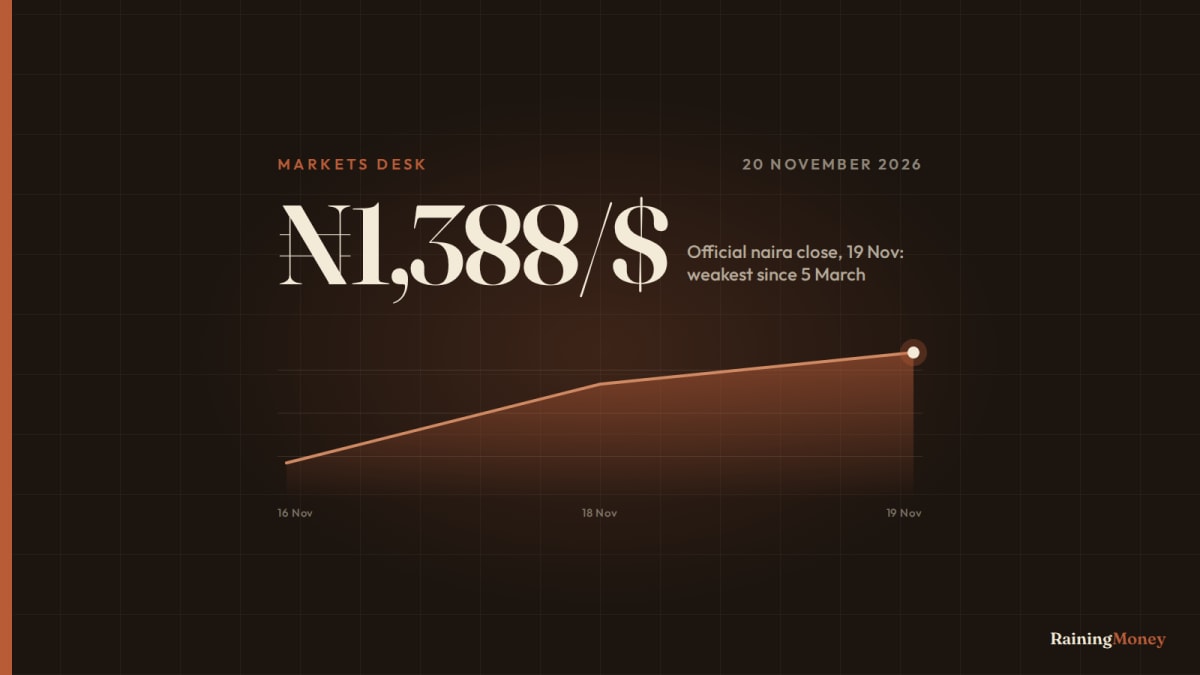
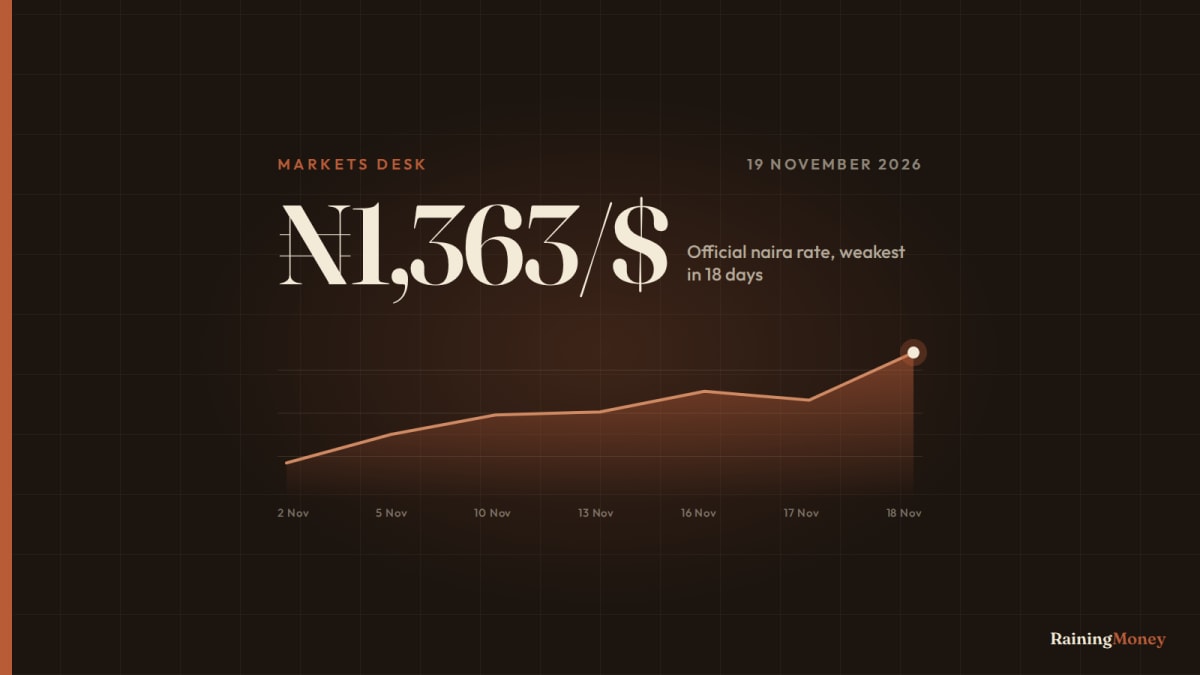
The naira closed at ₦1,388 to the dollar on Thursday, 19 November 2026, its weakest close at the official market since 5 March, Central Bank of Nigeria (CBN) data show. During the day it traded as weak as ₦1,397, within touching distance of ₦1,400. The slide comes four days before the CBN's Monetary Policy Committee (MPC), the group that sets the country's benchmark interest rate, meets on 23 and 24 November.
How far has the naira fallen this week?
The currency has weakened every trading day this week. Its closing rate went from ₦1,360 on Monday to ₦1,379.99 on Wednesday and ₦1,388 on Thursday. That is a fall of ₦28, or 2.06%, in four days.
| Day | Closing rate (₦ per $) | NFEM reference rate (₦ per $) |
|---|---|---|
| Monday 16 Nov | 1,360.00 | 1,357.19 |
| Tuesday 17 Nov | n/a | 1,355.80 |
| Wednesday 18 Nov | 1,379.99 | 1,363.23 |
| Thursday 19 Nov | 1,388.00 | 1,376.58 |
Why are there two official rates?
Both figures come from the official market, the Nigerian Foreign Exchange Market (NFEM), where banks and large businesses buy and sell dollars. The closing rate is the last price traded at the end of the day. The NFEM reference rate is a benchmark the CBN publishes from the day's trades, and many contracts and import payments are priced off it. On Thursday the reference rate moved from ₦1,363.23 to ₦1,376.58, a fall of ₦13.35, or about 0.98%. Either way you measure it, the naira lost ground.
The street rate is weaker still. At the parallel market, the informal market where bureaux de change and street traders deal in cash, a dollar cost ₦1,460 on Wednesday, up from ₦1,445 on Tuesday. That put the gap between the street and the official reference rate at ₦97, or 7.12%. A month ago the gap was roughly ₦21 to ₦24.
What is pushing the naira down?
Three forces are at work, according to traders, analysts and market reports.
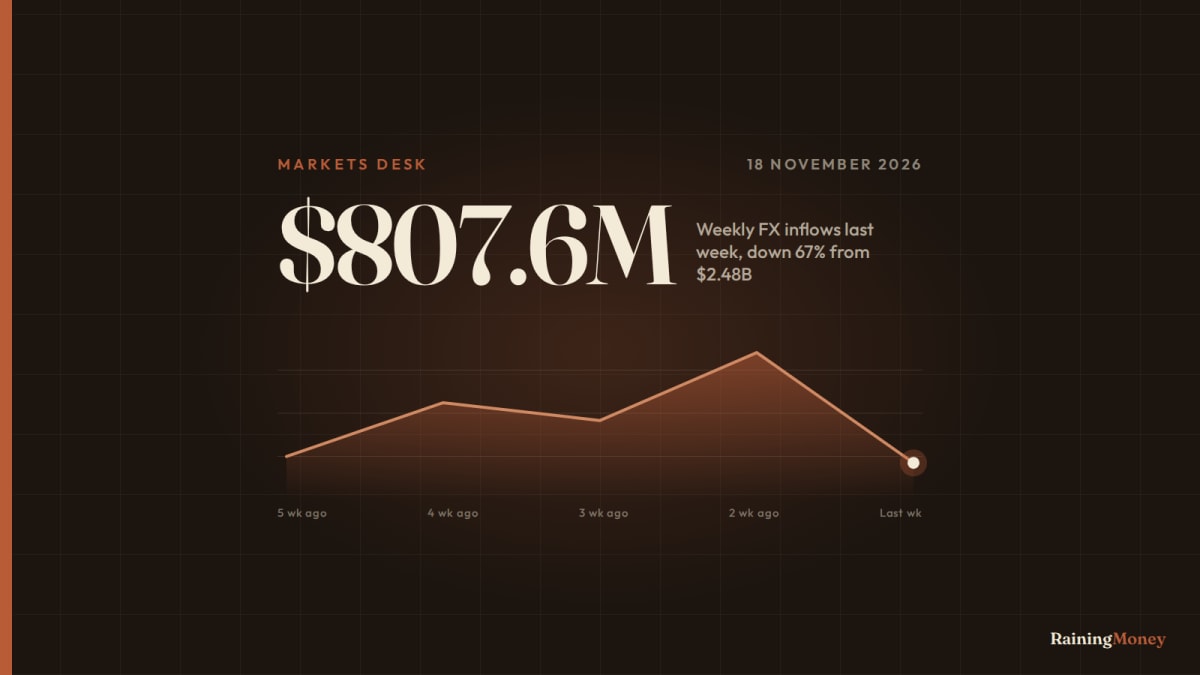
Fewer dollars coming in. Dollar inflows into the official market fell to $807.6M in the latest week tracked by Coronation Merchant Bank, from $2.48B the week before. That is the lowest weekly figure in at least five weeks. Exporters, importers, the CBN and foreign investors all brought in less.
More people wanting dollars. December is when demand rises every year: importers stock up for the festive season, families pay school fees abroad, and people travel. Analysts also point to spending ahead of the 2027 elections. Muda Yusuf, chief executive of the Centre for the Promotion of Private Enterprise, warned that electioneering could add to dollar demand on the street.
Foreign investors looking elsewhere. Interest rates in the United States and other rich economies are high, so a foreign investor can earn a good return at home with less risk. The Financial Markets Dealers Association said this has pushed some foreign investors out of Nigerian assets. One report says foreign investors hold more than $20B in CBN bills, a figure the association gave from its own sources and that has not been confirmed elsewhere.
Thursday's trading was also much busier. Banks traded $800.31M in the interbank market across 184 deals, up from $502.88M across 148 deals on Wednesday. When more buyers chase dollars, the price rises.
Is the central bank running out of dollars?
No. Nigeria's external reserves, the dollars the CBN holds to pay for imports and steady the currency, stood at $54.76B on 17 November. That is about $500M below this year's peak of $55.26B in October, but still 24.54% higher than the $43.97B of a year earlier. The CBN sold more than $3B into the market in October alone to keep things orderly.
Coronation Merchant Bank's research team described the naira as fundamentally undervalued but tactically vulnerable. In plain terms, the currency is cheaper than the economy's fundamentals suggest, yet thin trading means even modest dollar orders can move the price sharply. Abiodun Ogunniyi, head of research at IRON Capital Partners, said the naira could move towards ₦1,400 and did not rule out the CBN stepping in with dollar sales before the end of November or in December.
What does this mean for my money?
A weaker naira makes anything priced in dollars cost more in naira. A worked example, derived from this week's closing rates: a $1,000 school fee bill cost ₦1,360,000 at Monday's close and ₦1,388,000 at Thursday's, ₦28,000 more in four days. At the street rate of ₦1,460, the same bill would cost ₦1,460,000.
The effect spreads beyond people who buy dollars directly. Importers of food, drugs, spare parts and electronics pay in dollars and pass their costs on, so a falling naira can push up shop prices over the following weeks. That matters because inflation has been easing: it slowed to 14.06% in October from 14.63% in September.
For people who earn in dollars or receive money from relatives abroad, each dollar now buys more naira.
What happens next?
The next big date is the MPC meeting on 23 and 24 November. The committee could use its rate decision to support the naira: higher interest rates make naira assets more attractive to investors, while a cut would make them less so. RainingMoney's reading: a weakening naira makes a rate cut harder to justify this month, because cheaper money could add to the pressure on the currency.
What we don't know yet is whether the CBN will step up dollar sales before the meeting, and how much of the December demand is still to come. The ₦1,400 level is the one traders are watching.
Sources & Verification
- Sources: Nairametrics
- Editorial note: This explainer is an original RainingMoney adaptation of the report, RainingMoney has added explanatory context.

Founder and Editor-in-ChiefAbuja
Betini Udom
Founder and Editor-in-Chief of RainingMoney. Covers Nigerian, pan-African and global markets, finance and economic policy.
Author profile & archive →The Money Print
Market intelligence before the market opens.
Pan-African capital flows and the stories behind the numbers, on weekday mornings.