CompaniesMedium
UAC Sells Livestock Feeds and DP World Stakes: What Changes
UAC has completed its ₦19.5bn sale of Livestock Feeds and its exit from DP World Logistics. What the sales mean for its debt, its shares and minority holders.
By Betini Udom Published 7 min read Editorial Policy Report a correction
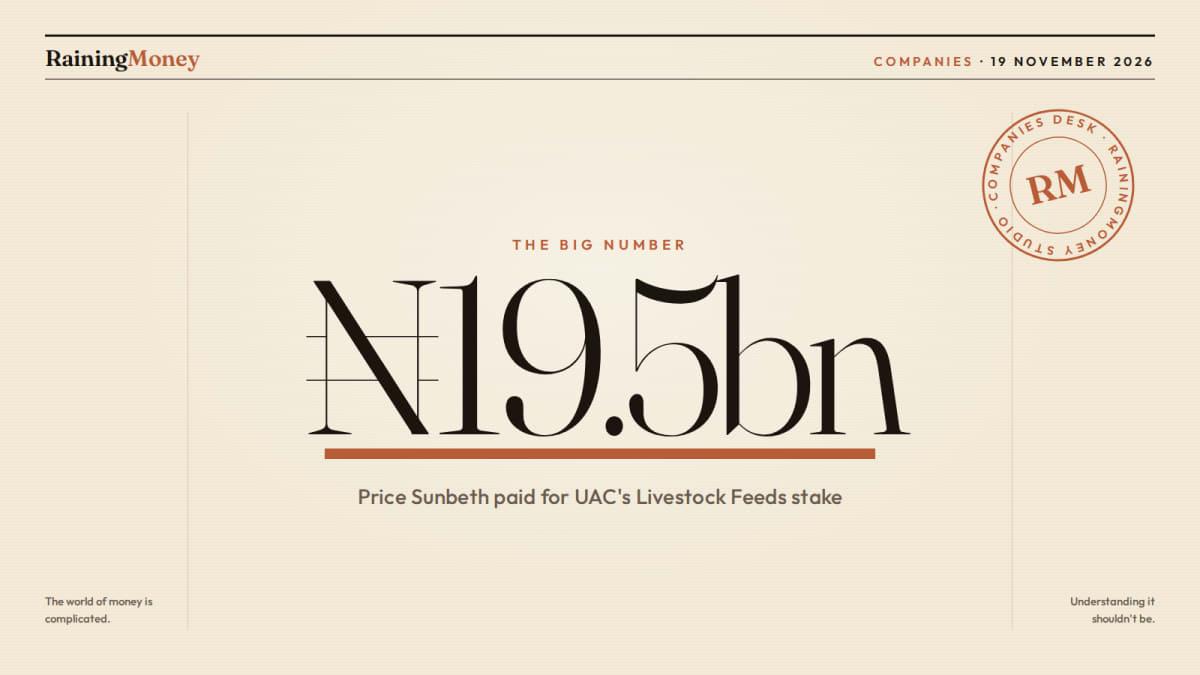
UAC of Nigeria Plc has closed two sales in two days. On 17 November 2026 it completed the sale of its 73.29% controlling stake in Livestock Feeds Plc to Sunbeth Treenuts and Sesame Limited for ₦19.5bn, ending an ownership that began in 2013. A day later, on 18 November, it said it had completed the sale of its 43% stake in DP World Logistics Limited, the company formerly called MDS Logistics, to 22 Plus Invest Limited, part of the Tropical General Investments (TGI) Group. The price for the logistics stake was not disclosed.
Both deals were agreed in September and were waiting for regulators. Together they show a group trimming itself back to the businesses it wants to keep, while it works down a large debt taken on last year.
What exactly did UAC sell?
Livestock Feeds makes animal feed for poultry, fish and livestock farmers, from plants in Ikeja, Aba and Kano. It was founded in 1963 and has been listed on the stock exchange since 1978. Sunbeth, an agribusiness group that sources, stores, trades and processes farm produce, paid ₦8.85 a share for about 2.2 billion shares. That price values the whole of Livestock Feeds at about ₦26.55bn.
The ₦19.5bn goes to UAC for its existing shares. None of it is new money for Livestock Feeds itself. The feed company stays listed on the Nigerian Exchange (NGX), and five new directors joined its board on 17 November while three left.
DP World Logistics moves goods around Nigeria for other businesses. UAC held its 43% as an "associate", meaning a stake big enough to give influence but too small for control. In the first half of 2026 that business made revenue of ₦25.41bn and a profit of ₦2.76bn. The deal needed approval from the Federal Competition and Consumer Protection Commission (FCCPC), which it received. Group managing director Fola Aiyesimoju thanked the DP World team and wished the logistics firm and its new shareholder success.
Why is UAC selling now?
The short answer is debt. In October 2025 UAC completed the purchase of CHI Limited, the maker of Chivita juices and Hollandia dairy drinks. That deal made the group far bigger and far more indebted. Revenue for the nine months to September 2026 rose 227.7% to ₦523bn, mostly because CHI's sales are now counted in UAC's books. But finance costs, the interest and fees paid on borrowed money, rose to ₦38.90bn from ₦8.68bn a year earlier.
UAC has been paying that debt down fast. Total borrowings fell to ₦262.63bn at the end of September 2026, from ₦344.81bn at the end of December 2025. Over the nine months it repaid ₦235.54bn of loans, though it also drew some new ones along the way, and net debt (borrowings minus cash) fell by ₦62.8bn to ₦231bn. In June, net debt was 2.7 times a year's operating earnings before interest, tax and depreciation, down from 5.9 times in December. That ratio measures how many years of earnings it would take to clear the debt.
RainingMoney's reading: selling smaller, lower-margin businesses gives UAC cash without touching the drinks business that now earns most of its money. Packaged food and beverages brought in more than 80% of revenue in the first half. The edibles and feed segment, which includes Livestock Feeds, saw revenue fall 31% to ₦33.95bn in that half and made a small loss before tax.
| Measure | Then | Now |
|---|---|---|
| Total borrowings | ₦344.81bn (Dec 2025) | ₦262.63bn (Sep 2026) |
| Cash and equivalents | ₦50.91bn (Dec 2025) | ₦31.54bn (Sep 2026) |
| Revenue, nine months | ₦159.58bn (2025) | ₦523bn (2026) |
| Finance costs, nine months | ₦8.68bn (2025) | ₦38.90bn (2026) |
| Profit after tax, nine months | ₦5.38bn (2025) | ₦21.91bn (2026) |
| Net debt to yearly earnings (EBITDA) | 5.9x (Dec 2025) | 2.7x (Jun 2026) |
How much difference does ₦19.5bn make?
Some, but it does not finish the job. Set against total borrowings of ₦262.63bn at the end of September, the feed sale proceeds equal about 7.4% (derived: ₦19.5bn ÷ ₦262.63bn). Against net debt of ₦231bn, they are about 8.4% (derived: ₦19.5bn ÷ ₦231bn). That assumes every naira goes to debt, and UAC has not yet said how it will use the money. It could also go into working capital, new equipment or other investments.
The company has also not disclosed whether it books a gain or a loss on either sale. One point to keep in mind: the gap between what Sunbeth paid and the feed company's book value is a measure of price, and does not tell you UAC's accounting profit on the deal.
Selling Livestock Feeds also takes its debts off UAC's books. At the end of September the feed company had interest-bearing borrowings of ₦7.93bn, and its operating cash flow for the nine months was negative ₦6.96bn, largely because it was holding more stock. RainingMoney's reading: a business that ties up cash in inventory is the kind a group under debt pressure is happy to hand on.
How have UAC's shares reacted?
So far, they haven't. UAC closed at ₦175 on 17 November, unchanged on the day, and was still at ₦175 in early afternoon trading on 18 November. The stock began 2026 at ₦91, so it is up about 92% this year. It has been a bumpy ride: the shares closed at ₦184.45 on 22 July and fell 7.85% to ₦166.80 on 5 November during a broad market sell-off, before ending the week of 13 November at ₦175.
A flat price after news like this means investors had not yet repriced the stock. It does not show whether they like the deals. Much of the sale was known from September, when both agreements were announced.
What does this mean for Livestock Feeds shareholders?
Minority shareholders, those outside UAC, own the remaining 26.71% of Livestock Feeds and keep their shares. They now have a new controlling owner. Peeyush Karnani, chief strategy officer of Sunbeth Agro HoldCo, said the first priority is to keep the business running with the existing managers and staff. Its longer plan is to pair the feed brands and plants with its own supply of soya and other feed ingredients, and to build a wider protein business covering animal feed, poultry and cattle farming, and meat processing.
The market already values Livestock Feeds well above the deal price. The stock closed at ₦13.10 on 17 November, so Sunbeth's ₦8.85 a share was about 32.4% below the market price. On 18 November it was quoted at ₦14.05, valuing the company at ₦42.15bn, against ₦26.55bn at the deal price.
The underlying business is improving on profit and shrinking on sales. In the nine months to September, revenue fell 24.8% to ₦22.39bn, while profit after tax was ₦1.25bn against a loss of ₦326.54m a year earlier. Finance costs fell 52.4% to ₦1.27bn. Shareholders' equity, what is left for owners after all debts, was ₦1.64bn, small next to total assets of ₦12.81bn. At ₦8.85, the deal valued the company at about 15.9 times annualised nine-month earnings and about 16 times book value.
What don't we know yet?
- The DP World price. Neither company has disclosed what 22 Plus Invest paid for the 43% stake.
- What UAC does with the cash. Paying down debt is the obvious use, but the company has not said so.
- Any gain or loss. UAC has not published the accounting effect of either sale.
- What happens for minority holders. Investors will look for disclosures on any takeover offer obligations, regulatory exemptions and Livestock Feeds' listing plans. None has been published.
- How Sunbeth paid. Sunbeth has raised money through commercial paper, short-term company IOUs, this year, but there is no confirmed disclosure that this funded the purchase.
For now, UAC is a smaller, more focused group built around packaged food and drinks, paints and quick-service restaurants, with somewhat more cash to manage a debt load that is shrinking but still large. The next set of results will show how much of that cash goes to lenders.
Sources & Verification
- Sources: BusinessDay
- Editorial note: This explainer is an original RainingMoney adaptation of the report, RainingMoney has added explanatory context.

Founder and Editor-in-ChiefAbuja
Betini Udom
Founder and Editor-in-Chief of RainingMoney. Covers Nigerian, pan-African and global markets, finance and economic policy.
Author profile & archive →The Money Print
Market intelligence before the market opens.
Pan-African capital flows and the stories behind the numbers, on weekday mornings.