CompaniesMedium
Laprophan Raises $223M in Africa's Largest Pharma IPO
Moroccan drug maker Laprophan raised 2.22bn dirhams in Casablanca as demand ran six times the offer. What the IPO means and how it compares with Dangote's.
By Chiamaka Prudence Published 6 min read Editorial Policy Report a correction
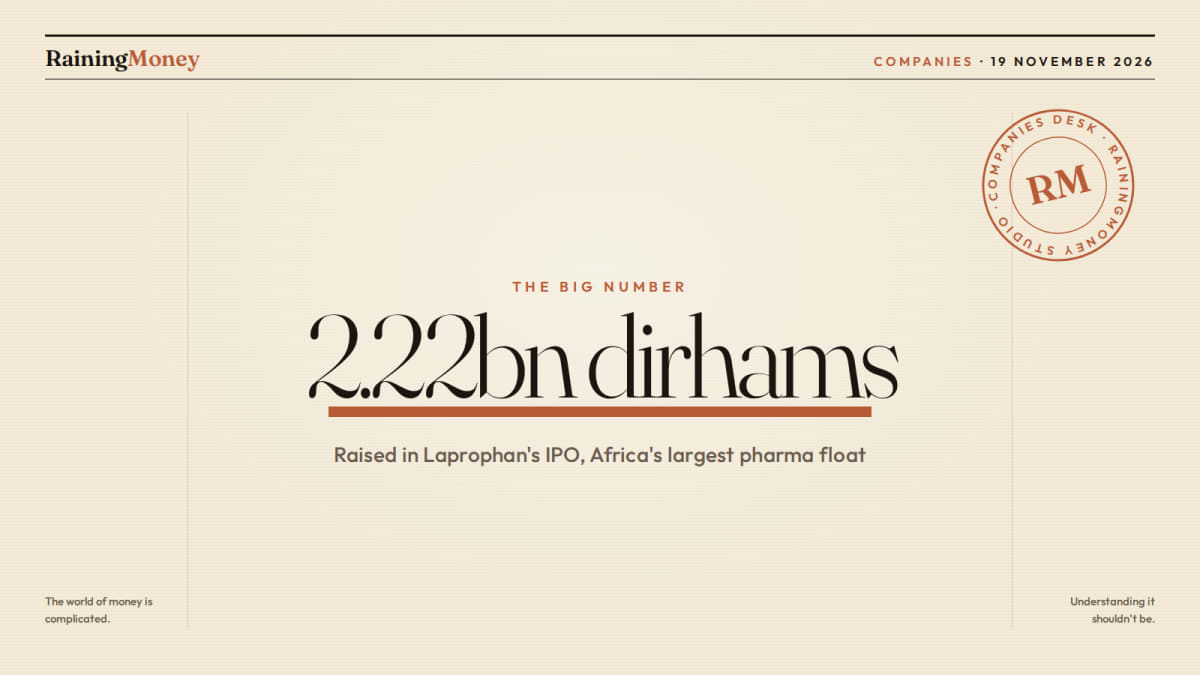
Laprophan, a Moroccan maker of medicines, has raised 2.22bn dirhams (about $223M) by selling shares to the public on the Casablanca Stock Exchange. It is the largest initial public offering (IPO) ever by an African pharmaceutical company, and investors asked for about six times as many shares as were on offer, according to the bank that led the sale. The result was reported on Thursday, 19 November 2026, two days after the subscription window closed.
An IPO is the first time a company sells its shares to the general public. After it, those shares can be bought and sold on a stock exchange, and the price moves with demand. Laprophan's deal comes in the same month as the Dangote refinery's much larger IPO in Lagos, which makes it a useful comparison for Nigerian readers following African share sales.
What exactly did Laprophan sell?
The company sold 6.52 million shares at 341 dirhams each. That price values the whole company at about 5.9bn dirhams. Morocco's market regulator approved the offer and published its prospectus, the official document that sets out the terms of a share sale. Investors could apply from 9 November to 17 November.
The offer had two parts:
- New shares: 4.1 million shares created for the sale. The money paid for these goes to Laprophan itself, as fresh capital.
- Existing shares: up to 2.41 million shares sold by people who already owned part of the company. The money for these goes to those sellers, who reduce their holdings.
This split matters. When you read that a company "raised" a sum in an IPO, only part of it may reach the company's own bank account.
| Item | Figure |
|---|---|
| Total raised | 2.22bn dirhams (about $223M) |
| Price per share | 341 dirhams |
| Shares sold, new and existing | 6.52 million |
| New shares in the offer | 4.1 million |
| Existing shares in the offer | up to 2.41 million |
| Value of the whole company at the offer price | about 5.9bn dirhams |
| Demand | about six times the shares on offer |
| Subscription window | 9 to 17 November 2026 |
How much of the money goes to the company?
The reports reviewed for this article do not give a split of the proceeds, so here is the arithmetic from the published share numbers.
Derived: 4.1 million new shares at 341 dirhams come to about 1.4bn dirhams (4.1 million × 341 = 1,398.1 million). Up to 2.41 million existing shares at 341 dirhams come to about 822M dirhams (2.41 million × 341 = 821.81 million). On those numbers, roughly three-fifths of the money raised is new capital for Laprophan and the rest goes to the shareholders who sold.
Derived: the 2.22bn dirhams raised is about 38% of the 5.9bn-dirham value of the whole company (2.22 ÷ 5.9 = 0.376). So the investors who bought in the IPO now own a bit over a third of Laprophan, if the final numbers match the published offer.
The reports reviewed here do not say what Laprophan plans to spend its new capital on. That detail should be in the prospectus.
What does "six times oversubscribed" mean?
An offer is oversubscribed when buyers ask for more shares than are available. Six times oversubscribed means the orders added up to about six times the number of shares for sale. The lead manager, CFG Bank Capital Markets, gave that figure. A lead manager is the investment bank that organises the sale, sets the timetable and gathers the orders.
When demand is this strong, not everyone gets what they asked for. Applicants usually receive only part of their order, and the rules for sharing out the shares (called allotment) are set in the prospectus. Strong demand also tends to be read as a sign of confidence in the company, though it says nothing certain about how the share price will move once trading starts.
Why is a medicine maker's share sale a big deal in Africa?
No African drug maker had raised this much in an IPO before. That makes the deal a reference point for other drug makers thinking about raising money from the public instead of from banks or private investors.
It also touches a wider problem. Africa depends heavily on imported medicines and on imported raw materials to make them. In Nigeria, a 2026 KPMG report found that more than 90% of the active pharmaceutical ingredients and other inputs used by local drug makers come from abroad. Active pharmaceutical ingredients (APIs) are the parts of a medicine that actually treat the illness. The federal government's pharmaceutical initiative said this month that local production of APIs is expected to begin in the first quarter of 2027, and that a financing scheme is being designed to lower borrowing costs for manufacturers.
RainingMoney's reading: a drug maker that can raise long-term money from shareholders depends less on expensive bank loans to build factories. With lending rates high across much of Africa, a successful listing like Laprophan's shows one route other manufacturers could study.
How does Casablanca compare with the Nigerian Exchange?
The two markets are close in size. Figures compiled in May 2026 put the Nigerian Exchange (NGX) at about $117B in total market value and Morocco's Casablanca Stock Exchange at about $111B, making them the second and third biggest in Africa after Johannesburg. Market value here means the combined worth of all the companies listed on the exchange.
Casablanca has also been drawing money from abroad. In the first quarter of 2026, foreign companies and funds bought 1.63bn dirhams (about $163M) of Moroccan shares, up 70.2% from a year earlier.
Lagos has had a busy month of its own. The Dangote Petroleum Refinery plans to raise as much as $2.1B in its IPO after investors put in orders worth nearly $4.5B, almost three times what was first on offer, and is expected to start trading on the NGX later in November.
Derived: at $2.1B, the Dangote refinery offer is about nine times the size of Laprophan's $223M (2.1 ÷ 0.223 = 9.4). The two deals are very different in scale, but both drew far more demand than there were shares to sell.
What does this mean for Nigerian investors and companies?
RainingMoney's reading: few Nigerian savers hold shares listed in Casablanca, so the direct effect on most readers' money is small. The indirect lessons are clearer.
- For companies: two heavily oversubscribed IPOs in Lagos and Casablanca in the same month suggest there is money in Africa willing to back large, well-known local firms. Nigerian manufacturers, including drug makers, will be watching.
- For investors: an IPO price is set before trading begins. How the shares then trade is a separate test, and strong demand at the offer stage does not guarantee gains later.
- For the medicine supply: more local drug making across Africa, if it follows, could over time reduce reliance on imports and on the foreign currency needed to pay for them.
What do we not know yet?
- When Laprophan's shares will start trading and at what price they open.
- What the company will do with its new capital.
- How the shares were shared out among the different groups of applicants.
- Whether other African drug makers will follow it onto the stock market.
Sources & Verification
- Sources: Bloomberg
- Editorial note: This explainer is an original RainingMoney adaptation of the report, RainingMoney has added explanatory context.

Correspondent, OnitshaOnitsha
Chiamaka Prudence
I am a technology and finance enthusiast with a keen interest in digital innovation, emerging financial trends, and the evolving ways technology is shaping businesses and everyday life. I enjoy…
Author profile & archive →The Money Print
Market intelligence before the market opens.
Pan-African capital flows and the stories behind the numbers, on weekday mornings.