
EnergyMedium
Petrol Imports Jump 47% in October Despite Dangote Supply
Nigeria imported 15 million litres of petrol a day in October, up 47%, and diesel imports rose 917%, as Dangote supplied more and exported 42% of its petrol.
By Janefrances Neche Published 4 min read Editorial Policy Report a correction
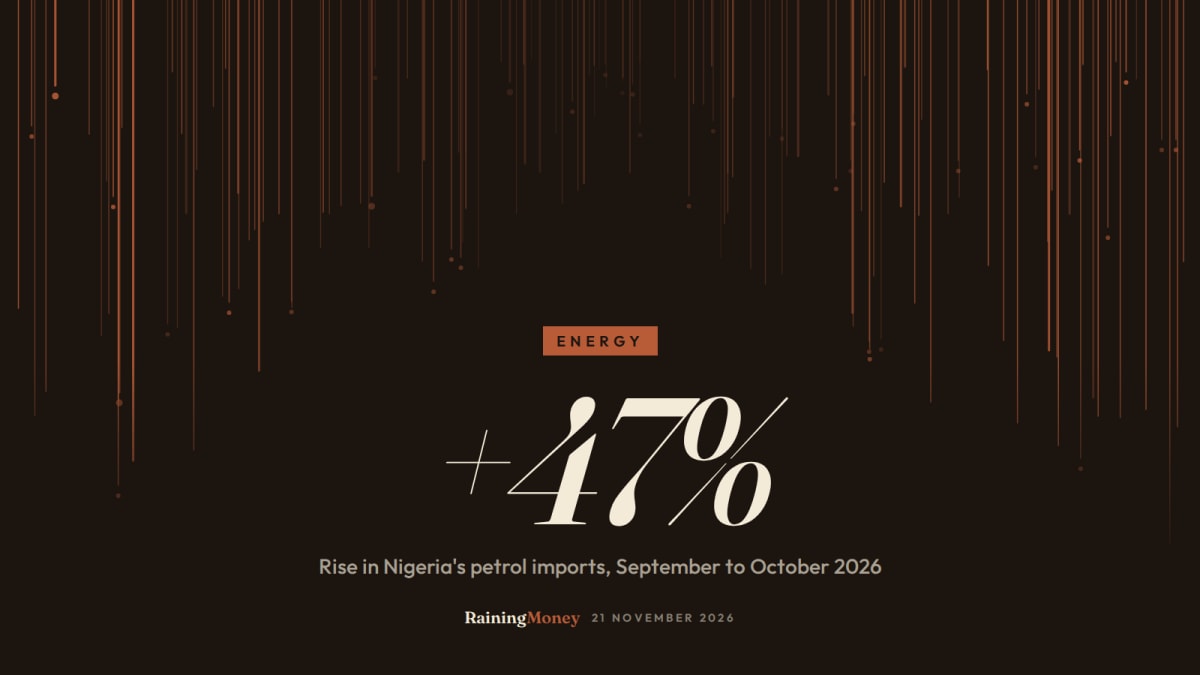
Nigeria imported 15 million litres of petrol a day in October 2026, up 47% from 10.2 million in September, even though the Dangote Petroleum Refinery sent more petrol into the local market, the Nigerian Midstream and Downstream Petroleum Regulatory Authority (NMDPRA) said in its October factsheet. Diesel imports rose even faster, from 600,000 litres a day to 6.1 million. Meanwhile the country's petrol stock fell to 21.8 days of cover, below the 30 days the regulator requires.
What did the regulator's October figures show?
The NMDPRA publishes a monthly factsheet on how much fuel is produced, imported, stored and used. October's shows supply and demand both rising, with imports filling more of the gap.
| Item | September 2026 | October 2026 | Change |
|---|---|---|---|
| Dangote domestic supply | 28.5 | 31.89 | +12% |
| Imports | 10.2 | 15.0 | +47% |
| Total petrol receipts | 38.7 | 46.9 | +21% |
| Consumption | 44.4 | 46.5 | +5% |
| Stock cover (days) | 23.9 | 21.8 | down |
By RainingMoney's working (derived: 15 ÷ 46.9), imports made up about 32% of the petrol that reached Nigerian depots in October.
If Dangote is producing more, why are imports rising?
The refinery is producing a lot of petrol, but much of it leaves the country. In October it ran at 103.73% of its 650,000-barrel-a-day capacity and produced an average of 48.51 million litres of petrol a day. It exported 20.18 million litres a day, about 42% of what it made, and supplied 31.89 million litres a day at home.
So in the same month, Nigeria was importing about 15 million litres a day while its biggest refinery was exporting about 20 million. The factsheet does not explain why. RainingMoney's reading: a refinery sells where it gets the best price, and marketers import when foreign cargoes are cheaper or when their own supply deals require it. The regulator also changed how it measures exports: October's export share is counted against production, while September's was counted against what left the refinery, so the two months are not exactly comparable.
Dangote also drew about 3.56 million litres a day from its own stored petrol, and its closing petrol stock fell 37% to 229.9 million litres.
What happened with diesel?
Diesel, which powers generators, lorries and factories, saw a sharper turn. Total diesel receipts almost doubled, up 93% to 16.8 million litres a day from 8.7 million. Domestic supply rose 32% to 10.7 million litres, but imports jumped from 0.6 million to 6.1 million litres a day, a rise of 917%. Imports were about 36% of all diesel received.
Diesel use rose 7% to 15.5 million litres a day. Stock cover fell 12% to 43.9 days, still above the 30-day minimum. The Dangote refinery produced 25.14 million litres of diesel a day and exported about half of it.
Smaller modular refineries supplied about 680,000 litres of diesel a day, up from 620,000, or about 4.9% of the regulator's 14 million-litre daily benchmark. One of them, the Duport refinery, stayed shut.
What does "stock cover" mean, and why does 21.8 days matter?
Stock cover, which the regulator calls stock sufficiency, is how many days the petrol already in the country would last at current use if no new supply arrived. The NMDPRA wants at least 30 days as a buffer against shipping delays, refinery outages or disputes.
At 21.8 days, petrol cover in October was below that line and lower than September's 23.9 days. It is not a shortage: fuel was still arriving. But a thinner buffer leaves less room if a supply chain breaks during the busy December travel season.
What about the government's own refineries?
The state-owned refineries in Port Harcourt, Warri and Kaduna produced nothing in October, the factsheet shows. Crude oil delivered to local refineries rose 19% to an average of 736,000 barrels a day from 617,000. Dangote's imported crude rose 39% to 118,400 barrels a day, and the share of its crude bought locally fell to 83.9% from 86.1%.
What does this mean for my money?
Imported fuel is bought in dollars. With the naira weakening this month, every litre imported costs more in naira, and that cost can show up at the pump. More expensive diesel also raises the cost of running generators and moving goods by road, which businesses can pass on in the prices of food and other goods. That is why rising imports matter even when overall supply looks healthy.
There is a currency angle too. Fuel imports add to demand for dollars, while Dangote's exports bring dollars in. Which of the two grows faster affects the naira.
What isn't known yet?
The factsheet gives volumes, not prices, so it does not show how much the extra imports cost or whether they were cheaper than local supply. It also does not say who imported the fuel. November's figures will show whether the jump in imports was a one-month move ahead of the festive season or the start of a trend.
The short version
Nigeria's appetite for fuel rose in October. Dangote supplied more at home but exported 42% of its petrol, and imports of both petrol and diesel climbed sharply to meet demand. Petrol stock cover slipped further below the 30-day safety line just as the high-demand season begins.
Sources & Verification
- Sources: Nairametrics
- Editorial note: This explainer is an original RainingMoney adaptation of the report, RainingMoney has added explanatory context.

Correspondent, AbujaAbuja
Janefrances Neche
Janefrances is a finance correspondent specializing in emerging markets, consumer economics, and policy analysis. Most recently reporting for regional business desks, she has tracked shifting…
Author profile & archive →The Money Print
Market intelligence before the market opens.
Pan-African capital flows and the stories behind the numbers, on weekday mornings.