CompaniesMedium
Why Half of Nigeria's Big Banks Stopped Paying Dividends
Only Zenith, GTCO and Stanbic IBTC paid interim dividends in 2026 as UBA, Access and others stay frozen by CBN rules on bad loans. What it means for you.
By Betini Udom Published 5 min read Editorial Policy Report a correction
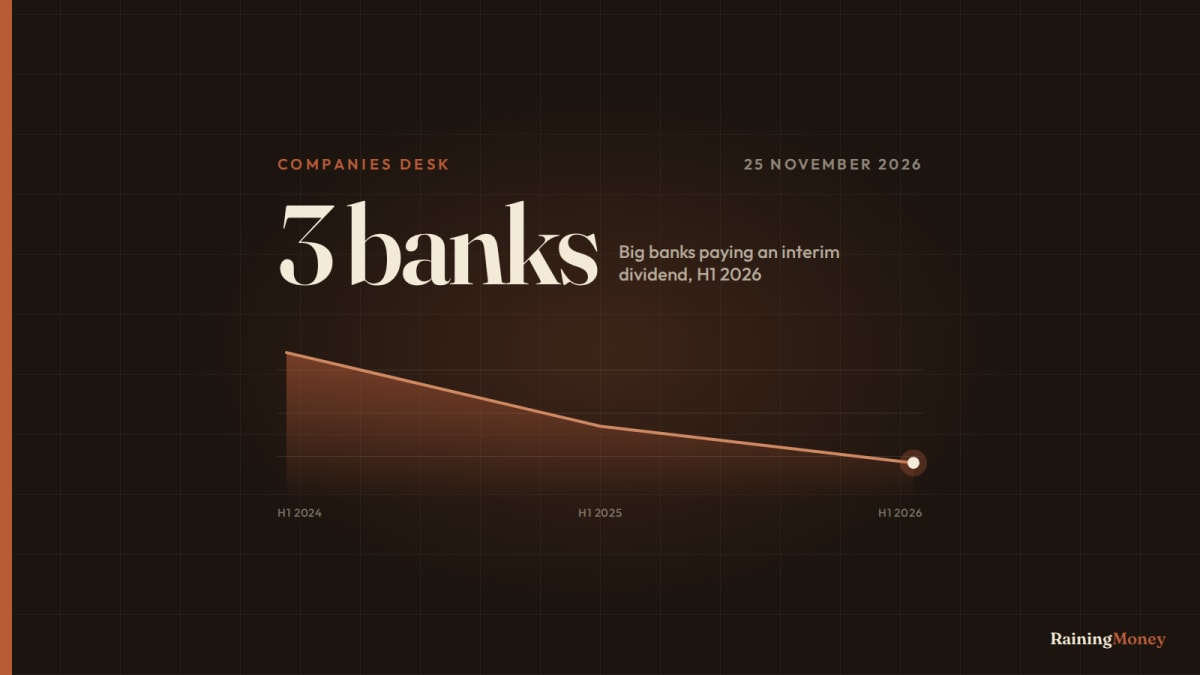
Only three of Nigeria's six biggest dividend-paying banks paid an interim dividend from their half-year results in 2026, down from four in 2025 and six in 2024. Zenith Bank, GTCO and Stanbic IBTC paid. UBA, Access Holdings and Fidelity Bank did not, and First HoldCo, Access and Fidelity paid nothing at all for 2025. The split comes even as several of the banks that are holding back report large profits.
For the millions of Nigerians who own bank shares, directly or through pension and mutual funds, this is a real loss of income. Here is what is going on.
Which banks paid, and which didn't?
| Bank | H1 2024 | H1 2025 | H1 2026 |
|---|---|---|---|
| Stanbic IBTC | 2.00 | 2.50 | 4.50 |
| Zenith Bank | 1.00 | 1.25 | 1.50 |
| GTCO | 1.00 | 1.00 | 1.00 |
| UBA | 2.00 | 0.25 | Nil |
| Access Holdings | 0.45 | Nil | Nil |
| Fidelity Bank | 0.85 | Nil | Not yet published |
The full-year picture is starker. For 2025, GTCO raised its dividend to ₦12.76 a share from ₦8.03, Zenith to ₦10.00 from ₦5.00 and Stanbic IBTC to ₦6.50 from ₦5.00. At the other end, UBA cut its payout to ₦0.25 from ₦5.00, a fall of 95%, while Access Holdings, First HoldCo and Fidelity Bank paid nothing. Zenith, GTCO and Stanbic together paid about ₦978bn for 2025, more than the rest of the listed banks combined.
Why are some banks not paying?
The main reason is a rule from the Central Bank of Nigeria (CBN). In a circular dated 13 June 2025, the CBN told banks that were still relying on "forbearance" to stop paying dividends, defer bonuses for directors and avoid new investments abroad. The ban lasts until a bank has fully exited forbearance and the CBN has checked its capital and provisions. CBN Governor Olayemi Cardoso repeated in September 2025 that banks must fully exit before they can pay again.
Forbearance is regulatory patience. It lets a bank avoid recognising the full damage from a bad loan, or lend more than the usual limit to one large borrower, for a time. Much of the problem lending sits in oil and gas, including one distressed loan of about $2bn to a local oil and gas company. Renaissance Capital estimated that six lenders held about $3.5bn of such loans when the circular came out.
A second, older rule also bites. Since 2018, a bank whose non-performing loan (NPL) ratio, the share of its loans that borrowers have stopped repaying, is above 10% cannot pay a dividend, and one between 5% and 10% faces a cap. First HoldCo's ratio was 10.4% in September 2026.
But aren't these banks profitable?
Yes, which is what makes this frustrating for shareholders. Access Holdings made a pre-tax profit of more than ₦1tn in 2025. UBA made ₦503bn before tax in the first nine months of 2026. The problem is that profit has to be set against provisions, the money a bank sets aside to cover loans that may not be repaid. UBA's net loan impairment charge jumped to ₦255.1bn in the nine months to September 2026 from ₦46.1bn a year earlier.
Some of the money is also locked up by the rules. Where the CBN demands more provisions than a bank's published accounts show, the difference goes into a reserve that cannot be paid out. That reserve stands at about ₦850bn at First HoldCo and ₦233bn at UBA. Access Holdings has a separate issue: its investments in foreign subsidiaries are about 19% of shareholders' funds, against a legal limit of 10%. The group says its pause is driven only by outstanding regulatory compliance requirements.
Why does this sting shareholders twice?
Over the last two years, Nigerian banks raised about ₦4.65tn of fresh capital to meet the CBN's new minimum capital levels, much of it through rights issues and public offers to their own shareholders. UBA alone raised about ₦395bn in 2025. Many investors put new money in and then saw dividends cut or stopped. The Association of Securities Dealing Houses of Nigeria has warned that dividend suspensions could make future capital raising harder.
The share prices tell the story. UBA traded at about ₦40 in early November, roughly flat for 2026 while the wider market rose about 60%. Access Holdings traded at about ₦28.40, roughly 0.4 times its book value, meaning the market valued the bank at less than half of what its accounts say its net assets are worth.
What does this mean for my money?
If you own bank shares for income, the sector has split in two. A few banks are paying more each year; others are paying nothing until their regulator is satisfied. Dividends are never guaranteed, and the banks that are paying are not promising any particular amount for 2026. RainingMoney's reading: the gap reflects how much bad lending each bank still carries from the past, more than how much profit it is making today.
What should I watch next?
The next test is the 2026 full-year results, due between March and May 2027. Four things will show whether the paused banks can pay again:
- NPL ratios against the CBN's 5% and 10% lines. First HoldCo needs its ratio below 10% by December to pay anything, under a policy it adopted in July 2026 to pay out at least 60% of profit, subject to approval.
- The size of the non-distributable reserves at UBA and First HoldCo.
- Whether results are published on time. UBA's board approved its half-year results in August but they were only published on 20 November, and Fidelity was still awaiting CBN approval in October.
- Whether the CBN publicly confirms that a bank has left forbearance.
Two headwinds remain even for the strong banks. The CBN cut its main rate to 23% in September, which is expected to squeeze lending margins from the fourth quarter, and the new tax law has raised banks' tax bills: Zenith's effective tax rate rose to 27% in the first nine months of 2026 from 17%.
Sources & Verification
- Sources: Premium Times
- Editorial note: This explainer is an original RainingMoney adaptation of the report, RainingMoney has added explanatory context.

Founder and Editor-in-ChiefAbuja
Betini Udom
Founder and Editor-in-Chief of RainingMoney. Covers Nigerian, pan-African and global markets, finance and economic policy.
Author profile & archive →The Money Print
Market intelligence before the market opens.
Pan-African capital flows and the stories behind the numbers, on weekday mornings.