EnergyMedium
Oil Falls Near a Three-Month Low: What It Means for Nigeria
Brent crude slipped below $90 a barrel, helping cut Dangote's petrol gantry price to ₦1,070. What cheaper oil means for pump prices, the budget and the naira.
By Janefrances Neche Published 5 min read Editorial Policy Report a correction
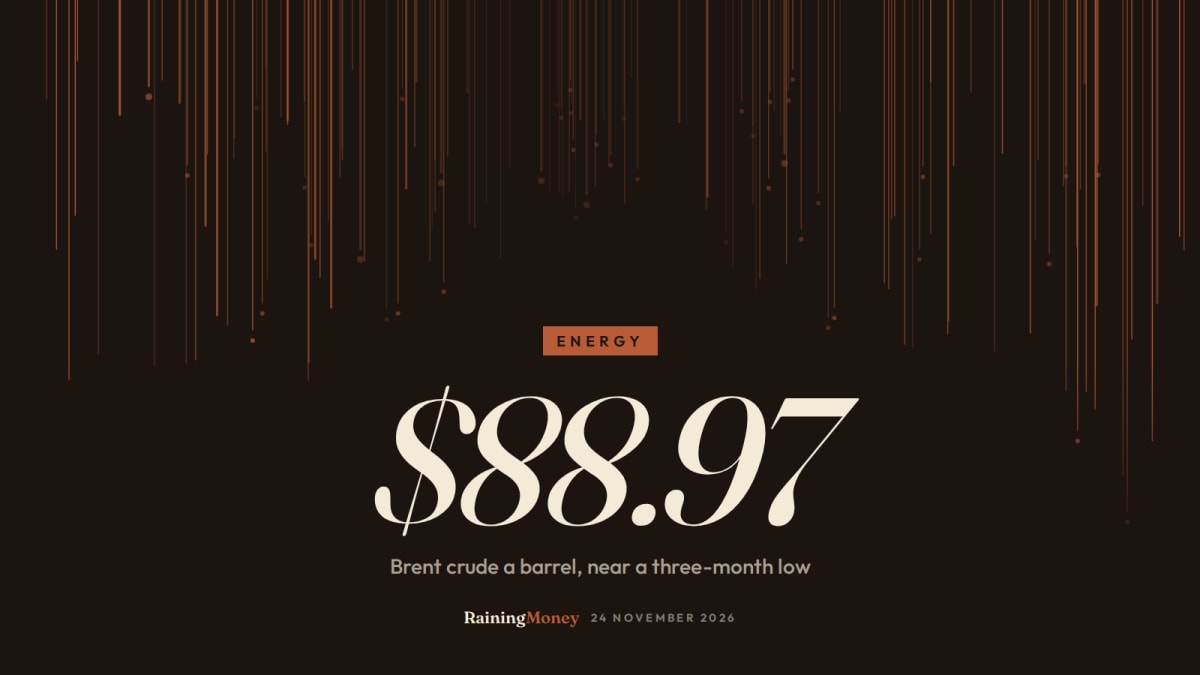
Brent crude, the global oil price Nigeria's own crude is sold against, slipped below $90 a barrel on Tuesday, 24 November 2026, close to its lowest level in three months. It traded at $88.97 a barrel during the day, while West Texas Intermediate (WTI), the main US price, was at $79.94. Both had climbed above $100 a barrel in October.
For Nigeria the fall cuts two ways. It has already helped pull down the wholesale price of petrol from the Dangote refinery. It also trims the extra oil money the government had been earning, although Brent is still far above the price the 2026 budget assumes.
Why is the oil price falling?
Traders are more worried about too much oil than too little. Supply from the Middle East is recovering after months of disruption linked to the conflict involving Iran, stocks of crude and fuel have started to rebuild, and the market expects a surplus in the months ahead.
Hopes that tensions between the United States and Iran will ease have also reduced fears of new supply shocks, though signals from Washington about a peace deal remain mixed. The head of global commodities strategy at JP Morgan told clients that the conflict had worked like a dam, holding back Middle Eastern oil for months, and that a race to win back market share could add a lot of supply once it lifts.
The risks have not gone away. Iran's Islamic Revolutionary Guard Corps claimed that three tankers struck mines in the Strait of Hormuz, the narrow sea route that carries a large share of the world's oil, after it said they broke its new crossing rules. One analyst said Brent had lost its upward momentum but that a rebound could not be ruled out while talks between the US and Iran make little progress.
| Date | Brent ($/barrel) | Dangote petrol gantry price (₦/litre) |
|---|---|---|
| 3 November | n/a | ₦1,300 |
| 18 November | n/a | ₦1,130 |
| 20 November | $91.67 | ₦1,070 |
| 24 November | $88.97 | n/a |
What has this done to petrol prices?
The clearest effect so far is on petrol. The Dangote refinery cut the price its marketers charge at the gantry (the depot gate where tankers load) to ₦1,070 a litre on 20 November, down ₦60 from ₦1,130 two days earlier. That is its lowest level since July 2026.
Early in the month the same price had reached ₦1,300 a litre, on 3 November. The refinery then made about six cuts in a row. Derived: the fall from ₦1,300 to ₦1,070 is ₦230 a litre, or about 17.7%.
Part of the reason is how the refinery sets its price. It has gone back to linking its petrol price to an international gasoline benchmark, so when world prices fall its price can follow more quickly than under the fixed naira arrangement it used earlier in the month.
A gantry price is not the pump price. What a motorist pays at the filling station also depends on transport costs, marketers' margins and local conditions, and those prices tend to fall more slowly than wholesale ones. We have not found reliable figures for pump prices across the country this month, so we can't say how much of the cut has reached drivers.
What does a cheaper barrel mean for the government?
Crude oil provides the bulk of the federal government's revenue and of Nigeria's foreign exchange earnings, so the price matters for the budget and for the naira.
The 2026 budget assumes an oil price of $64.85 a barrel and output of about 1.8 million barrels a day. Derived: at $88.97, Brent is $24.12 above that benchmark, or about 37% higher ($24.12 divided by $64.85). So even after the latest fall, each barrel Nigeria sells is still earning well above what the budget planners counted on.
RainingMoney's reading: the price is less of a worry for the budget than the volume. The budget's revenue depends on both the price and how many barrels are pumped and sold. If output falls short of the 1.8 million barrel assumption, a high price only partly makes up the gap. A lower price also means fewer dollars flowing in, at a time when the naira is already under pressure.
What does it mean for my money?
- At the pump: cheaper crude gives room for further cuts in petrol prices, which affect transport fares and the cost of moving food. How fast that happens depends on marketers and on the naira.
- For prices in general: fuel and transport costs feed into almost everything Nigerians buy. Analysts polled before the central bank's 24 November rate decision named higher energy and transport costs among the reasons not to cut rates. A lasting fall in oil would ease that pressure.
- For the naira: oil sales are the country's main source of dollars. Lower prices mean fewer dollars coming in, which can weigh on the currency, and a weaker naira makes imported goods dearer.
What should I watch next?
Three things will decide where prices go from here: whether talks between the US and Iran make progress, whether supply from the Middle East keeps recovering, and whether the expected surplus turns up in rising stockpiles.
At home, the next test is whether filling stations pass on the latest refinery cuts in the run-up to the festive season, when demand for fuel usually rises. We will also be watching Nigeria's own output figures, which matter as much as the price for the government's revenue.
What we don't know yet is how long the fall will last. One analyst warned that prices could rebound if the talks stall, and the shipping risks in the Strait of Hormuz remain. Brent has already moved from above $100 in October to below $90 now, a swing of more than $10 a barrel in a matter of weeks.
Sources & Verification
- Sources: Semafor
- Editorial note: This explainer is an original RainingMoney adaptation of the report, RainingMoney has added explanatory context.

Correspondent, AbujaAbuja
Janefrances Neche
Janefrances is a finance correspondent specializing in emerging markets, consumer economics, and policy analysis. Most recently reporting for regional business desks, she has tracked shifting…
Author profile & archive →The Money Print
Market intelligence before the market opens.
Pan-African capital flows and the stories behind the numbers, on weekday mornings.