CompaniesHigh
Pension Funds Seek Nearly $1bn of Dangote Refinery IPO
South African and Nigerian pension funds asked for nearly $1bn of Dangote refinery shares in an IPO that drew ₦5.85tn of bids. Here's what it means for you.
By Chiamaka Prudence Published 6 min read Editorial Policy Report a correction
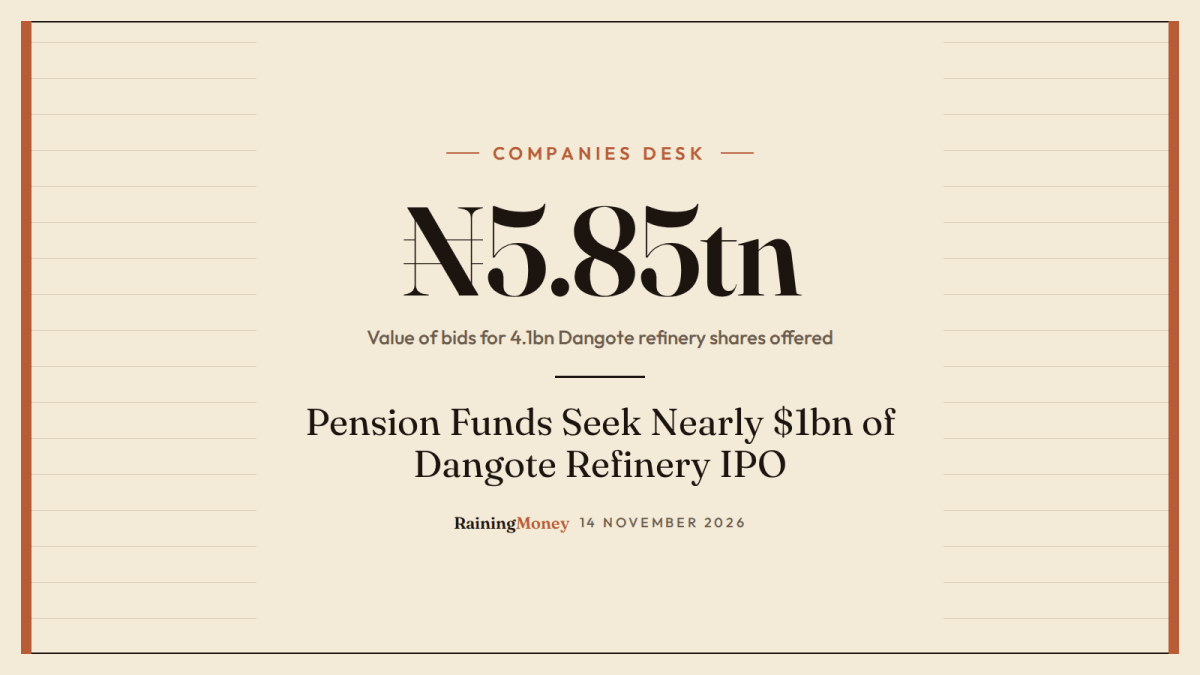
South Africa's state pension manager and Nigeria's pension fund administrators have applied for close to $1bn of shares in the Dangote Petroleum Refinery's initial public offering (IPO), people familiar with the deal said on Friday, 13 November 2026. The demand adds to an offer that has already drawn about ₦5.85tn in bids against a target of ₦2.15tn, nearly three times what the company set out to raise.
An IPO is the first time a private company sells its shares to the public. Once the shares are listed on a stock exchange, anyone can buy and sell them. Neither the refinery nor the South African fund has commented on the reported applications.
The Big Number
₦5.85tn. That is the value of the applications investors lodged for the refinery's shares. The company offered 4.1bn shares at ₦525 each, worth about ₦2.15tn (roughly $1.6bn). Investors asked for about 11.15bn shares. Dividing one by the other, the offer was covered about 2.7 times (derived: 11.15bn ÷ 4.1bn = 2.72).
Close to 3.8 million people and institutions applied. In dollar terms, subscriptions reached about $4.3bn, according to people familiar with the transaction.
| Item | Figure |
|---|---|
| Shares offered | 4.1bn |
| Price per share | ₦525 |
| Target raise | ₦2.15tn (about $1.6bn) |
| Shares applied for | about 11.15bn |
| Value of bids | about ₦5.85tn |
| Applicants | nearly 3.8 million |
| Implied value of the refinery | about $50bn |
What changed this week?
Until now, the headline was the size of the crowd. The new detail is who sits at the front of it. South Africa's Public Investment Corporation (PIC), which manages about $220bn, much of it the pension savings of South African government workers, reportedly asked for about $500M of shares. Nigerian pension fund administrators, the companies that invest workers' monthly retirement contributions, reportedly applied for between $400M and $500M. Part of the Nigerian funds' demand was already covered through an earlier private placement, a sale of shares to selected investors before the public offer.
The businessman Femi Otedola has also said he plans to invest $100M in the offer.
The demand is large enough that the refinery is expected to use a 30% extra allowance granted by the Securities and Exchange Commission (SEC), the capital market regulator. That would lift the offer to about $2.1bn. People familiar with the deal said foreign demand would still be larger than the shares available even after that increase. They also said Aliko Dangote could consider selling some of his own shares in a separate deal to meet it.
Why are pension funds allowed to buy this?
Nigerian pension rules usually stop fund administrators from buying shares in a company that lacks a long record of profits and dividends. The refinery started operating recently, so it would not normally qualify. In May 2026 the National Pension Commission (PenCom), which regulates the pension industry, granted a one-off exemption for this offer only. Administrators must still follow their own investment policies and their duty to protect contributors and retirees.
About 11 million Nigerians contribute to the pension system, spread across 20 pension funds. If you have a retirement savings account, part of your balance may end up in refinery shares. How much will depend on what each administrator decides and how many shares it is finally given.
What Caught Our Attention
Three applicants accounted for about 46.72% of all the shares applied for, a block worth about ₦2.73tn. They have not been named. Online retail investors, ordinary people applying through apps and bank platforms, numbered about 1.55 million and bid more than ₦860bn, roughly 14.7% of the total. Those retail figures are still being reconciled and could change once offline applications are counted.
The turnout of nearly 3.8 million also fell short of Mr Dangote's stated ambition of 10 million Nigerian shareholders.
RainingMoney's reading: the gap between a handful of very large bids and millions of small ones means the SEC's allotment rules will decide who really owns this company. If the regulator protects small applicants, institutions will be cut back hard. If it favours large orders, many retail investors may receive only a fraction of what they paid for.
Finance Speak → Human Speak
- Oversubscribed: more people asked to buy than there were shares to sell. Here, about 2.7 times more.
- Allotment: the official decision on how many shares each applicant actually gets. It needs the SEC's approval.
- Over-allotment (upsizing): permission to sell extra shares, here up to 30% more, when demand is strong.
- Valuation: what the whole company is worth at the offer price. At ₦525 a share, the refinery is valued at about $50bn.
- Refund: money returned to applicants for the shares they asked for but did not receive.
What does this mean for my money?
If you applied, expect to receive fewer shares than you asked for. Even if the full 30% upsize is used, the offer would rise to about 5.33bn shares (derived: 4.1bn × 1.3), against about 11.15bn applied for. On those numbers, fewer than half of the shares requested can be met (derived: 5.33bn ÷ 11.15bn ≈ 48%). The rest of the money paid in should come back as refunds after allotment.
The SEC is expected to approve the final allotment on 17 November. Under the prospectus, trading starts 15 business days after allotment, which points to around 8 December, though the company is aiming for an earlier listing if regulators agree. These dates come from people close to the deal and are not yet confirmed by the SEC or the company.
After the offer, Mr Dangote would keep about 84.34% beneficial ownership, according to the prospectus. That means public shareholders will own a small slice of a company controlled by one person.
Where is the money going?
The proceeds are meant to support an expansion programme of about $14.3bn over five years. The aim is to double crude processing capacity to 1.4 million barrels per day by 2029. The refinery raised $2.5bn in a private placement in July 2026 ahead of this offer.
The company's own numbers help explain the appetite. In the nine months to September 2026, revenue was $22.48bn, up 144.47% from a year earlier, and profit after tax was $4.73bn, against a loss of about $117M in the same period of 2025.
What we don't know yet
- How many shares the PIC and the Nigerian pension funds will actually receive.
- The names of the three applicants who bid for nearly half of the shares.
- The final basis of allotment between retail and institutional investors.
- When the shares will start trading, and at what price they will settle once the market sets it.
The Bottom Line
The Dangote refinery's IPO has pulled in far more money than it needs, from ordinary Nigerians, local pension funds and South Africa's state pension manager. The decision that matters most now sits with the SEC: how it shares out about 5.33bn shares among applicants who asked for more than twice that. Whatever it decides, millions of applicants are due refunds, and a slice of Nigerian retirement savings is about to be tied to a single refinery's fortunes.
Sources & Verification
- Source: BusinessDay
- Editorial note: This explainer is an original RainingMoney adaptation of the report, RainingMoney has added explanatory context.

Correspondent, OnitshaOnitsha
Chiamaka Prudence
I am a technology and finance enthusiast with a keen interest in digital innovation, emerging financial trends, and the evolving ways technology is shaping businesses and everyday life. I enjoy…
Author profile & archive →The Money Print
Market intelligence before the market opens.
Pan-African capital flows and the stories behind the numbers, on weekday mornings.