CompaniesMedium
AIICO and Cornerstone Plan Merger to Build ₦858bn Insurer
AIICO and Cornerstone want to merge into a listed insurer with ₦858bn in assets. Here is what the deal means for policyholders, shareholders and the industry.
By Betini Udom Published 7 min read Editorial Policy Report a correction
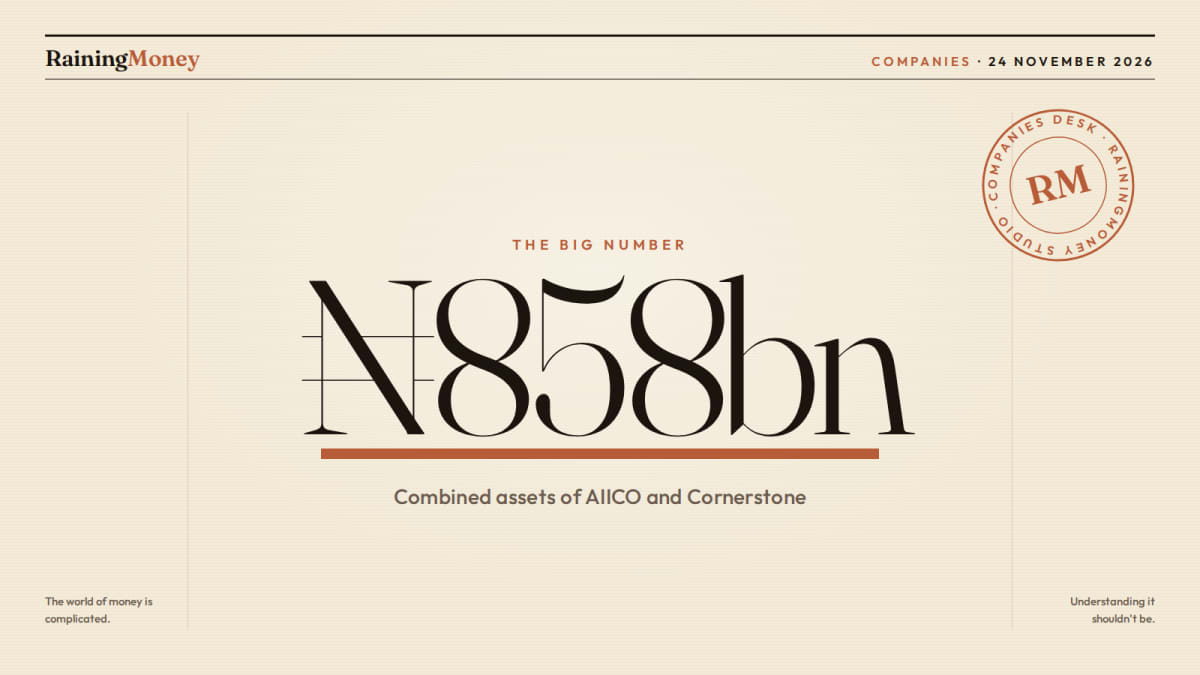
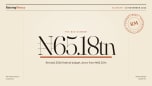
AIICO Insurance Plc and Cornerstone Insurance Plc, two insurers listed on the Nigerian Exchange (NGX), have proposed to merge. In a joint notice to the exchange on Monday, 23 November 2026, the companies said the combined group would hold about ₦858bn in total assets and about ₦194bn in shareholders' funds. Both boards have approved the plan, and it now goes to shareholders, regulators and a court.
If it goes through, the companies say the enlarged insurer would be Nigeria's leading listed insurance company by gross written premium, insurance revenue and shareholders' funds. On the same day, AIICO also told the exchange that one of its shareholders, LeapFrog III Nigeria Insurance Holdings Ltd, plans to sell its roughly 30.53% stake in the company to Insur Investments Limited.
What exactly did the two insurers announce?
The notice describes a proposed merger carried out through a "scheme of merger". In plain terms, that is a legal route in which two companies become one under a plan that shareholders vote on and a court then approves. Cornerstone, AIICO and AIICO's two insurance subsidiaries would be brought together into one enlarged business, which would stay listed on the NGX.
What the notice does not yet say matters just as much. The companies have not published a price, a share exchange ratio (how many new shares a holder of each company would receive), who would own what share of the combined group, or a completion date. They said a scheme document setting out the full terms, the boards' recommendations and notices of meetings will be sent to shareholders in due course.
How big are the two companies on their own?
The two firms are very different in size. Their latest results, for the nine months to 30 September 2026, show AIICO as by far the larger partner. Both sets of figures are unaudited.
| Measure | AIICO | Cornerstone | Combined (derived) |
|---|---|---|---|
| Total assets | ₦708.39bn | ₦149.14bn | ₦857.53bn |
| Shareholders' funds (total equity) | ₦113.33bn | ₦80.36bn | ₦193.69bn |
| Insurance revenue | ₦114.57bn | ₦43.31bn | ₦157.88bn |
| Profit before tax | ₦19.42bn | ₦7.74bn | ₦27.16bn |
The derived totals line up with the companies' own headline. Adding ₦708.39bn and ₦149.14bn gives ₦857.53bn, which rounds to the ₦858bn in the notice. Adding ₦113.33bn and ₦80.36bn gives ₦193.69bn, which rounds to ₦194bn. On these figures, AIICO would bring about 83% of the combined assets (derived: ₦708.39bn divided by ₦857.53bn).
The two also came into the deal on different paths. AIICO's profit before tax rose 27.3% from ₦15.25bn a year earlier, helped by a 32.8% jump in net investment income to ₦58.80bn. Cornerstone's profit before tax fell 6.93% from ₦8.32bn, even though its insurance revenue grew 16.70%.
What do terms like "gross written premium" and "Takaful" mean?
An insurer collects money from customers in advance, called premiums, and promises to pay them if something goes wrong. Gross written premium is the total value of premiums on policies the insurer has sold in a period, before it passes any of that business on to other insurers. AIICO's gross written premium for the nine months was ₦163.58bn, up 6.6%.
Insurance revenue is the part of those premiums the insurer has actually earned in the period, because cover runs over time. Shareholders' funds are what would be left for the owners if all debts and promised claims were settled. For an insurer, this cushion is what allows it to absorb a bad year of claims.
Takaful is insurance designed to follow Islamic principles. Members pool contributions into a shared fund that pays out when one of them suffers a loss, and the fund is run in line with Islamic rules, which for example avoid interest. Cornerstone runs a growing Takaful business.
Why are AIICO and Cornerstone doing this now?
The companies tie the merger to rising capital demands under the Nigerian Insurance Industry Reform Act (NIIRA), which brought higher minimum capital rules and a move to a risk-based capital framework. Under a risk-based framework, the amount of capital an insurer must hold depends on how much risk it takes on, so a company that wants to write bigger policies needs a bigger cushion.
Both firms already passed the first hurdle. The National Insurance Commission's (NAICOM) recapitalisation exercise closed on 31 July 2026, and both AIICO and Cornerstone were on the list of compliant firms as composite insurers, meaning they sell both life and general insurance. AIICO said in August that it did not need to raise new capital to meet the new minimum. The regulator later confirmed 48 insurers and two reinsurers as compliant, and said about ₦1.079tn was mobilised across the industry.
RainingMoney's reading: with the minimum already met, the merger looks aimed at the next stage, where size decides how much business an insurer can keep. The companies themselves say a bigger capital base would let them take on larger underwriting commitments and retain more of that business, instead of relying heavily on reinsurers, which are insurers for insurance companies. They also cite more room to spend on digital services and new products, and Nigeria's low use of insurance as a growth opportunity.
The fit is also about products. AIICO brings life insurance, annuities (regular payments for life, often bought with retirement savings) and a large retail sales network. Cornerstone brings general insurance, such as motor and property cover, and its Takaful arm. Together they would sell life, general, health and Takaful products.
What does the LeapFrog stake sale have to do with it?
LeapFrog III Nigeria Insurance Holdings Ltd has agreed to sell 11,173,946,135 AIICO shares, about 30.53% of the company, to Insur Investments Limited under a share purchase agreement. AIICO said it is not a party to that agreement, no new shares are being issued, and the deal still needs regulatory approvals and NGX clearance for the block trade. No price has been disclosed, and the owners of Insur Investments were not named.
Both announcements were filed on the same day, and the companies have not said whether the two deals depend on each other. RainingMoney's reading: a block of almost a third of AIICO's shares carries real weight in any shareholder vote, so whoever ends up owning it will matter when AIICO holders are asked to approve the merger.
I have a policy with AIICO or Cornerstone. Does anything change?
Not for now, according to the companies. They said all existing policies and claims at both insurers will continue to be honoured in full and that customers do not need to take any action at this stage. They also said they intend to keep working with the same reinsurers, brokers, agents and bank partners that sell their policies.
If the merger completes, policies would in time sit inside one larger company. RainingMoney's reading: a bigger balance sheet should, in principle, make it easier to pay large claims, but the real test for customers will be claims service once the two businesses are combined.
What about people who own shares in either company?
Shareholders will get the final say. Each company must hold a separate court-ordered meeting where its shareholders vote on the scheme. Until the exchange ratio is published, nobody outside the boards knows how many shares in the enlarged company a holder of AIICO or Cornerstone shares would end up with.
For context, AIICO's shares closed at ₦3.55 on 30 October 2026, the day its nine-month results came out, giving the company a market value of ₦129.95bn. That price had fallen 6.58% on the day.
What happens next, and what is still unknown?
The deal needs approval from four bodies: NAICOM, the insurance regulator; the Federal Competition and Consumer Protection Commission (FCCPC), which checks that mergers do not hurt competition; the Securities and Exchange Commission (SEC); and the NGX. After the shareholder meetings, the Federal High Court must sanction the scheme before it takes effect.
No timetable has been given. The key things to watch are the scheme document with its exchange ratio, any conditions the regulators attach, the completion of the LeapFrog sale and whether other mid-sized insurers follow with deals of their own as the risk-based capital rules bite.
Sources & Verification
- Sources: BusinessDay
- Editorial note: This explainer is an original RainingMoney adaptation of the report, RainingMoney has added explanatory context.

Founder and Editor-in-ChiefAbuja
Betini Udom
Founder and Editor-in-Chief of RainingMoney. Covers Nigerian, pan-African and global markets, finance and economic policy.
Author profile & archive →The Money Print
Market intelligence before the market opens.
Pan-African capital flows and the stories behind the numbers, on weekday mornings.