CompaniesMedium
Gold Fields Offers $7.5B to Keep Ghana's Tarkwa Gold Mine
Gold Fields says it will invest about $7.5B in Ghana's Tarkwa mine over 20 years as its leases near expiry in April 2027. Why Africa's investors are watching.
By Betini Udom Published 5 min read Editorial Policy Report a correction
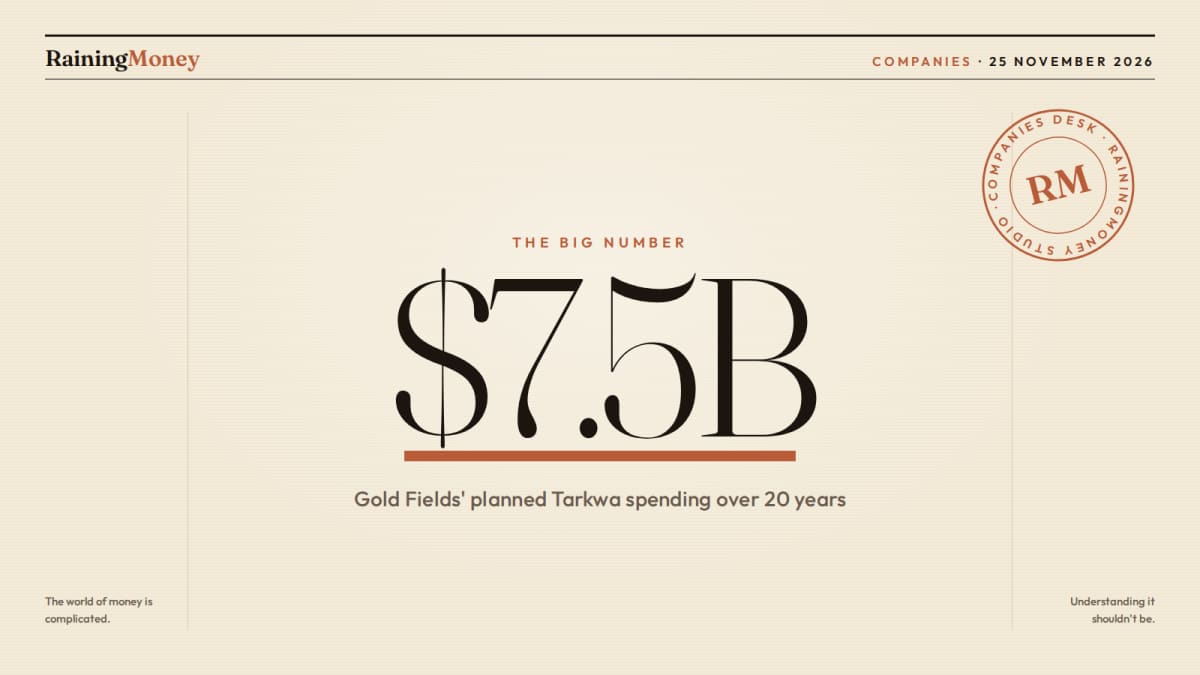
Gold Fields says it is ready to put about $7.5bn into Ghana's Tarkwa gold mine over the next 20 to 21 years, if it is allowed to stay. Elliot Twum, Senior Vice President and Managing Director of Gold Fields Ghana, set out the figure in a television interview on Monday, 23 November 2026. The company's leases on the mine run out in April 2027, and Ghana's government has not yet said whether it will renew them.
The pledge is the clearest public price tag the South African miner has put on its future in Ghana. It lands in the middle of a standoff that investors across Africa are watching, because Ghana has already taken one mine away from the same company.
What exactly did Gold Fields say?
Mr Twum said the $7.5bn would fund the next phase of operations at Tarkwa, which he put at 20 to 21 years. He said the company has spent more than $5bn at the mine over roughly three decades, and described mining as capital intensive. He also gave two figures meant to show how much of the mine's money stays in Ghana:
- $4.6bn spent through local and host-community suppliers in the last five years.
- 74% of every dollar the operation earns stays in the Ghanaian economy, by the company's count.
| Item | Figure |
|---|---|
| Planned investment, next phase | About $7.5bn over 20 to 21 years |
| Invested so far | More than $5bn over about 30 years |
| Local and host-community procurement, last five years | $4.6bn |
| Share of each dollar earned kept in Ghana | 74% |
| Lease expiry | April 2027 |
Spread evenly, $7.5bn over 20 years works out at about $375M a year (derived: $7.5bn divided by 20). That is a plan for the life of a mine, covering the steady cost of digging, processing and replacing equipment, rather than a single new project ready to start.
Why is the lease in doubt?
Ghana has broken with its old habit of renewing big mining leases almost automatically. In 2025 it refused to renew Gold Fields' lease at Damang, a smaller mine nearby, and took it over. In April 2026 Damang was handed to Engineers & Planners, a Ghanaian mining contractor. Officials said the tender was open only to wholly Ghanaian-owned firms. The company is owned by a brother of President John Mahama, which drew accusations of favouritism that Ghanaian authorities have denied.
Tarkwa is a much bigger prize. It has been Gold Fields' biggest mine, and Ghana is Africa's largest gold producer. Earlier this year the government said it was weighing whether to hand Tarkwa to local firms when the leases expire, while also studying an extension for Gold Fields. In October, Ghana's lands and natural resources minister said the country was assessing whether local companies were best placed to run large mines, while stressing that such mines need operators with access to capital.
The law may also change under the company. A draft mining law approved by Ghana's cabinet would cap lease renewals at 10 years. Current law allows a 30-year extension. A 20-year spending plan sits awkwardly with a 10-year lease.
What is driving the $7.5bn pledge?
RainingMoney's reading: the timing is the message. With about five months left on the leases, Gold Fields is making its case in public, in Ghana, in terms voters understand: long-term investment, local suppliers and money that stays at home. Gold Fields said in August that it would not simply "roll over" in its talks with the government, so the pledge also works as a reminder of what Ghana could lose if the mine changes hands.
The government's side of the argument is about who keeps the profit. Ghana wants more of the value of its gold to stay with Ghanaian owners, and the Damang decision showed it is willing to act. Its own minister's comments show the tension: local ownership is popular, but large mines cost large sums to run.
Why should a reader in Nigeria care?
Three reasons. First, this is a test of how African governments treat foreign investors when licences expire. Nigeria is trying to grow its own mining sector, and its solid mineral exports rose 83.4% to ₦249.70bn in the first half of 2026 from ₦136.17bn a year earlier. How Ghana handles Tarkwa will shape what mining investors expect from the region, Nigeria included.
Second, it shows the trade-off every resource country faces. Keeping a foreign operator can bring steady investment and tax. Handing a mine to local owners can keep more profit at home, but only if the new owner can raise the money to run it well.
Third, gold matters to West African money. Gold exports earn Ghana dollars, and those dollars support its currency and reserves. A smooth or a messy handover at its biggest gold mine would show up in those numbers over time.
What does this tell us, and what doesn't it?
It tells us Gold Fields wants to stay and is willing to commit money for two decades. It does not tell us what Ghana will decide. The company's figures for local spending and the share of revenue kept in Ghana are its own and have not been independently checked. It also does not tell us how the $7.5bn would be paid for, whether through earnings from the mine or new borrowing, or what happens to the plan if Ghana offers a shorter lease under the draft law.
What happens next?
The leases expire in April 2027. Before then, Ghana must choose between renewing for Gold Fields, possibly on new terms, and running a tender for local firms as it did at Damang. Watch for three signals: whether the draft mining law reaches Parliament, whether the government opens a Tarkwa tender, and whether Gold Fields offers Ghanaian investors a bigger stake as part of a deal.
Sources & Verification
- Sources: Bloomberg
- Editorial note: This explainer is an original RainingMoney adaptation of the report, RainingMoney has added explanatory context.

Founder and Editor-in-ChiefAbuja
Betini Udom
Founder and Editor-in-Chief of RainingMoney. Covers Nigerian, pan-African and global markets, finance and economic policy.
Author profile & archive →The Money Print
Market intelligence before the market opens.
Pan-African capital flows and the stories behind the numbers, on weekday mornings.