MarketsHigh
Naira Under Pressure as Dollar Inflows Slump to $807.6M
FX inflows fell 67% in a week to $807.6M, reserves slipped to $54.87B and the street premium widened. What it means for the naira, prices and your money.
By Betini Udom Published 6 min read Editorial Policy Report a correction
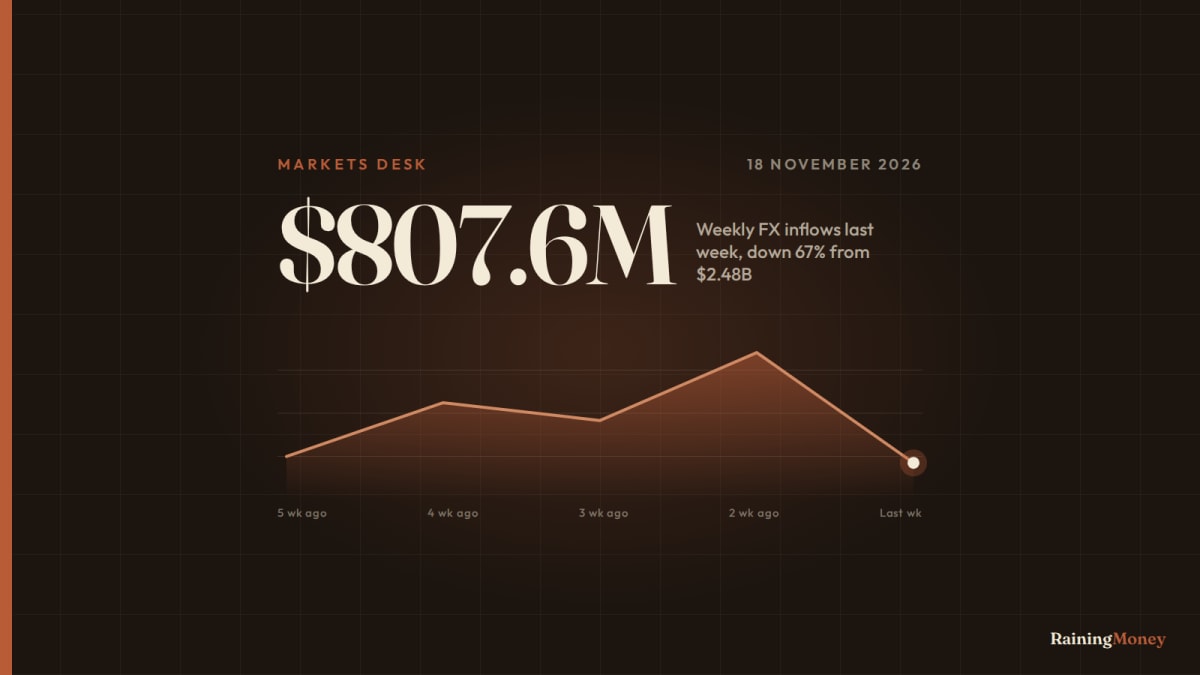
The naira is under fresh pressure as the dollars flowing into Nigeria's official currency market dry up. Total foreign exchange (FX) inflows fell to $807.6M last week, down from $2.48B the week before, according to figures from Coronation Merchant Bank. That is the lowest weekly total in at least five weeks. Over the same period the country's gross external reserves slipped to $54.87B, and the gap between the official exchange rate and the street rate widened.
On Monday, 16 November 2026, the naira closed at ₦1,357.19 per dollar in the official market, weaker by ₦3.22 from Friday. On Tuesday the street, or parallel, market quoted ₦1,445, up from ₦1,430 a day earlier. The central bank has so far kept the official rate steady by selling dollars itself. The question for households and businesses is how long that can last into the festive season and the run-up to the 2027 elections.
The Big Number: how far did dollar inflows fall?
Inflows dropped by about 67% in a single week (derived: $2.48B minus $807.6M is $1.67B, which is 67.4% of $2.48B). Weekly inflows over the past five weeks, from oldest to newest, were $904.6M, $1.72B, $1.45B, $2.48B and $807.6M.
| Source of dollars | Amount | Share of total |
|---|---|---|
| Exporters and importers | $246M | 30.5% |
| Central Bank of Nigeria | $235.1M | 29.1% |
| Foreign portfolio investors | $176.9M | 21.9% |
| Non-bank corporates | $110.8M | 13.7% |
| Other corporates | $25.3M | |
| Individuals | $11.4M | |
| Foreign direct investment | $2M | |
| Total | $807.6M |
Two lines in that table matter most. First, the Central Bank of Nigeria (CBN) supplied almost three in every ten dollars that came in. Second, foreign direct investment, the long-term money that builds factories and offices, was just $2M. Portfolio investors, who buy Nigerian bonds and shares and can sell and leave quickly, brought in far more.
What changed in the market this week?
Trading in the official market, the Nigerian Foreign Exchange Market (NFEM), thinned sharply. Turnover, the total value of dollars traded, fell 60.24% to $343.19M on Monday from $863.25M on Friday. The number of deals fell to 260 from 300. In the interbank market, where banks trade with each other, turnover dropped 85.29% to $68.66M from $466.97M.
The gap between the two exchange rates, called the premium, also grew. It stood at about ₦88 on Monday, or 6.48% of the official rate, up from about ₦80 (5.93%) the previous week. Over the week to Friday, 13 November, the naira lost 0.53% in the official market, closing at ₦1,353.97 from ₦1,346.79, and about 2.2% on the street, where it weakened to around ₦1,441 from ₦1,410.
| Date | Official (NFEM) | Street (parallel) |
|---|---|---|
| Friday, 6 November | ₦1,346.79 | ₦1,410 |
| Friday, 13 November | ₦1,353.97 | about ₦1,441 |
| Monday, 16 November | ₦1,357.19 | ₦1,430 |
| Tuesday, 17 November | not yet reported | ₦1,445 |
Why are the reserves falling?
External reserves are the stock of foreign money the CBN holds to pay for imports, service foreign debt and defend the naira. Gross reserves fell by $194.79M in a week, to $54.87B on 13 November from $55.06B on 6 November. They are now about $390M below their 27 October peak of $55.26B.
That is a small fall in percentage terms, about 0.71% from the peak. The reserves are still 26.02% higher than a year ago, when they stood at $43.54B. RainingMoney's reading: the direction matters more than the size. When the central bank sells more dollars into the market while fewer dollars arrive from exporters and investors, the reserves are what fill the gap.
What Caught Our Attention: who is buying dollars, and why now?
Bureau de change operators in Abuja say people and businesses have started buying dollars ahead of the festive season. Analysts also expect spending tied to the 2027 elections to add demand, including for imported election equipment for the Independent National Electoral Commission (INEC).
Operators add a third reason: many people still find it hard to get dollars from banks. Importers, small businesses and families paying school fees or hospital bills abroad turn to the street market when banks cannot meet their needs. Since February 2026, the CBN has allowed licensed bureaux de change to buy up to $150,000 a week from banks, but they must follow know-your-customer rules, return unused dollars within 24 hours and keep cash deals to no more than 25% of a transaction's value. Operators say some retail demand still sits outside the formal system.
In September, CBN Governor Olayemi Cardoso said the bank was ready to manage the liquidity pressures that elections bring.
Finance Speak → Human Speak: what does the "premium" mean for me?
Finance speak: "The parallel-market premium widened to 6.48%, indicating firm underlying FX demand."
Human speak: If you need $1,000 for school fees and cannot get it from your bank, you pay about ₦88,000 more on the street than the official rate implies (derived: ₦88 multiplied by 1,000). A week ago, the extra cost was nearer ₦80,000. The wider that gap, the more it signals that people want dollars the official market is not supplying.
What does this mean for prices and my money?
A weaker naira makes imported goods dearer: fuel, medicines, phones, car parts and many raw materials for local factories. Those costs reach shop shelves with a lag of weeks or months. Inflation slowed to 14.06% in October, and a stable naira has helped. A sustained slide would work against that.
For savers, the picture is mixed. People who hold dollars gain in naira terms when the currency weakens. People whose income and savings are in naira lose buying power on anything priced off the dollar. None of this is a reason to buy, sell or hold any currency; it explains the forces at work.
What isn't known yet?
- How many dollars the CBN is prepared to sell, and for how long, before the festive season ends.
- Whether last week's slump in inflows is a one-off or the start of a trend.
- How election spending will affect demand in the months before the 2027 polls.
- Whether the CBN's Monetary Policy Committee, which meets on 23 and 24 November, will weigh the naira's softness when it sets interest rates.
The Bottom Line: should I worry about the naira?
Coronation Merchant Bank expects the official rate to stay broadly stable in the near term, supported by central bank sales. It also warned that falling inflows, more CBN intervention, lower reserves and a wider street premium point to growing reliance on central bank supply and firm underlying demand for dollars. The naira is holding for now because the CBN is holding it. Watch the weekly inflow figures and the street premium: if inflows stay weak and the gap keeps widening, the pressure on the official rate will grow.
Sources & Verification
- Sources: BusinessDay
- Editorial note: This explainer is an original RainingMoney adaptation of the report, RainingMoney has added explanatory context.

Founder and Editor-in-ChiefAbuja
Betini Udom
Founder and Editor-in-Chief of RainingMoney. Covers Nigerian, pan-African and global markets, finance and economic policy.
Author profile & archive →The Money Print
Market intelligence before the market opens.
Pan-African capital flows and the stories behind the numbers, on weekday mornings.