CompaniesMedium
MTN Opens Talks to Buy Telkom as Telkom Shares Jump 15%
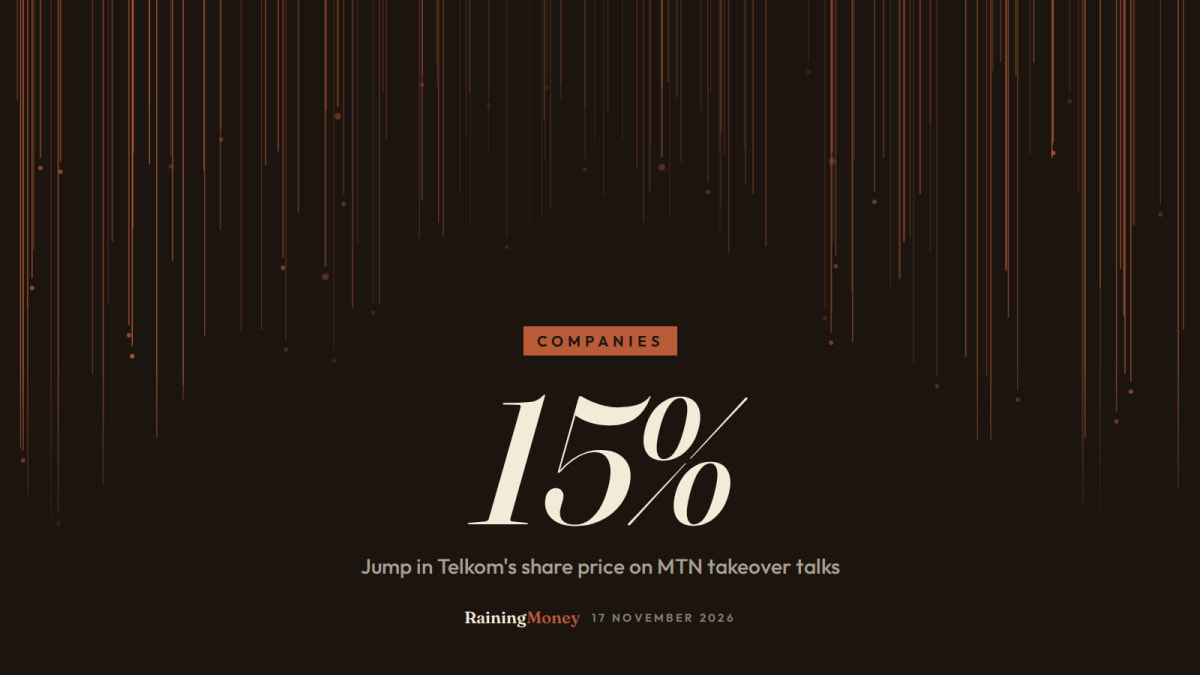
MTN Group and South Africa's Telkom confirmed early talks on a mainly cash offer for all of Telkom, sending its shares up 15% to a market value of R36.5bn.
By Betini Udom Published 6 min read Editorial Policy Report a correction
MTN Group, the South African parent of MTN Nigeria, is in talks to buy all of Telkom, one of its biggest rivals in South Africa. Both companies confirmed the discussions in separate statements to investors on Monday 16 November 2026. MTN said it is thinking of paying mainly in cash, with an option for Telkom shareholders to take MTN shares instead. No price and no timetable have been set, and both sides said there is no certainty a deal will happen.
Investors reacted fast. Telkom's shares jumped about 15% on Johannesburg's stock market on Monday, to about R71, lifting the company's market value to about R36.5bn. MTN's own shares fell about 2.3%.
What is a takeover, and what exactly is MTN proposing?
A takeover happens when one company buys enough of another company's shares to own and control it. Here MTN is talking about making an offer for all of Telkom's shares, so that Telkom would become part of the MTN group.
The companies said the payment, which dealmakers call the consideration, is currently planned to be in cash, with an alternative of MTN shares. In a cash offer, Telkom shareholders sell their shares and walk away with money. In a share offer, they swap their Telkom shares for new MTN shares, and so become part-owners of the bigger, combined company. A cash offer gives sellers a clean exit but means MTN must find a large sum of money. Paying partly in shares eases that burden, because MTN issues new shares instead of handing over cash.
How much is Telkom worth?
A company's market value, or market capitalisation, is its share price multiplied by the number of shares it has. It is a quick way to see what the stock market thinks the whole business is worth on a given day.
| Measure | Figure |
|---|---|
| Telkom close on Friday 13 November | R62 |
| Telkom price on Monday afternoon | R71.35, up 15.1% |
| Telkom intraday high | R73.30, up 18.2%, a 52-week high |
| Telkom market value | about R36.5bn, up about R4.8bn on the day |
| MTN price on Monday afternoon | R229.16, down 2.3% |
| MTN market value lost on the day | almost R10bn |
In dollar terms, one estimate puts the possible deal at about $2B. On Friday's close of R62, Telkom was worth about R31.7bn. Monday's rise suggests investors expect MTN to pay more than the old price, an extra known as a premium.
Telkom is also worth far more than when MTN last looked at it. In July 2022, when the first talks became public, Telkom was valued at about R17.1bn. Today's R36.5bn is a little more than twice that (derived: R36.5bn divided by R17.1bn is about 2.1 times).
Who owns Telkom, and can they say no?
The South African government owns 40.5% of Telkom, through the Department of Communications and Digital Technologies. The Government Employees Pension Fund (GEPF), the pension fund for state workers, owns another 11.1%. Together that is 51.6% of the company, more than half.
At a market value of R36.5bn, the government's stake is worth about R14.8bn (derived: 40.5% of R36.5bn), and the GEPF's about R4.1bn (derived: 11.1% of R36.5bn). Because the two control a majority, no deal can go through without them. Selling a state stake also needs political backing.
Ralph Mupita, MTN Group's chief executive, has argued that South Africa's mobile market should shrink to two or at most three big operators. He has named three conditions for a Telkom deal: openness from regulators, political support, and a commercial agreement with Telkom.
Why would regulators need to approve it?
When two big competitors join, there are fewer firms left to compete on price and service. That is why many countries make large mergers pass a competition review. South Africa's Competition Commission would look at how concentrated the market would become, what it means for customers and jobs, and the role of historically disadvantaged businesses. The Independent Communications Authority of South Africa (ICASA), the telecoms regulator, would look at radio spectrum, network competition and access for rivals. Shareholders would also have to vote on any offer.
Such reviews can be slow. The closest recent case, Vodacom's deal to take joint control of the fibre company behind Vumatel, was announced in November 2021, blocked by the Competition Tribunal in October 2024, cleared on appeal in July 2025 and completed in December 2025, more than four years later. A combined MTN and Telkom would leave MTN and Vodacom as the two dominant mobile players.
Why does MTN want Telkom, and why did it walk away before?
MTN and Telkom held talks once before. They became public in July 2022, and MTN walked away in October 2022 after the two sides failed to agree on exclusivity, the period during which a seller agrees not to talk to other bidders. Telkom's shares fell almost 25% at the time.
Telkom brings things MTN lacks at home. Its fibre arm, Openserve, is South Africa's second-largest home fibre provider, and MTN has no home fibre business of similar size there. MTN South Africa, by contrast, lost about 1.5 million prepaid customers in the first half of 2026, and its earnings before interest, tax, depreciation and amortisation (EBITDA, a common measure of operating profit) fell 7.6% to R8.5bn.
What could this mean for MTN Nigeria and its shareholders?
MTN Nigeria is listed on the Nigerian Exchange (NGX), and MTN Group controls it. Nigeria has been one of the group's strongest earners this year. In the first nine months of 2026, the Nigerian business grew its EBITDA by 32.8%, a major contributor to group earnings. In the first half, MTN Nigeria made a profit after tax of ₦707.5bn, up 70.6%, and declared an interim dividend of ₦26 a share, paid on 7 September. Part of every MTN Nigeria dividend flows up to the parent, because the group is the majority shareholder.
The Telkom talks also come while MTN is already spending heavily. In February 2026 it agreed to buy the roughly 75% of IHS, the tower company, that it did not already own, in an all-cash deal valuing IHS at about $6.2B. As a condition of approving that deal, Nigeria's Federal Competition and Consumer Protection Commission (FCCPC) requires MTN to sell up to 30% of the Nigerian part of IHS over time. In August the group also approved a share buyback of R6bn, about $375M, in which it buys back its own shares from the market.
RainingMoney's reading: a large cash offer for Telkom, on top of the IHS purchase, would raise the group's need for cash, and dividends from strong subsidiaries such as MTN Nigeria are one of the ways money reaches the parent. Neither company has said how a Telkom deal would be paid for, and nothing in the statements points to any change in MTN Nigeria's dividend policy. If the group offers MTN shares, existing MTN Group shareholders would own a slightly smaller slice of a bigger company. MTN Nigeria's own shares on the NGX are separate from MTN Group's shares in Johannesburg, so a share offer would not change the number of MTN Nigeria shares in issue.
None of this is advice to buy, sell or hold any share.
What isn't known yet?
Almost everything that matters for a final decision. There is no offer price, so nobody knows the size of the premium. There is no split between cash and shares, and no word on how MTN would raise the money. There is no timetable. The government and the GEPF have not said whether they would sell. And any agreement would still face the competition authorities and ICASA, a process that, on recent evidence, can take years.
Sources & Verification
- Sources: BusinessDay
- Editorial note: This explainer is an original RainingMoney adaptation of the report, RainingMoney has added explanatory context.

Founder and Editor-in-ChiefAbuja
Betini Udom
Founder and Editor-in-Chief of RainingMoney. Covers Nigerian, pan-African and global markets, finance and economic policy.
Author profile & archive →The Money Print
Market intelligence before the market opens.
Pan-African capital flows and the stories behind the numbers, on weekday mornings.