PoliticsMedium
Israel's Election Fraud Row: What Was Claimed, What Was Found
Israel's election panel found no fraud that affected the 27 October vote and the president accepted it. Netanyahu's bloc holds 53 of 120 seats. Full story.
By Betini Udom Published 6 min read Editorial Policy Report a correction
Israelis voted on Tuesday, 27 October 2026. By the next day, Prime Minister Benjamin Netanyahu's Likud party was publicly describing the election as stolen. The party accused Arab-led parties of bribery, intimidation and fraud, and said it was submitting hundreds of testimonies to the police, the Shin Bet security service and the Central Elections Committee.
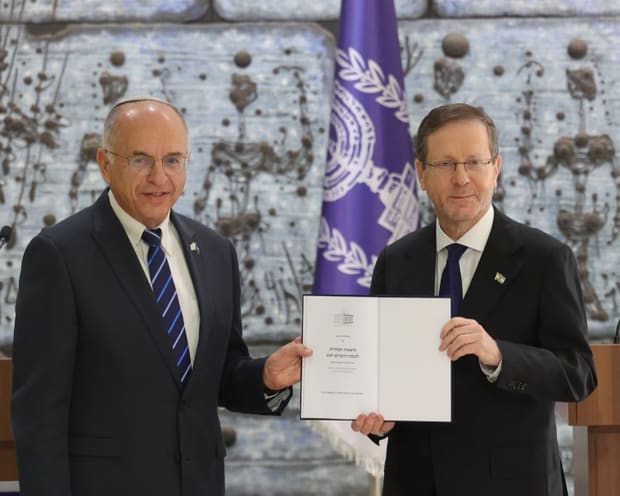
On Wednesday, 4 November, the committee reported that its review "found no evidence of irregularities that compromised the integrity of the election or affected its results." Its acting director general, Dean Livne, said each complaint was examined "individually and thoroughly." President Isaac Herzog then accepted the certified results as legally binding and said he would start consulting the parties on who should try to form a government.
In Simple Terms
Israel elects its 120-seat parliament, the Knesset, and a government needs 61 seats behind it. No bloc has that. The prime minister's side says the count was corrupted. The agency that runs the vote has checked the complaints it received and says the count is accurate. The president, whose job is to choose who tries to form a government next, has said he will work from the certified numbers.
The Money
There is no market or economic data in the dispute itself, and we have not seen reported figures on how Israeli markets or the shekel reacted. What can be said is that unresolved coalition arithmetic has consequences for policy: a government that cannot form cannot pass a budget, and a second election would extend that uncertainty into next year. Those are risks, not reported outcomes.
The Numbers
| Bloc | Seats | Gap to 61 |
|---|---|---|
| Netanyahu's bloc (Likud, far-right and ultra-Orthodox allies) | 53 | 8 short |
| Gadi Eisenkot's opposition bloc | 48 | 13 short |
| Arab-led parties | 19 | record, up from 10 |
The three figures add up to 120. Likud is the single largest party, but that does not by itself confer the right to govern. Eisenkot's bloc plus the Arab-led parties would total 67 on paper, which is why the Arab-led parties are central to every route to a majority and why the fraud allegations aimed at them carry such weight.
Follow the Money
In an election dispute the trail to follow is the evidence rather than cash, and this is where the two accounts diverge.
Likud's allegations. Likud said it had found envelopes containing cash and ballots, people voting under multiple identities, threats against polling station workers, prohibited mobilisation software, and mismatches between envelope and voter counts. It also pointed to possible foreign funding of vote-buying. The party has not made the supporting material public.
The authorities' responses. On 29 October Livne wrote to an opposition lawmaker that the vote was lawful and that he knew of no basis for claims of systematic violations. Israeli police were reported to have said they had no investigative or intelligence evidence of widespread fraud and saw fewer irregularities than at earlier elections. Police also announced arrests in a suspected vote-buying case, though the public detail is limited and its link to any party's claims has not been established in the reporting we reviewed.
The foreign-funding question. The committee's chairman, Justice Noam Sohlberg, asked the Shin Bet to examine suspected foreign-funded influence and report within a week. A committee spokesperson says that inquiry is continuing, with no findings released. This is the one strand where an answer has not yet been given.
The Bigger Picture
Political reactions. Gadi Eisenkot said the vote was free and fair and accused Netanyahu of trying to delegitimise the result. National Security Minister Itamar Ben-Gvir was reported to have called for the arrest of Arab party leaders over foreign-funding suspicions that have not been substantiated. Herzog called the situation sensitive, urged a full investigation, and cautioned against tarnishing Arab voters.
Institutions under pressure. What the episode shows is a full cycle: a public accusation by the governing party, a formal review by an independent body, a narrow security inquiry on a single question, and a head of state acting on certified results. Whatever one thinks of the underlying claims, the process produced a documented answer on the domestic complaints.
The community at the centre. The allegations name Arab-led parties as a group, which is why the president's appeal against tarnishing Arab voters matters. A record 19 seats means a large number of voters are affected by how the claims are characterised.
A caution on sourcing. Some details, such as police arrests and the number of reports of irregularities, appear in secondary summaries and are not consistent across the reports we read. We have included only what two or more accounts support, and flagged the rest as reported.
The Jargon
- Knesset: Israel's 120-seat parliament.
- Bloc: a group of parties that usually votes together and would form a coalition.
- Coalition: an alliance of parties that together hold at least 61 seats and can pass laws and a budget.
- Central Elections Committee: the body that runs Israeli elections, handles complaints and certifies the result.
- Shin Bet: Israel's domestic security service.
- Certification: the formal confirmation of the final result, after which it goes to the president.
What Happens Next
Known. Results are certified and accepted by the president. Herzog will consult each party that won seats and then choose the lawmaker he thinks most able to build a coalition. Coalition talks usually run for weeks. If no government forms, Israel holds another election early next year.
Possible. Netanyahu could be tasked and try to find eight more seats outside his bloc. Eisenkot could be tasked and try a coalition resting on Arab-led parties. The two big blocs could agree a shared government, which both have resisted so far. A court challenge to the results is possible in principle, but nothing in the reporting we reviewed shows one has been filed.
Unknown. What the Shin Bet inquiry will conclude; what was in the material Likud submitted; whom Herzog will task; whether Likud accepts the committee's findings, since it did not respond to requests for comment on them.
Rainingmoney's Take
This section is Rainingmoney's reading.
The domestic fraud question has been answered by the body best placed to answer it, and the answer is no. That does not end the political fight, and it should not be read as a verdict on every strand. The foreign-funding inquiry is still open, and Likud's evidence has not been seen outside the authorities.
For readers watching from elsewhere, the lasting lesson is about sequence. A claim made in the first hours after a vote is a position. A finding that comes after a review is a fact others can test. Israel now has the second kind on one part of the dispute and is waiting for it on another. The arithmetic, meanwhile, is unforgiving: 53, 48 and 19 do not make a government without someone changing their position.
Sources & Verification
- Source: Reports on the Central Elections Committee findings, the president's acceptance of certified results, and the final seat count, 27 October to 4 November-Gulf/Euro News
- Editorial note: This explainer is an original RainingMoney adaption of the report, RainingMoney has added explanatory context.

Founder and Editor-in-ChiefAbuja
Betini Udom
Founder and Editor-in-Chief of RainingMoney. Covers Nigerian, pan-African and global markets, finance and economic policy.
Author profile & archive →The Money Print
Market intelligence before the market opens.
Pan-African capital flows and the stories behind the numbers, on weekday mornings.