PoliticsHigh
Brazil's election, America's minerals problem, and the argument over who owns the future
Lula's campaign accuses Trump of meddling in Brazil's 4 October election to capture its resources. The US denies it. What the facts show.
By Betini Udom Published 7 min read Editorial Policy Report a correction
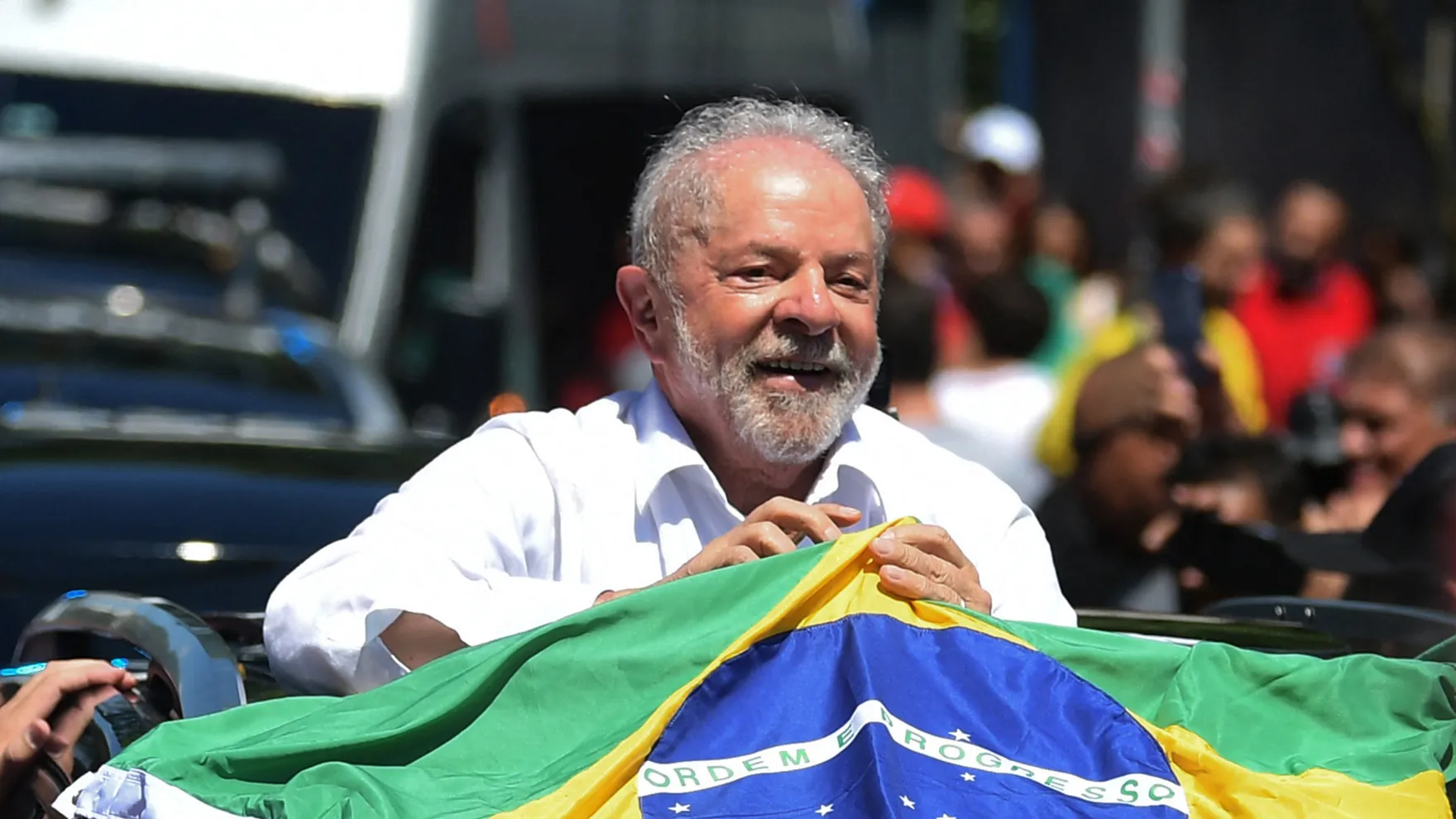
On Thursday night, the re-election campaign of Brazilian President Luiz Inácio Lula da Silva published a one-minute advert on social media accusing US President Donald Trump of trying to take control of Brazil's natural resources by interfering in the country's presidential election. The advert was scheduled to air on Brazilian television on Friday.
"Flávio Bolsonaro is Trump's candidate and what Trump wants is to colonise Brazil, take our riches, steal our future and leave us in the dust," the narrator says. Writing separately on X, Lula accused his opponent of wanting to "hand our natural resources over to the United States," adding: "If it's up to him, Brazil will become a colony again."
The US State Department has rejected the accusation. In a statement last month it said that "any insinuation of a 'ploy' to undermine a democratic nation's election is a baseless lie." It had not responded to a further request for comment at the time of reporting.
Brazil votes on 4 October, with a runoff on 25 October if no candidate exceeds half the vote.
In Simple Terms
An incumbent president, eight days from a vote he might lose, is telling voters that a foreign government is trying to decide their election so it can get at their minerals. The foreign government says that is false.
Both of those positions are exactly what you would expect each side to say, which is why the claim itself settles nothing. What can be examined is the surrounding record: a real tariff, real diplomatic pressure, a real intelligence warning, real objections from American lawmakers, and a real and very large quantity of minerals sitting under Brazilian soil that the United States would like access to.
The Money
Three financial facts frame this story.
The tariff. On 22 July, the US imposed 25% duties on Brazilian goods under Section 301, a US trade law allowing action against practices Washington deems unfair. The stated grounds included digital trade and deforestation. The investigation ran a year, with more than 30 meetings failing to resolve it.
The exemptions. The tariff did not cover everything. Sugar, apparel, paper and steel were taxed. Beef, coffee, aircraft parts, certain oil and gas products — and rare earth materials — were exempted.
The trade balance. The US ran a $14.4bn goods surplus with Brazil in 2025, up from $7.7bn in 2024. That is $6.7bn more in a single year, an increase of about 87%. (Derived.) Brazil buys considerably more from the US than it sells there, which is unusual for a tariff target.
Follow the Money
Who stands where. Beyond the stated facts, the assessment below is Rainingmoney's reading.
China currently holds the position both Washington and Brasília are responding to: 69% of world production and the dominant share of processing capacity. Any Brazilian refining capacity that gets built erodes that, whoever funds it.
The United States wants supply that does not route through Beijing. It produced 51,000 tonnes in 2025 against China's 270,000, and its own reserves, at 1.9m tonnes, are a sixth of Brazil's.
Brazil owns the resource and captures almost none of its value. Extraction pays a fraction of what separation and refining pay, and Brazil does the extraction.
Brazilian voters are being asked to treat this as the central question of the election, by a campaign that benefits from them doing so.
Other resource-holding states — including Nigeria, which has its own lithium, tantalum and rare earth deposits and its own local-processing policy — get a public demonstration of how this negotiation goes.
The Bigger Picture
The regional context is not abstract. In January, the United States intervened militarily in Venezuela and captured Nicolás Maduro. That happened nine months ago, in the same hemisphere, and it is why arguments about sovereignty in Latin America currently carry a harder edge than they would have two years ago.
It also explains something otherwise puzzling about this story: the alarm is not confined to Lula's side. Renan Santos, a right-wing candidate in the same election, said this week he did not want Brazil to become a US vassal state, claimed that "they want to interfere in Brazil's elections to secure satisfactory contracts involving rare earths," and referenced the Venezuela operation directly: "I don't want to see Latin America become an American protectorate."
When a candidate competing against Lula makes substantially the same resource argument as Lula, the argument is no longer purely a campaign tactic.
There is a further detail worth stating on its own. This connection is Rainingmoney's reading, and no source asserts it: the July tariff taxed ordinary Brazilian exports and specifically exempted rare earths. Tariffs discourage purchases. Exempting the one category Washington has publicly identified as strategically scarce is consistent with wanting more of it, not less. That is an observation about the structure of a trade measure, not evidence of a plan.
The Jargon
Rare earths — a group of 17 metals used in electric motors, wind turbines, phones, and guided weapons. Not geologically rare; genuinely hard and dirty to separate into usable form, which is why processing, not mining, is the bottleneck.
Section 301 — a US trade law letting Washington investigate another country's trade practices and impose tariffs if it concludes they are unfair.
Tariff exemption — a carve-out sparing specific goods from a tariff that applies to others.
Runoff — a second round held between the top two candidates when nobody wins an outright majority in the first.
Value addition — processing a raw material domestically instead of exporting it raw, so the country keeps more of what the finished product is worth.
Vassal state / protectorate — a country that is formally independent but whose major decisions are effectively controlled from outside.
What Happens Next
Known. The first round is on 4 October and a runoff, if needed, on 25 October. Democratic lawmakers have asked Secretary of State Marco Rubio to commit to respecting Brazil's electoral process and requested a reply by 1 October. Lula's Workers' Party says it is organising nationwide events for Sunday; communications secretary Éden Valadares said the party had been instructed to "mobilise Brazilian society" and "react in the streets."
Possible. On polling this close, a runoff is the likely outcome, which would extend the dispute another three weeks. Whoever wins will face the same structural choice about who finances Brazilian refining capacity.
Unknown. Whether US conduct has in fact been intended to influence the result — the central contested claim, which no publicly available evidence settles. Reports of a confidential Brazilian intelligence document warning of a "critical level" of interference risk, and of links between the Bolsonaro campaign and Rockbridge, a donor network co-founded by Vice-President JD Vance, remain reported rather than independently confirmed here.
Rainingmoney's Take
Analysis, not reporting.
Readers should be careful with this story in both directions. An accusation made in a campaign advert eight days before a close election is not evidence, and Rainingmoney is not in a position to say what American officials intend. Equally, a denial from a State Department press statement is not evidence either.
What is solid is the commercial structure underneath, and it is the part that will still matter after the votes are counted. Brazil holds roughly a quarter of China's rare earth reserves and produces roughly one one-hundred-and-thirty-fifth of China's output. That gap is worth a great deal of money to whoever closes it. It will be closed by whoever builds the processing plants, on whatever terms are agreed when they are built.
An election is a poor mechanism for settling an industrial policy question of that size, and both campaigns now have an incentive to keep it loud rather than resolve it. Our reading is that the terms of Brazilian mineral processing — who finances it, who owns the output, how much value stays in the country — will be negotiated after 25 October regardless of who wins, and that those contracts, not the advert, are the thing to watch.
Sources & Verification
- Reporting by Tom Phillips and Tiago Rogero for The Guardian. Tariff detail from Al Jazeera's coverage of the July Section 301 action; reserve and production figures from the USGS 2026 Mineral Commodity Summary; polling from Quaest and BTG Pactual/Nexus as reported by Al Jazeera.
The Money Print
Market intelligence before the market opens.
Pan-African capital flows and the stories behind the numbers, on weekday mornings.