

AfricaLow
US ends duty-free trade access for South Africa and Rwanda from 2027: what AGOA is and who pays
From 1 January 2027, South African and Rwandan exporters lose duty-free entry to the US under AGOA. Here is what the programme is, how tariffs work, and what is still unknown.
By Betini Udom Published 7 min read Editorial Policy Report a correction
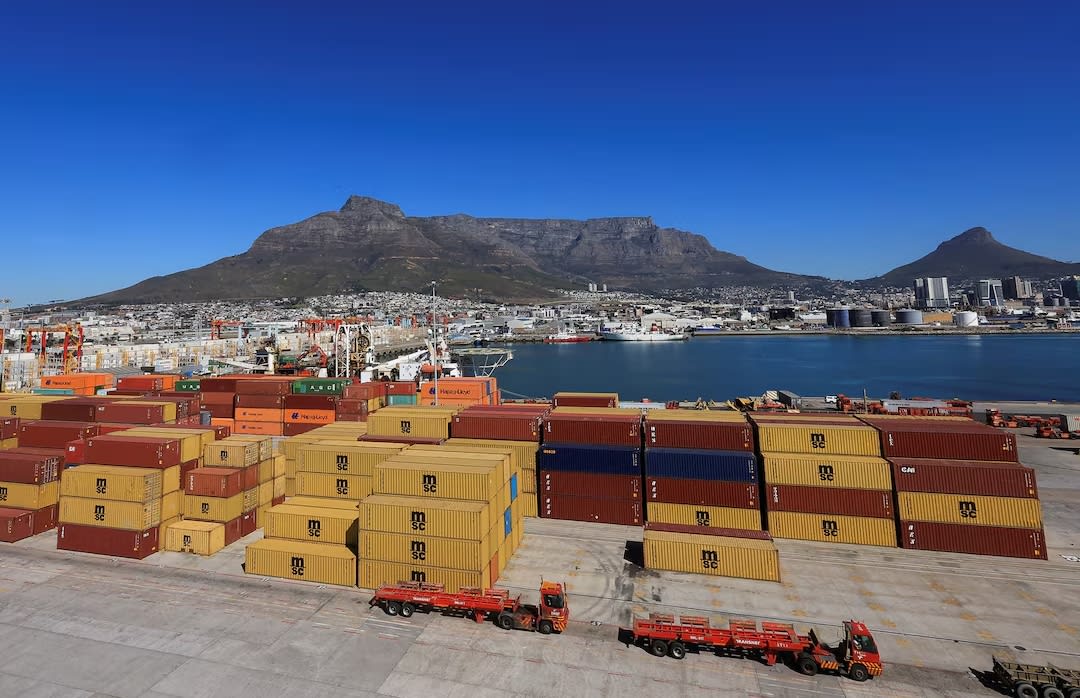
The United States has decided to end duty-free export access for South Africa and Rwanda under a trade programme called AGOA. The change takes effect on 1 January 2027. Until then, the existing arrangements stay in place.
This guide explains what AGOA is, how losing it can affect businesses and workers, and what nobody has confirmed yet. It is built from secondary reports, because we could not find the US government's own notice. Where something is unconfirmed, we say so.
What has the US decided?
The US will end AGOA benefits for two countries, South Africa and Rwanda, from 1 January 2027. One report says an annual review found both countries out of compliance with the programme's eligibility rules.
That report says US Trade Representative Jamieson Greer pointed to barriers to American trade and investment, and to threats to US national security and foreign policy interests. The US Trade Representative is the American government's top trade negotiator.
Some headlines say the US has "kicked out" the two countries. The reports describe something more specific: a scheduled end of benefits that starts in 2027. The two countries keep their access until then, as far as the reports show.
What is AGOA?
AGOA stands for the African Growth and Opportunity Act. It is a US trade programme. It lets goods from eligible African countries enter the American market without paying import tax, known as a tariff or duty.
A tariff is a tax charged when goods cross a border. If a US importer buys a crate of oranges from a farm abroad, the US government can charge a percentage of the crate's value as tax. Someone has to pay that tax. It may be the importer, the exporter (who may cut the price to keep the sale), the shopper, or a mix of all three.
Under AGOA, many goods from qualifying countries skip that tax. That makes them cheaper to sell in the US than similar goods from countries without the benefit. It gives African exporters an edge.
A country has to meet eligibility rules to stay in the programme, and the US reviews this each year. That is the annual review mentioned in the reports.
Why were South Africa and Rwanda singled out?
The reports give different reasons for each country. One report says Rwanda was faulted on human rights, political pluralism, the rule of law and workers' rights. It says South Africa was faulted on corruption.
The same report says Rwanda's exclusion follows US Treasury sanctions on its defence ministry. It links those sanctions to alleged support for M23 rebels in eastern Congo. We have not confirmed that this is part of the AGOA decision. Treat it as unconfirmed. We also have not found Rwanda's response.
We have not seen the US government's own notice, so we cannot quote its wording or list its reasons in full.
How much trade is at stake?
South Africa is the largest beneficiary of AGOA. One report says it shipped about $1.7 billion of auto parts, citrus and wine to the US "last year". The report does not say which year.
That figure has limits. It does not say how much of the $1.7bn actually entered duty-free under AGOA. Some goods may have been sold without using the programme at all. So the figure shows how big the trade is. It does not show how much money South Africa stands to lose.
We did not find Rwanda's export figures, so we cannot say how large its exposure is.
South Africa's citrus industry has warned of a serious blow. Citrus is a fruit business with a short selling window. Fruit has to be picked, packed, shipped and sold while it is fresh. That leaves farmers and exporters with little room to wait for a better deal.
How does losing duty-free access hit an exporter?
Think of a simple example. Suppose a US buyer can choose between two crates of oranges at the same price. One crate carries a tax at the border and the other does not. The buyer will usually pick the crate without the tax.
Once AGOA benefits end, South African and Rwandan goods will face the standard US tariff where one applies. We do not have the rates for each product in our notes, so we cannot say how large the new taxes will be.
An exporter in that position has three broad choices:
- Accept a lower profit. The exporter cuts its price so the US buyer still finds the deal attractive.
- Pass the tax on. The US buyer pays more, and may buy less.
- Look elsewhere. The exporter finds buyers in other countries.
South Africa's trade ministry said it would support affected exporters and look for new markets. We do not have details of what that support will be.
What could this mean for prices?
The daily brief that flagged this story said the change affects the prices of goods these countries sell. We found no figure to back that up, so we cannot say by how much, or in which direction.
RainingMoney's reading: in the US, a new tariff can push up shelf prices for the affected goods, if importers pass the cost on. In South Africa and Rwanda, the effect could go the other way. If exporters cannot sell as much abroad, more of their goods may stay at home, which can push local prices down for those goods. These are general effects of tariffs and are not confirmed for this case. The real result depends on tariff rates, on how much buyers switch to other suppliers, and on how many months the change takes to arrive.
Who else feels it besides exporters?
Exporters are not the only people involved. A business that sells less abroad may cut hours or jobs. Farms, packing houses, transport firms and ports all depend on export volumes.
Exports also bring in foreign currency, mostly dollars. A country that earns fewer dollars can see pressure on its currency. This is a general link, and we have no evidence on how much it will matter here. We did not find any figures on job losses or currency effects.
Why should a Nigerian reader care?
Nigeria is not part of this decision, and our notes contain nothing about changes to its own AGOA status. But the story shows how fragile a trade perk can be. Access to a large market can depend on political decisions, and on annual reviews, rather than on a fixed contract.
For Nigerian businesses that export goods such as farm products, the lesson is general. Exporters that rely heavily on one buyer market carry more risk if the rules change. We make no claim here about any specific Nigerian company.
There is also a second angle. South African and Rwandan goods that lose the US market may be offered elsewhere, including in African markets. We have no evidence yet that this will happen, and we cannot say how it would affect prices in Nigeria.
What is still not known?
- The primary document. We have not found the US Trade Representative's notice, a White House proclamation or a Federal Register entry.
- The announcement date. The exact date is not confirmed.
- The size of the loss. The $1.7bn figure has no stated year, and it does not say how much used AGOA benefits.
- The Rwanda link. The tie between the Treasury sanctions and the AGOA decision is unconfirmed.
- Rwanda's response. We have not found its statement or its export figures.
- Price effects. No figures have been published in the material we have.
- Whether anything changes before 2027. Our notes say nothing about appeals, talks or reversals.
What happens next?
The benefits are due to end on 1 January 2027. Until then, exporters in both countries can plan. Some will look for new buyers. Others may press for the decision to be reconsidered. We have no information on either.
South Africa's trade ministry has said it will back affected exporters and search for new markets. The details, including the timing and the amounts, have not been given in the material we have.
We will update this explainer when the US government's notice and the two governments' statements can be checked.
Sources & Verification
- Source: DailyMaverick
- Editorial note: This explainer is an original RainingMoney adaptation of the report, RainingMoney has added explanatory context.

Founder and Editor-in-ChiefAbuja
Betini Udom
Founder and Editor-in-Chief of RainingMoney. Covers Nigerian, pan-African and global markets, finance and economic policy.
Author profile & archive →The Money Print
Market intelligence before the market opens.
Pan-African capital flows and the stories behind the numbers, on weekday mornings.