
TechnologyMedium
Google's Data Centre in Space Is Switched On. What Is It For?
Google's first orbital AI data centre test is working: four chips, 1kW of solar power and bursts of computing. Here is why Google wants servers in space.
By Betini Udom Published 4 min read Editorial Policy Report a correction

Google has confirmed that the first satellite from Project Suncatcher, its experiment in building data centres in orbit, is online and talking to the ground. After about three weeks of checking its systems, the spacecraft is operating normally, according to a company spokesperson. Engineers have already put an AI model on board to work. Their first request was a haiku about being in space, and they followed it with space-themed limericks.
The poetry makes a good headline. It is not the point. The point is whether computing can work in orbit at a cost that makes sense, and today nobody can say that it can.
What was actually launched?
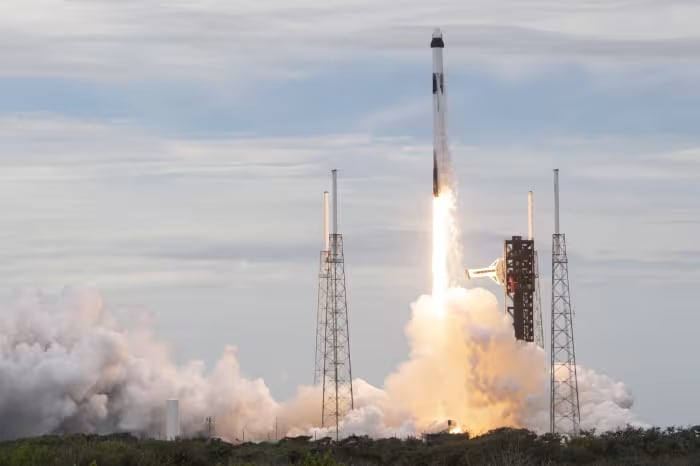
The prototype is roughly the size of a refrigerator. Google built it with Planet Labs, a satellite company, and it rode into low Earth orbit in early October on a SpaceX Falcon 9 alongside more than 100 other spacecraft. Launch-day reports say it carries four of Google's Tensor Processing Units, or TPUs, the chips the company designs for AI work. A later account describes a single chip running at a time, so the exact count is worth checking before you quote it.
Its solar panels produce about one kilowatt of electricity. That is less than a typical electric kettle draws. A large AI data centre on the ground can draw tens or hundreds of megawatts, many thousands of times more.
Why would anyone put a data centre in space?
Because AI is hungry for electricity, and electricity on the ground is getting harder to get. Building a data centre means finding land, a grid connection, cooling water and local approval. Each of those is now a fight in many places.
In space, Google argues, the sun shines almost constantly if the satellite sits in the right orbit, and panels there can produce up to eight times more power than similar panels on Earth. There is no weather and no neighbour to object. In the long run the company imagines clusters of satellites, each carrying dozens of TPUs, linked to each other and to Earth by lasers.
What is the catch?
Several, and the project's own lead is open about them.
- Heat. Space is cold but it is also a vacuum, so heat cannot be blown away by fans. The satellite relies on heat pipes and radiators, and its chips can only run in bursts of roughly 15 to 20 minutes before they have to stop and cool.
- Radiation. Cosmic rays and solar storms can flip bits in a chip's memory and quietly corrupt results. Google tested its chips in a proton beam on the ground and says they handled more radiation than a five-year mission would deliver. Ground tests suggest AI answering questions is only mildly affected, while AI training is harder to protect.
- Launch. Rockets shake. Equipment faces forces of about ten times gravity for the roughly ten minutes of the climb.
- Cost. This is the big one. Travis Beals, who leads the project, has described the satellite as a minimal test and said he does not expect orbital computing to be cheaper than ground computing within five years.
What happens next?
The test campaign continues, looking at how the chips cope with temperature swings and radiation. Google's goal is to keep the mission running for a year. In 2027 it plans to launch two more satellites with better chips, more power and laser links between them, because a real data centre in orbit would need satellites that share work.
What to watch
This section is Rainingmoney's reading.
- Launch cost. The idea only makes economic sense if rockets become far cheaper to fly, which depends on fully reusable vehicles such as SpaceX's Starship. Alphabet is an investor in SpaceX, so Google is betting on both ends.
- Rivals. Starcloud, SpaceX and other firms are chasing the same idea, and they are making different design choices, especially on how satellites link to each other.
- The 2027 satellites. Laser links and stronger power are the first signs of whether this is a lab curiosity or a product.
Why a Nigerian reader might care
Power is the central problem for data centres in Nigeria and across Africa too. Operators here pay a great deal for reliable electricity, and the cost of running AI is a key reason that local computing is expensive. Orbital data centres will not help in any way that matters this decade. What the project does show is that the world's largest AI spenders see energy, not chips, as the thing most likely to limit them. That is a useful signal for anyone planning infrastructure, building a tech business, or investing in the sector.
What we do not know
Google has not published a cost, a target launch price or the size of its planned constellation. The company calls this a long-term bet aimed at the 2030s. Until it publishes numbers, a data centre in orbit is a research project, not a business.
Sources & Verification
- Source: TechCrunch
- Added Context: Launch details, the number of chips, the power and cooling limits, the 2027 follow-up plan, and Google's radiation-testing claims from the earlier research programme.
- Editorial note: This explainer is an original RainingMoney adaptation of the report, RainingMoney has added explanatory context.

Founder and Editor-in-ChiefAbuja
Betini Udom
Founder and Editor-in-Chief of RainingMoney. Covers Nigerian, pan-African and global markets, finance and economic policy.
Author profile & archive →The Money Print
Market intelligence before the market opens.
Pan-African capital flows and the stories behind the numbers, on weekday mornings.