CompaniesHigh
Dangote IPO: SEC Holds Allotment to Shield Small Investors
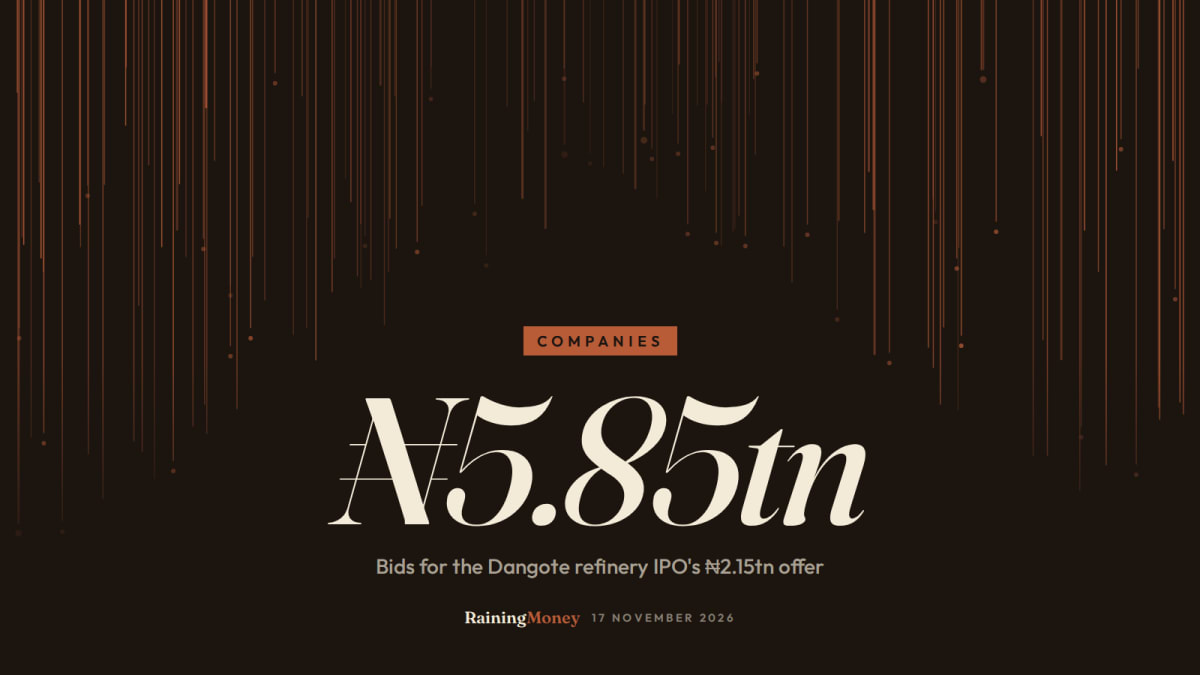
Nigeria's SEC is holding back the Dangote refinery share allotment until it is sure small investors were treated fairly, after ₦5.85tn in bids for ₦2.15tn.
By Betini Udom Published 7 min read Editorial Policy Report a correction
Nigeria's Securities and Exchange Commission (SEC) has not yet signed off on how shares in the Dangote Petroleum Refinery's initial public offering (IPO) will be shared out. As of 17 November 2026, the regulator said it would hold its approval until it was satisfied that small investors had not been pushed aside by big ones. Approval had been expected on 17 November, and no announcement had been made by the time of writing.
The offer drew bids worth about ₦5.85tn for 11.15 billion shares. Only 4.1 billion shares were on sale, at ₦525 each, to raise about ₦2.15tn, or roughly $1.6B. People familiar with the matter say retail investors who applied will receive every share they asked for. That has not been confirmed by the company or the SEC.
The Big Number: how much money chased the shares?
About ₦5.85tn, or a little over $4B, was offered for shares worth about ₦2.15tn. Put simply, for every share on sale, investors asked for about 2.7 (derived: 11.15 billion shares bid ÷ 4.1 billion offered = 2.72). Africa's largest share sale was oversubscribed nearly three times over, which means far more people and institutions wanted shares than there were shares to give.
| Measure | Figure |
|---|---|
| Shares on offer (base) | 4.1 billion |
| Price per share | ₦525 |
| Amount sought | ₦2.15tn (about $1.6B) |
| Shares if the 30% top-up is used | about 5.33 billion |
| Shares applied for | 11.15 billion |
| Value of bids | ₦5.85tn (about $4.1B) |
| Applicants | about 3.7 million |
| Investor target | 10 million |
| Minimum application | 10 shares, ₦5,250 |
The company has SEC permission to absorb up to 30% more demand on top of the base offer, which would raise the number of shares it can sell to about 5.33 billion. Even then, demand would still be about twice the shares available (derived: 11.15 ÷ 5.33 = 2.09). At ₦525 a share, 5.33 billion shares would bring in about ₦2.8tn (derived: 5.33 billion × ₦525).
What changed this week?
The offer opened on 14 September and closed on 27 October, after being extended from 13 October. Since then, the company and its issuing house, the investment bank that manages the sale, have worked out who gets what and sent their recommendations to the SEC.
On 16 November, people familiar with the deal said retail subscribers would get their full allocations. A day later, an SEC official said the commission was still studying the recommendations, and that its main concern was whether minority shareholders had been treated fairly. Once it is satisfied, it will approve the allotment, and trading should begin no more than ten days after that.
That ten-day window matters. The offer document had set trading to start 15 business days after allotment, which pointed to around 8 December. If the SEC approves this week and trading follows within ten days, shares could start changing hands around 27 November, up to 11 days earlier than the original plan.
How does the company decide who gets shares?
The rules were set out before the offer opened. The company will fix a number of shares called the full-allotment threshold. Every valid application at or below that number gets everything it asked for. The value of the threshold has not been published.
Shares left after those full allotments go to the larger applications, under a formula called the basis of allotment, which the SEC must approve. Larger applications may be scaled back, meaning they receive only part of what they asked for. The formula may also take into account the need for a broad base of shareholders and enough shares in circulation for trading after listing.
RainingMoney's reading: if retail investors do receive their full requests, the threshold has been set high enough to cover the typical small application, and the cut falls on the large institutional bids. The SEC's pause suggests it wants to see the numbers that prove this before it signs.
What caught our attention?
Two figures sit side by side in this offer, and they tell different stories.
The first is breadth. About 3.7 million individual investors took part, the SEC official said, adding that he had not expected so many. Before this offer, the number of individual investors was under 300,000, so the count rose more than twelvefold. Applications came from all 54 African countries, and the founder, Aliko Dangote, has said from 120 countries in all.
The second is concentration. Three subscribers alone accounted for about 46.72% of the shares applied for, worth about ₦2.73tn. That leaves about ₦3.12tn spread across everyone else (derived: ₦5.85tn minus ₦2.73tn). One of the large commitments is known: the Pan-African Refinery Investment SPV agreed to take up to $400M, about 25.34% of the IPO, subject to allotment. Pension funds in Nigeria and South Africa also applied.
Dividing the ₦5.85tn by 3.7 million applicants gives about ₦1.6m each (derived). That average is pulled up sharply by the big bids. A typical retail application was far smaller; the minimum was just ₦5,250.
Why did the offer miss the 10 million investor goal?
Mr Dangote set a target of 10 million investors before the offer opened, to spread ownership beyond large institutions and wealthy individuals. About 3.7 million is roughly 37% of that goal (derived: 3.7 ÷ 10). Speaking at a business conference in Lagos, he said the target was missed because time was short and many people did not know how to apply. He also said demand had still been very strong.
Finance Speak → Human Speak: what do the terms mean?
- IPO (initial public offering): the first time a company sells its shares to the public, so that anyone can own a piece of it.
- Oversubscribed: more shares were asked for than were on sale.
- Allotment: the final decision on how many shares each applicant actually receives.
- Full-allotment threshold: a cut-off. Ask for that many shares or fewer, and you get them all.
- Scaled back: a large application that receives only part of what it asked for.
- Refund: money paid for shares you did not get, which is returned to you.
- Listing: when the shares start trading on the Nigerian Exchange (NGX), so they can be bought and sold every day.
What does this mean for my money?
If you applied and your request was small, the reports point to you receiving all the shares you paid for. Your shares will be credited to your stockbroking account at the Central Securities Clearing System (CSCS). If you applied without a CSCS account, your shares are held under a temporary registrar number until you supply your account details.
If you made a large application and are scaled back, the money for shares you did not get should come back to you, with any interest earned, within five business days of the allotment date, according to the offer terms.
Once listing begins, the price will be set by buyers and sellers on the exchange. It can rise above or fall below ₦525. This article does not tell you whether to buy, sell or hold.
For context, at ₦525 the whole company is valued at roughly $50B, and the base offer is only about 3.3% of the enlarged company. Mr Dangote held about 87.27% before the offer. Public shareholders will own a small slice and will have little say in how the business is run.
What isn't known yet?
- Whether and when the SEC approves the allotment.
- The size of the full-allotment threshold, and how far large bids will be cut.
- Whether the company uses all of its 30% top-up.
- The final count of investors. Figures so far range from about 3.7 million to nearly 3.8 million.
- The exact first day of trading.
The Bottom Line: what happens next?
The Dangote refinery offer has already done what few Nigerian share sales manage: it drew millions of first-time investors and far more money than it needed. The hard part now is fairness. The SEC has said it will not sign off until it is sure small investors were not crowded out by the handful of big bidders who supplied nearly half the demand. Once it approves, shares should be credited, refunds paid, and trading on the NGX could start within ten days.
Sources & Verification
- Source: BusinessDay
- Editorial note: This explainer is an original RainingMoney adaptation of the report, RainingMoney has added explanatory context.

Founder and Editor-in-ChiefAbuja
Betini Udom
Founder and Editor-in-Chief of RainingMoney. Covers Nigerian, pan-African and global markets, finance and economic policy.
Author profile & archive →The Money Print
Market intelligence before the market opens.
Pan-African capital flows and the stories behind the numbers, on weekday mornings.