FinanceMedium
Bank of Industry Pledges 10% of Lending to Green Projects
The Bank of Industry says at least 10% of its lending will go to green projects. What it promised, where the money comes from and what it means for borrowers.
By Chiamaka Prudence Published 6 min read Editorial Policy Report a correction
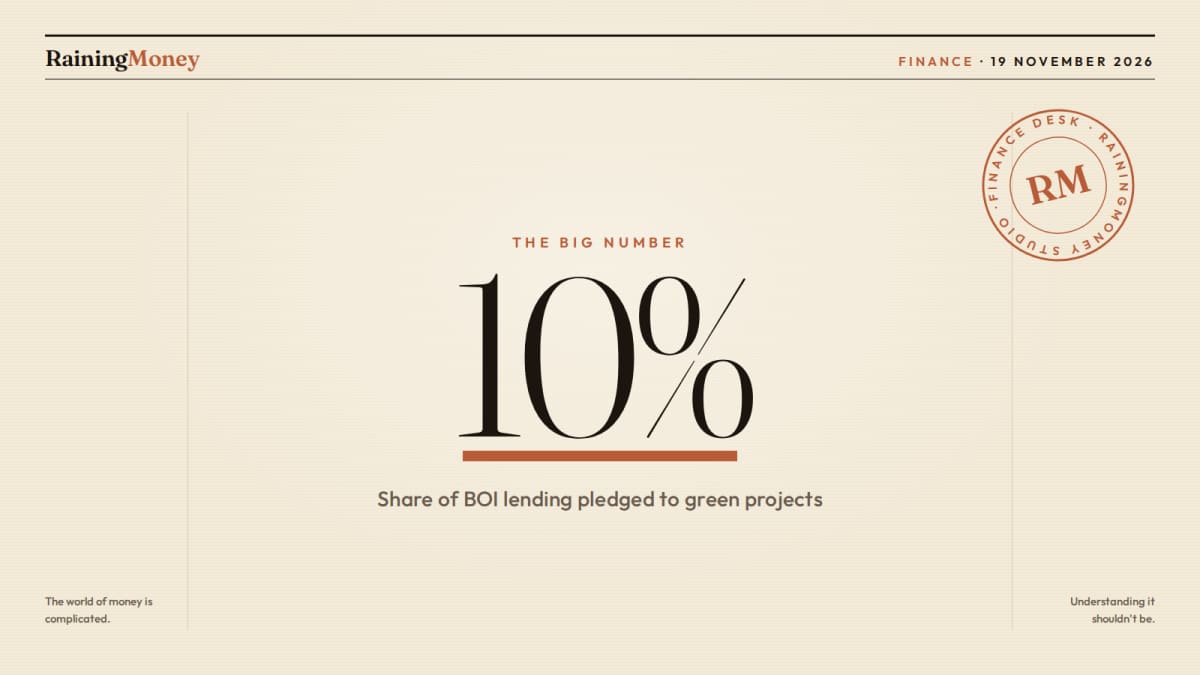
The Bank of Industry (BOI) says at least 10% of its financing will go to climate and sustainability projects under its 2025 to 2027 strategy. Its managing director, Olasupo Olusi, announced the commitment on Wednesday, 18 November 2026, at the bank's second Sustainability Conference in Lagos. The money is meant for three areas: renewable energy, climate-smart agriculture and manufacturing that uses less energy.
The pledge is not brand new. The same 10% figure has appeared in the bank's targets since at least July 2026, when it presented its first Annual Development Impact Report. What the conference added is a public restatement, a list of partners and a push to get businesses to treat cleaner operations as a way to cut costs.
What is the Bank of Industry?
The BOI describes itself as Nigeria's leading development finance institution. That means it exists to lend for long periods, often at lower rates than ordinary banks, to activities the country wants more of. It was set up in 1959 and restructured in 2001. It lends mainly to manufacturing, agriculture and services, and offers business advice alongside its loans.
It is a big lender. The bank disbursed (paid out) a record amount in 2025, though the figure differs between reports: ₦644.9bn in some accounts of its results and ₦625bn in others. Both versions say the total was 26% higher than in 2024 and reached 12,501 businesses.
What exactly has the bank promised?
The bank says at least a tenth of its lending will go to green projects. The wording of that promise has varied from one occasion to the next, and the difference matters for how it will be measured:
- At the November conference it was described as at least 10% of the bank's financing interventions.
- In October, when the bank set out its 2027 goals, it was described as at least 10% of its loan portfolio going to climate-related investments.
- In the July impact report, it was listed as 10% of total funding going to green projects, as one of the bank's 2026 targets.
- Another account of the October briefing puts it as 10% of portfolio disbursements, covering clean energy, climate-resilient businesses and the circular economy (businesses built around reusing and recycling materials).
A loan portfolio is everything the bank has lent and not yet been repaid. Disbursements are the new money paid out in a given year. A bank can hit 10% on one measure and miss it on the other, so readers should watch which yardstick the bank uses when it reports progress.
How much money could that be?
The bank has not put a naira figure on the green share in the material reviewed for this article. Simple arithmetic gives a sense of scale.
| Base figure | Amount | 10% of it (derived) |
|---|---|---|
| 2025 disbursements, higher reported figure | ₦644.9bn | ₦64.49bn |
| 2025 disbursements, lower reported figure | ₦625bn | ₦62.5bn |
| Annual lending target for 2027 | ₦1.85tn | ₦185bn |
Derived: each amount in the last column is the base figure multiplied by 0.1. These are illustrations of the target's size. They are not amounts the bank has announced.
How far is the bank from the target?
That is the hard question, and the reports reviewed here do not settle it. None of them gives a naira figure for how much the bank actually lent to climate projects in 2025. One report quotes Mr Olusi as saying in October that the bank met its disbursement targets for climate and digital financing in 2025. That claim appears in a single report and is unconfirmed.
What the bank has listed are results. Its 2025 impact report says it helped more than 55 firms install renewable energy and backed mini-grid projects in 100 rural communities, connecting 11,777 new customers. A mini-grid is a small, local power network, usually solar, that serves a community the national grid does not reach. The report also lists ₦30bn for mini-grid projects in Lagos, Imo and Rivers states.
RainingMoney's reading: until the bank publishes the green share of its lending on a stated basis, it will be hard for anyone outside the bank to judge how close it is to 10%.
Where does the green money come from?
The bank borrows from abroad and from local investors, then lends the money on. For climate projects, it named several partners at the conference:
- The French Development Agency (AFD) has a €100M credit facility with the bank, lent directly rather than through the government, under its Transforming Financial Systems for Climate programme. The facility is co-financed by the Green Climate Fund. AFD has added a €2.5M grant to help the bank build its climate strategy and its systems for judging climate risk.
- Germany's Deutsche Gesellschaft für Internationale Zusammenarbeit (GIZ) and the Africa Guarantee Fund are working with the bank to raise climate finance.
- In 2025 the bank was made Nigeria's National Implementing Entity for the Adaptation Fund, a five-year role in which it manages international money for projects that help communities cope with climate change.
Beyond climate, the bank says it has raised a €1.879bn syndicated loan (a loan from a group of lenders) in 2024, €210M from development partners in 2025, a ₦250bn bond in 2026 that investors oversubscribed, and €85M for agriculture and €50M for healthcare manufacturing from the European Investment Bank.
What does this mean for small businesses and manufacturers?
For a business that wants a loan, the pledge signals where the bank is willing to lend. A factory that wants solar panels or more efficient machines, or a farm processor that wants to cut waste, fits the stated focus.
The cost of borrowing is the main draw. A policy brief from the Alliance for Economic Research and Ethics in July said the bank lends at 13% to small businesses and 15% to larger firms, while commercial lending rates were above 35%. Manufacturers generate about 60% of their own electricity, the same brief said, which is why cheaper power is a selling point. The permanent secretary of the trade ministry, Christopher Isokpunwu, told the conference that green business is increasingly smart business.
Small firms also have a stake in the bank's wider targets. It aims to give 35% of its funding to micro, small and medium enterprises (MSMEs) and to finance 24,000 of them under the strategy. Reports differ on how much MSMEs received in 2025: one set of accounts says 41%, another says more than 31%.
A loan still has to be earned. AFD's Nigeria country manager, Jackie Amprou, said at the conference that a good environmental record does not on its own unlock capital. He pointed to three barriers: whether a project can repay, whether the business has the skills and systems to run it, and how risky lenders believe it is.
What should readers watch next?
The strategy runs in three phases: 2025 laid the foundations, 2026 is for execution at scale, and 2027 is for meeting the targets. The bank wants to double its loan book, disbursements and development impact within three years and reach ₦1.85tn in annual lending by 2027. The next development impact report should show how much went to green projects and on which measure. That figure, more than the pledge itself, will show whether the 10% is being met.
Sources & Verification
- Sources: Nairametrics

Correspondent, OnitshaOnitsha
Chiamaka Prudence
I am a technology and finance enthusiast with a keen interest in digital innovation, emerging financial trends, and the evolving ways technology is shaping businesses and everyday life. I enjoy…
Author profile & archive →The Money Print
Market intelligence before the market opens.
Pan-African capital flows and the stories behind the numbers, on weekday mornings.