
FinanceMedium
What CBN’s New ₦15bn Rule for Stablecoins Means for Your Crypto and Dollars
The Central Bank of Nigeria mandates a ₦15bn minimum capital requirement for foreign stablecoin issuers and tightens P2P crypto rules. Here is what it means for your money.
By Betini Udom Published 6 min read Editorial Policy Report a correction
What did the Central Bank of Nigeria just announce?
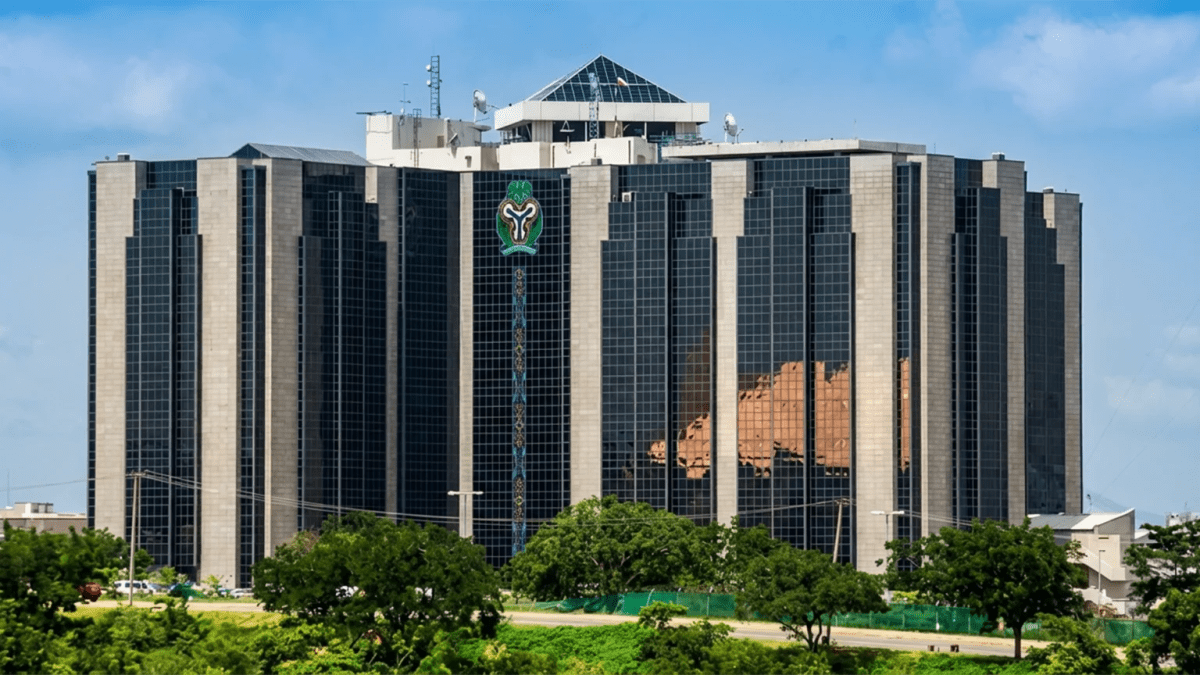
The Central Bank of Nigeria (CBN) has issued a mandatory regulatory framework titled the Regulations for the Operations of Non-Security Virtual Assets in Nigeria. The centerpiece of this directive is a strict financial hurdle: any company issuing foreign currency-backed stablecoins—such as US Dollar-pegged digital tokens—must hold a minimum paid-up capital of ₦15 billion before it can legally operate in the country.
To put ₦15 billion in perspective, that is roughly $11.16 million at current foreign exchange rates. It is an amount comparable to the capital requirements imposed on commercial payment service banks. In addition to this financial threshold, foreign stablecoin issuers are no longer permitted to serve Nigerian users remotely from offshore havens. They must incorporate a local business entity in Nigeria, open a physical office staffed with resident management, and subject their reserves to direct inspection by central bank examiners.
At the same time, the central bank set a ₦10 billion minimum capital floor for issuers of Naira-backed stablecoins and introduced tight identity-matching rules for peer-to-peer (P2P) cryptocurrency platforms. Algorithmic stablecoins—tokens that maintain their target price using code and supply adjustments rather than physical cash reserves—have been banned outright.
What is a stablecoin, and why is the central bank stepping in?
A stablecoin is a type of cryptocurrency whose value is tied to another asset, usually a hard currency like the US Dollar or the Euro, or a fiat currency like the Nigerian Naira. Unlike volatile cryptocurrencies such as Bitcoin, whose price can swing dramatically in a single day, a stablecoin is designed to stay steady at a 1-to-1 ratio with its reference currency. For instance, one unit of Tether (USDT) is meant to be worth exactly one US Dollar at all times.
In Nigeria, stablecoins have evolved from niche trading tools into everyday financial lifelines. Millions of households and small business owners use dollar-backed stablecoins to preserve their purchasing power against inflation, pay foreign vendors, or receive payments from clients abroad without waiting days for traditional bank wire transfers.
However, because stablecoins function like private digital currencies, regulatory authorities worry about financial stability, consumer protection, and foreign exchange leakage. If a massive global stablecoin issuer were to collapse or freeze redemptions, Nigerian investors holding those tokens could suffer severe losses without any legal recourse. By introducing these regulations, the central bank aims to force digital asset companies into the formal financial umbrella, ensuring that any token operating locally is backed by verified cash reserves and supervised entity structures.
How much money do stablecoin issuers need to operate in Nigeria?
The new framework divides stablecoin issuers into two primary categories based on the currency they reference, establishing distinct financial benchmarks for each:
- Foreign Currency-Backed Stablecoins (Class 2): Issuers of tokens pegged to foreign currencies—such as USDT or USDC—must maintain a minimum paid-up capital of ₦15 billion ($11.16 million). This means the founding firm cannot simply register a web domain; it must deposit ₦15 billion in equity into an account verified by regulators before issuing tokens to the public.
- Naira-Backed Stablecoins: Companies issuing stablecoins pegged 1-to-1 to the Nigerian Naira face a lower minimum paid-up capital requirement of ₦10 billion ($7.44 million). This lower bar is designed to encourage local fintech consortiums and licensed banks to develop domestic digital currency solutions under direct regulatory control.
Paid-up capital represents the actual money injected into a business by its shareholders in exchange for stock. It acts as a financial cushion, ensuring that the company has sufficient resources to absorb operational losses, pay regulatory penalties, and satisfy customer redemptions if trouble arises. For a reader with no banking background, think of paid-up capital as a landlord demanding a large security deposit before letting a commercial tenant open doors to the public.
Why are algorithmic stablecoins banned?
The central bank’s framework draws a sharp distinction between reserve-backed stablecoins and algorithmic stablecoins. Under the new rules, algorithmic stablecoins are prohibited from receiving operating licenses in Nigeria.
To understand why, it helps to look at how different stablecoins maintain their value. A traditional reserve-backed stablecoin holds real assets—such as cash in bank vaults or short-term treasury bills—equal to every token it issues. If there are 1,000 digital tokens in circulation, the issuer holds $1,000 in a bank account. If users want to cash out, the real dollars are waiting.
An algorithmic stablecoin, by contrast, holds no physical cash reserves. Instead, it relies on computer algorithms and financial incentives between two complementary tokens to maintain its price. When demand for the stablecoin rises, the code mints new tokens; when demand falls, the code burns tokens or issues incentive bonds. While this sounds clever in theory, history has shown that algorithmic stablecoins are vulnerable to sudden "bank runs." If market panic sets in, the mathematical mechanism can break down completely, reducing the token's value to zero overnight—as occurred during the famous collapse of the TerraUSD algorithmic token in 2022.
By banning algorithmic models, the central bank is ensuring that only tokens backed by tangible, audited bank deposits can legally circulate in Nigeria's financial system.
How will this affect your daily P2P crypto trades and transfers?
For the average person trading cryptocurrency on peer-to-peer (P2P) marketplaces, the most immediate impact will be felt in how identity verification and payment routing work. Under the updated directive, P2P exchanges can no longer operate as anonymous bulletin boards.
Every P2P trade must now be tied directly to a verified bank account track. When you buy or sell crypto on a platform, the platform must verify that the bank account name sending or receiving the Naira matches the exact legal identity registered on your crypto profile. Payment descriptions, bank verification numbers (BVN), and national identity numbers (NIN) will be cross-referenced automatically between exchanges and licensed commercial banks.
If you use P2P platforms for legitimate business, your trades will continue, but you will experience stricter compliance checks. Unverified accounts, third-party bank transfers (where a friend sends money on your behalf), and anonymous wallet addresses will be flagged or blocked by bank compliance software.
What does this mean for your savings and personal money?
If you currently hold dollar-backed stablecoins to protect your savings, the effect of this rule depends on how major global issuers respond to the central bank's mandate:
- Fewer Unlicensed Options: Offshore issuers that refuse to incorporate in Nigeria or pay the ₦15 billion capital deposit may find their tokens restricted on regulated domestic exchanges. Regulated Nigerian platforms will be forced to delist unlicensed tokens to avoid bank sanction.
- Greater Protection on Licensed Tokens: For stablecoins that comply, buy-in from regulators means your funds are safer. If a licensed issuer defaults, local assets and reserve deposits can be accessed by regulators to compensate token holders.
- Higher Costs for Small Operators: The high capital entry bar (₦15 billion) means smaller crypto startups will struggle to launch their own tokens. The market will likely be dominated by well-funded international firms, consortiums of local banks, and major fintech giants.
What happens next, and what isn't clear yet?
The central bank has set the ground rules, but several operational details remain to be clarified. It is not yet clear how long existing global issuers will be given to meet the ₦15 billion capital requirement before domestic exchanges are mandated to delist non-compliant tokens.
Furthermore, it remains to be seen whether major global stablecoin operators will choose to establish formal Nigerian subsidiaries or simply restrict their operations to international jurisdictions. What is certain is that the era of unregulated crypto transfers in Nigeria has come to an end. As implementation unfolds, RainingMoney will monitor how commercial banks and crypto exchanges update their user guidelines.
Sources & Verification
- Sources: Central Bank of Nigeria Regulations for Virtual Assets
- Editorial note: This explainer is an original RainingMoney adaptation of the report, RainingMoney has added explanatory context.

Founder and Editor-in-ChiefAbuja
Betini Udom
Founder and Editor-in-Chief of RainingMoney. Covers Nigerian, pan-African and global markets, finance and economic policy.
Author profile & archive →The Money Print
Market intelligence before the market opens.
Pan-African capital flows and the stories behind the numbers, on weekday mornings.