EconomyMedium
Africa's Central Banks End 2026 Tight as US Rate Risk Looms
Egypt, Uganda and Namibia raised rates in October as Nigeria cut to 23%. What a stronger dollar and a possible Fed hike mean for the naira before the CBN meets.
By RainingMoney Desk Published 8 min read Editorial Policy Report a correction
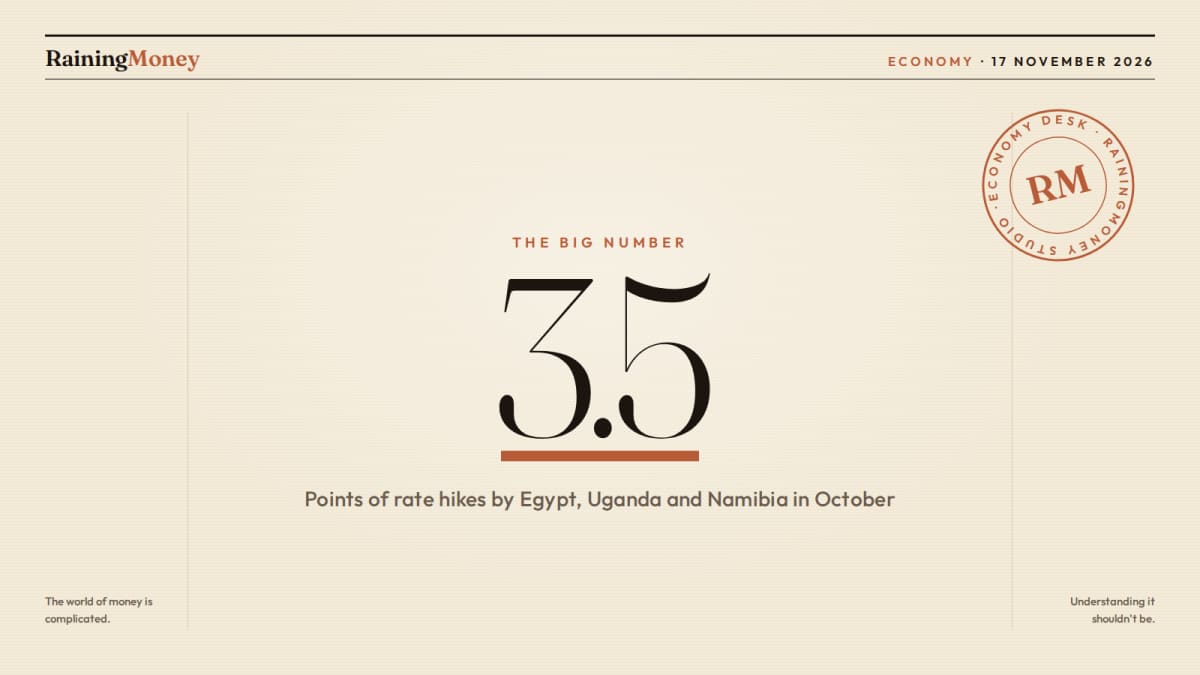
Africa's central banks are heading into the last weeks of 2026 with interest rates high and, in several countries, rising. In October alone, Egypt, Uganda and Namibia raised their benchmark rates by a combined 3.5 percentage points. South Africa raised its rate in September, Kenya has held steady, and Nigeria went the other way with a large cut. Hanging over all of them is the United States Federal Reserve, which raised rates in September and which traders think could do so again in December.
For Nigerian readers the question is practical. When money gets dearer in America and the US dollar gets stronger, pressure lands on the naira, on foreign money parked in Nigerian bills and bonds, and on the choices the Central Bank of Nigeria (CBN) makes when its Monetary Policy Committee (MPC) meets on 23 and 24 November.
Who raised rates, and by how much?
A central bank's benchmark rate, often called the policy rate, sets the floor for what banks charge each other and, in time, what they charge you for a loan and pay you on a deposit. Raising it makes borrowing dearer and saving more rewarding. Central banks raise it to cool prices or to defend a weak currency.
- Egypt: The Central Bank of Egypt raised its overnight deposit rate by 1 percentage point to 20% in late October, with the lending rate going to 21%. It was the bank's first increase since March 2024 and came after the Egyptian pound fell to a record low of about 56 per dollar on 26 October. The bank said it wanted to keep expectations of future inflation in check.
- Uganda: The Bank of Uganda raised its rate by 2.25 points to 12% at an emergency meeting on 14 October, its highest level since 2017, to stop a slide in the shilling. On 9 November it held at 12% and instead made some of its own lending to banks more expensive.
- Namibia: The Bank of Namibia raised its repo rate by 0.25 points to 7% in October, citing fuel-driven inflation and its currency peg to the South African rand.
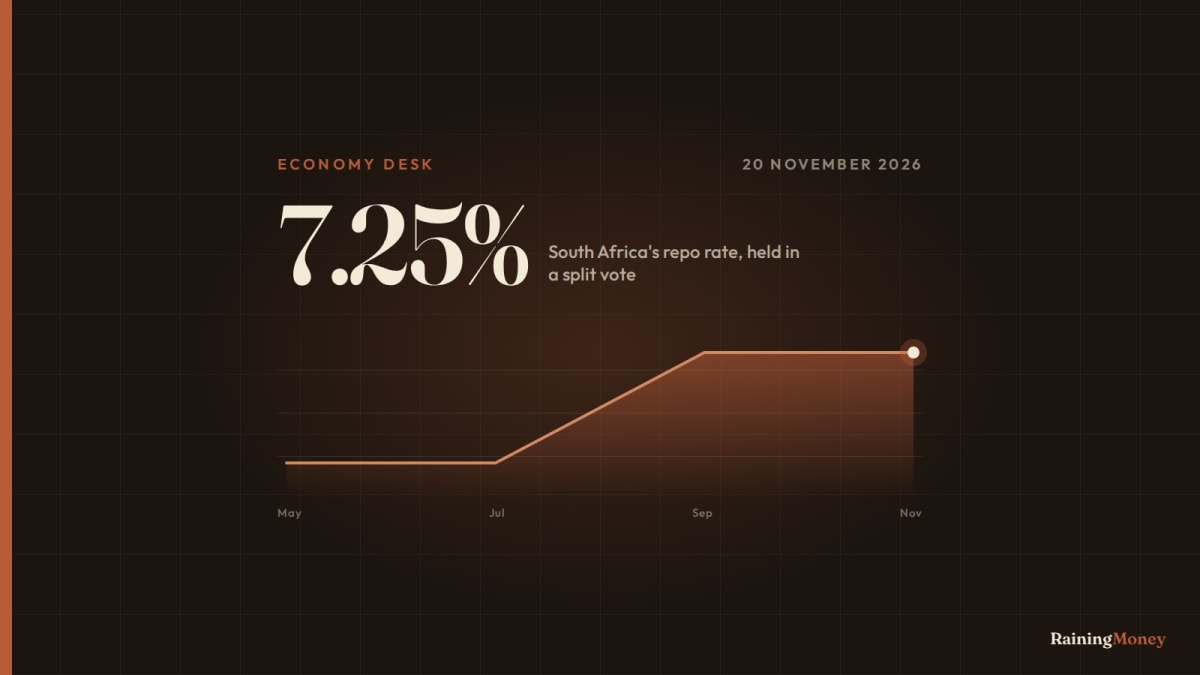
- South Africa: The South African Reserve Bank raised its repo rate by 0.25 points to 7.25% on 23 September, its second increase of 2026 after May.
Rwanda also raised rates in the second half of the year, and Ethiopia lifted its rate to 16% in July.
Who is cutting or standing still?
The picture is mixed. In September, Nigeria cut its Monetary Policy Rate (MPR) by 3.5 points to 23%, Zambia and Zimbabwe each cut by 2.5 points, and Angola cut by 1 point.
Others are holding. Kenya has kept its rate at 8.75% at four meetings in a row, most recently in October. Ghana is at 14%, Morocco at 2.25% and Mozambique at 9.25%.
| Country | Latest move | Policy rate | Latest inflation |
|---|---|---|---|
| Nigeria | Cut 3.5 points, September | 23% | 14.06% (October) |
| Egypt | Raised 1 point, October | 20% (deposit) | 13.9% urban (September) |
| Uganda | Raised 2.25 points in October, held in November | 12% | 5.8% (October) |
| Kenya | Held, October | 8.75% | 6.8% (September) |
| South Africa | Raised 0.25 points, September | 7.25% | 4.4% (August) |
| Namibia | Raised 0.25 points, October | 7% | 5.4% (September) |
Why are so many central banks tightening again?
Three forces are pushing in the same direction. The first is fuel. The war involving Iran that began in March has kept oil prices volatile. Brent crude, the global benchmark, traded between $113.4 and $117.6 a barrel in late October before dropping back below $100. Dearer fuel feeds into transport and food prices across the continent.
The second is currencies. In October the Ugandan shilling lost 8.74% against the dollar and the Egyptian pound 6.90%, the two worst performers among 17 African currencies tracked. A weaker currency makes every imported item cost more in local money, which pushes up inflation.
The third is the United States. The Federal Reserve, America's central bank, raised its rate by 0.25 points to a range of 3.75% to 4% on 16 September, its first increase since 2023. On 11 November the dollar index, which measures the dollar against a basket of major currencies, rose to 103.02, its highest since April 2025, helped by growing expectations of another Fed increase.
The International Monetary Fund's managing director, Kristalina Georgieva, has urged central banks to keep their focus on stable prices. Angelika Goliger, EY's chief economist for Africa, has said that even where local inflation is easing, outside pressures are likely to limit how fast rates can come down.
Why does a Fed rate rise matter in Lagos or Kampala?
Global investors move money to where they get the best return for the risk. When US interest rates rise, safe American government debt pays more, so some investors pull money out of riskier markets such as Africa's. They sell local currency to buy dollars on the way out, and that weakens the currency.
So the gap between local and US rates matters. A central bank that raises its rate keeps that gap wide and gives foreign investors a reason to stay. In Egypt and Uganda the currency slides came first and the rate rises followed.
Where does Nigeria stand?
Nigeria cut its rate on 22 September, six days after the Fed raised its own. The CBN had held the MPR at 26.5% in May and July before the cut. Governor Olayemi Cardoso described the September move as a realignment to make policy work better through the banking system, and said it was no change in the bank's overall stance.
Nigeria's gap is still wide. With the MPR at 23% and the top of the Fed's range at 4%, the difference is 19 percentage points (derived: 23 minus 4). Measured against inflation, the MPR is 8.94 points above the 14.06% October rate (derived: 23 minus 14.06). Economists call that the real interest rate.
That gap has drawn a lot of short-term money. Nigeria attracted $10.37B of foreign capital in Q1 2026, and about 95% of it was portfolio investment, much of it in money market instruments that can leave quickly. Joseph Nnanna, chief economist of the Development Bank of Nigeria, has argued that cutting while major central banks tighten squeezes the rate advantage that pulled that money in, and raises the risk that it flows back out. A finance professional on a recent podcast panel argued that Nigerian rates have not fallen far enough to trigger a large exit.
What is happening to the naira?
The naira has been softening this month. On 11 November it lost ₦10.50 in a day at the official market to close at ₦1,364 per dollar, its biggest single-day loss since 22 October. It recovered slightly to ₦1,358.50 the next day. In the parallel market, where street dealers trade, the dollar cost ₦1,445 on 12 November, a gap of ₦86.50 over the official rate. Dealers point to holiday demand and spending ahead of the 2027 elections.
There is a cushion. The naira was still about 4.7% stronger against the dollar for the year by 11 November, having started 2026 at ₦1,431. The CBN's net foreign reserves reached a record $46B.
RainingMoney's reading: this year's rate rises came mostly where currencies were sliding fast, and the cuts where inflation was easing. Nigeria's MPC will be watching which group the naira looks more like.
What could the CBN do on 24 November?
The MPC weighs inflation, the exchange rate, growth, reserves, capital flows and interest rates in the big economies. Five market analysts quoted ahead of the meeting all expect a hold at 23%, citing high food prices, a rise in core inflation in September and the need to see how the September cut has worked. One said a small cut cannot be ruled out. October inflation of 14.06%, down from 14.63% in September, gives the committee some room. A stronger dollar and possible Fed rise in December argue for caution.
An asset manager on the same podcast panel said that if the Fed raises rates in December, Nigeria should rethink the cost of its dollar borrowing, especially Eurobonds, the dollar bonds it sells to foreign investors.
What does this mean for my money?
- If you save in naira: rates on deposits and Treasury bills follow the MPR. A hold would keep them broadly where they are. A cut would likely pull them lower over the following months.
- If you borrow: loan rates move slowly, and with the MPR at 23% they remain high by any standard.
- If you pay for things in dollars: school fees, imports and travel abroad all cost more when the naira weakens, and the parallel market is where pressure shows first.
What isn't known yet?
Nobody knows yet whether the Fed will raise rates in December or how far the dollar's rise will run, and oil prices remain tied to events in the Middle East. South Africa's next decision is also pending. The first clear answer for Nigerians comes on 24 November, when the MPC announces its decision.
Sources & Verification
- Sources: BusinessDay
- Editorial note: This explainer is an original RainingMoney adaptation of the report, RainingMoney has added explanatory context.
The Money Print
Market intelligence before the market opens.
Pan-African capital flows and the stories behind the numbers, on weekday mornings.