TechnologyMedium
Why Nvidia and CEO Jensen Huang Are Facing a Massive US Lawsuit
Nvidia and CEO Jensen Huang face a major US lawsuit after an alleged spy affair shook the AI titan. Here is what happened and what it means for chip markets.
By Betini Udom Published Last edited 6 min read Editorial Policy Report a correction
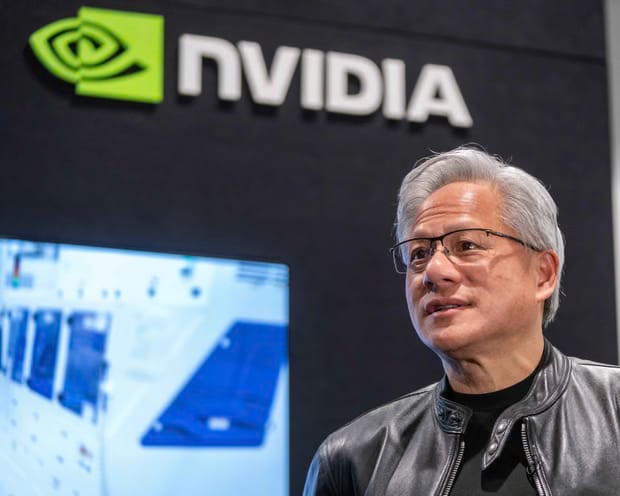
Summary: Nvidia Corporation and its CEO, Jensen Huang, face a shareholder lawsuit in California alleging failure to disclose material security and reputational risks tied to Huang's personal relationship with an executive linked to Chinese espionage. US President Donald Trump confirmed FBI involvement, while Nvidia opened an independent internal inquiry. Shares dropped 4.3% in one session, erasing ~$190bn in market value.
- Fact (Court Filing): Retail investor Mark Kistenmacher filed a class-action lawsuit in San Jose, California on 9 November 2026.
- Fact (Company Letter): CEO Jensen Huang published an open letter apologizing for an extramarital affair with Alice Huang (Huang Le).
- Fact (Filing Data): Business executive Alice Huang was linked to Megaspeed International, which purchased over $4.8bn in Nvidia hardware.
- Fact (US White House Briefing): President Donald Trump confirmed the FBI is looking into Huang's security connections.
- Flag (RainingMoney's Reading): Market reaction reflects heightened geopolitical risk that US regulators may restrict Nvidia's licensing or impose governance penalties.
What actually happened between Nvidia, Jensen Huang, and the US government?
Nvidia Corporation, the world's leading manufacturer of artificial intelligence (AI) chips, has been thrust into a corporate and national security crisis. The company and its high-profile chief executive officer, Jensen Huang, are now facing a class-action lawsuit filed by shareholders in a California court.
The controversy began after reports revealed that Huang engaged in a personal relationship with a business executive named Alice Huang (also known as Huang Le). United States intelligence agencies suspect Alice Huang of gathering corporate and technical intelligence on behalf of Beijing. Jensen Huang published an open letter apologizing to his family and Nvidia employees for the extramarital affair, while affirming that he had no knowledge of any espionage activities and pledging full cooperation with federal authorities.
The situation escalated further when US President Donald Trump publicly confirmed that the Federal Bureau of Investigation (FBI) is actively reviewing the matter. Concurrently, Nvidia's board of directors hired an independent law firm to conduct an internal inquiry into whether foreign intelligence targeted the company's executive leadership.
Why are shareholders suing Nvidia and its chief executive?
When investors buy shares in a public company like Nvidia, corporate law requires executives to disclose major risks that could harm the business or lower its market value. The lawsuit, filed on behalf of retail investor Mark Kistenmacher and other shareholders, alleges that Huang and Nvidia misled the public by hiding the personal relationship and failing to report the serious national security risks it created.
According to court papers, Alice Huang was previously associated with Singapore-based Megaspeed International—a firm that purchased more than $4.8bn (roughly ₦7.4tn at current market benchmarks) worth of high-performance Nvidia microchips over the past two years. The lawsuit argues that investors paid artificially high prices for Nvidia shares because they were kept in the dark about potential regulatory breaches, export control risks, and governance failures.
What is a class-action shareholder lawsuit and how does it work?
A class-action lawsuit is a legal process where one person or a small group files a single case on behalf of hundreds or thousands of people who suffered the same financial loss. In this instance, the lawsuit covers anyone who bought Nvidia stock between 9 October 2026—when initial reports of the relationship emerged—and 8 November 2026, when the company confirmed an independent board probe.
The step-by-step mechanism works like this:
- Step 1 (Alleged Non-Disclosure): Management becomes aware of a significant personal or operational risk but does not inform the stock market.
- Step 2 (Public Revelation): News of the risk breaks publicly, causing panic or uncertainty among market participants.
- Step 3 (Market Cell-Off): Investors sell their stock quickly to minimize exposure, driving down the share price rapidly.
- Step 4 (Legal Action): Affected investors sue to recover the money they lost, claiming they would never have bought the stock at that price had the truth been known.
How does a personal scandal turn into a national security issue?
To understand why Washington is involved, one must understand Nvidia's role in the global tech ecosystem. Microchips (also called semiconductors or graphics processing units) are the physical engines of modern computing. They run advanced AI models, military hardware, supercomputers, and cloud networks.
Because these chips are critical to national defense and technological dominance, the US government enforces strict export controls—rules that prohibit selling high-end AI processors to specific foreign countries, including China, without special government permission. When an executive at a major chip customer turns out to be under scrutiny by counterintelligence agencies, federal regulators worry that restricted technology or sensitive trade secrets may have leaked.
What is market capitalization, and why did Nvidia lose $190bn in a day?
A company's market capitalization (or market cap) is the total cash value of all its shares combined. You calculate it by multiplying the total number of company shares by the current price of one share on the stock exchange.
When news of the lawsuit and FBI investigation hit Wall Street, Nvidia's stock price dropped by 4.3% in a single trading session. That single percentage drop erased approximately $190bn (about ₦290tn) from Nvidia's total market value in one afternoon. Since the initial media leaks in late October, Nvidia's overall market value has fallen by over $430bn.
"RainingMoney's reading — The sharp drop in stock value does not mean Nvidia's factories stopped working. Rather, it shows that investors are factoring in the risk of heavy government fines, potential export restrictions, or leadership disruption."
What does this mean for everyday investors and their money?
Even if you do not own individual Nvidia shares, this case affects broader financial markets for three primary reasons:
- Global Pension and Index Funds: Nvidia is one of the largest companies in global stock indices. Major pension funds, mutual funds, and international equity portfolios hold Nvidia stock. When its value swings, retirement savings around the world feel the impact.
- Tech Sector Confidence: Uncertainty around the chief executive of the world's key AI hardware supplier creates a ripple effect across tech giants relying on Nvidia hardware.
- Regulatory Tightening: Increased scrutiny could lead to stricter compliance requirements across global technology manufacturing and international chip deliveries.
What happens next for Nvidia and Jensen Huang?
The saga is moving along three separate tracks:
- The Legal Track: The California court will decide whether to certify the class action and proceed to a jury trial where damages will be determined.
- The Corporate Governance Track: Nvidia's independent board committee will complete its inquiry into executive conduct and determine whether Huang retains the full trust of the board.
- The Congressional & Federal Track: US congressional committees have called Huang to testify in a closed-door hearing on 18 November 2026, alongside ongoing FBI checks .
For now, Jensen Huang remains in his position as CEO with public backing from prominent tech executives and President Trump, but the legal and security reviews will determine his long-term future at the helm of Silicon Valley's most valuable chipmaker.
Sources & Verification
- Source: The Guardian
- Editorial note: This explainer is an original RainingMoney adaptation of the report, RainingMoney has added explanatory context.

Founder and Editor-in-ChiefAbuja
Betini Udom
Founder and Editor-in-Chief of RainingMoney. Covers Nigerian, pan-African and global markets, finance and economic policy.
Author profile & archive →The Money Print
Market intelligence before the market opens.
Pan-African capital flows and the stories behind the numbers, on weekday mornings.