

TechnologyHigh
Why Germany Banned Chinese Drones From Its Military Bases
Germany has banned Chinese commercial drones and restricted Chinese vehicles from military facilities over spying fears. Here is what happened and what it means.
By Betini Udom Published 5 min read Editorial Policy Report a correction
What just happened with Germany's military drone ban?
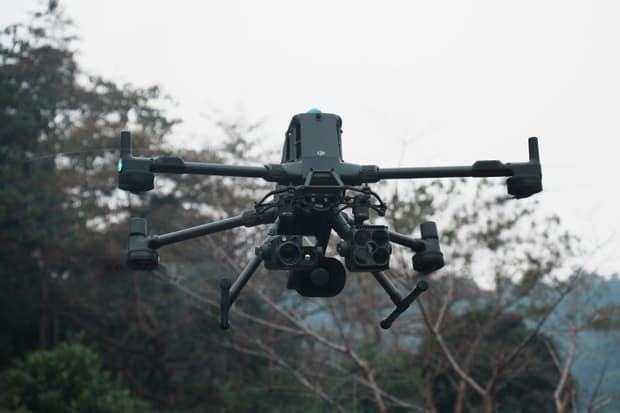
Germany's defence ministry has taken decisive action by banning all commercially manufactured Chinese drones from its military barracks and training grounds, effective immediately. The government announced that any existing equipment produced in China will be phased out as quickly as possible and replaced entirely by hardware produced domestically or within Europe.
Alongside the drone ban, military commanders have restricted smart electric vehicles built by Chinese automakers from entering secure zones. Drivers operating these vehicles are now required to park outside perimeter gates and enter military installations on foot. The armed forces stated that these steps are essential to strengthen self-sufficiency, maintain data security, and safeguard technological sovereignty.
Why were Chinese-made commercial drones used by the military in the first place?
To understand why this ban is significant, it helps to look back at how the equipment entered service. In 2024, Germany's armed forces—known as the Bundeswehr—introduced a streamlined procurement strategy. Under this policy, local unit commanders were given the authority to buy commercially available, off-the-shelf drones with minimal bureaucratic red tape.
An off-the-shelf drone is a standard commercial model that anyone can buy online or in a retail electronics shop. They were not used for real combat or secret reconnaissance operations. Instead, the military used these inexpensive commercial devices for two basic tasks: teaching junior pilots how to fly and serving as moving target practice for air-defence systems. Buying commercial models saved millions compared to purchasing military-grade hardware, allowing units to expand their pilot training programs rapidly.
What specific security risks triggered this sudden policy reversal?
The policy reversal was driven by growing security fears that commercial hardware contains built-in vulnerabilities that could expose sensitive military data. While commercial drones appear simple on the outside, they rely on complex onboard software, global positioning systems (GPS), optical cameras, and continuous data transmission links to function.
Germany's Military Counterintelligence Service—the agency responsible for stopping espionage and protecting armed forces secrets—conducted forensic examinations on several training drones. Intelligence analysts discovered traces suggesting that operational data, such as flight logs, precise GPS coordinates of training grounds, and video imagery, could potentially be exfiltrated—meaning sent back without authorization—to foreign servers.
Even if a drone is bought for basic target practice, operating it repeatedly over a military site creates a digital footprint. If software protocols automatically sync flight telemetry to cloud servers located outside Europe, foreign intelligence services could gain access to detailed maps, structural layouts, and routine troop movement schedules.
How do commercial drones and smart vehicles pose espionage risks?
The risk extends beyond flying devices to modern connected automobiles. A modern electric vehicle is essentially a massive mobile computer equipped with high-definition optical cameras, ultrasonic radar, microphones, and continuous internet connectivity designed for driver-assistance and navigation features.
When an employee or military officer drives a connected vehicle through a secured compound, those cameras and sensors constantly scan the surroundings to navigate. Defence officials worry that if that data is stored in cloud databases accessible under foreign national security laws, the vehicle becomes an unwitting surveillance tool. This is why security directives now require such vehicles to remain outside the base perimeter, mirroring similar restrictions placed on military facilities in Poland and Allied naval bases in Asia.
What does this shift mean for military budgets and tech costs?
Switching from cheap commercial gear to European-made alternatives introduces significant financial trade-offs. Commercial drones produced in Asia benefit from massive economies of scale, making them widely available at low prices—often costing a few hundred to a few thousand dollars per unit.
By contrast, European defence contractors produce hardware in smaller volumes under strict domestic compliance frameworks. Replacing several thousand training drones with European models will inevitably push procurement costs higher. In plain terms, for every ₦100 or €100 the military previously spent on basic training gear, replacing it with domestic alternatives could cost two to three times as much. This forces defence planners to adjust their annual operational budgets, spending more money on routine training tools that used to be cheap and abundant.
Why does this matter for the broader tech market and your money?
While this decision directly affects military units, its ripple effects touch the global technology market and everyday consumers. We are seeing a broadening of dual-use technology restrictions—rules that govern commercial products capable of being used for both everyday civil purposes and military applications.
When major Western economies restrict commercial technology products based on their origin, it accelerates supply chain fragmentation. Tech companies are forced to build duplicate supply chains: one for Western markets with localized software and domestic components, and another for the rest of the world. For consumers and businesses, fragmented supply chains mean higher production costs, which eventually translate into higher retail prices for cameras, smart devices, commercial hardware, and electronics.
What does this decision tell us—and what remains unknown?
This decision tells us that defence institutions are closing the loophole between commercial convenience and military security. The days of purchasing off-the-shelf commercial electronics for military use without rigorous software auditing are ending. Western armed forces are prioritizing technological sovereignty—the ability to build, control, and secure their own tech infrastructure—over short-term cost savings.
However, important questions remain unanswered. Defence authorities have kept the exact technical details of their intelligence findings classified, meaning the public does not know whether actual operational secrets were compromised. Furthermore, major drone manufacturers continue to state that their products do not transmit data outside user control, pointing to independent audits. What is clear is that trust in global tech hardware is breaking down, and governments are willing to pay a higher price to keep their data locked inside their own borders.
Sources & Verification
- Sources: The Guardian , Statement of the Ministry of Defence of Germany, Bundeswehr Procurement Directives.
- Editorial note: This explainer is an original RainingMoney adaptation of the report, RainingMoney has added explanatory context.

Founder and Editor-in-ChiefAbuja
Betini Udom
Founder and Editor-in-Chief of RainingMoney. Covers Nigerian, pan-African and global markets, finance and economic policy.
Author profile & archive →The Money Print
Market intelligence before the market opens.
Pan-African capital flows and the stories behind the numbers, on weekday mornings.