MarketsHigh
Inside Vetiva's ₦2.15tn Deal: How Dangote Refinery's Capital Raise Reshapes Corporate Finance
Vetiva leads the structuring of Dangote Refinery's ₦2.15tn public offer. Read how this mega-deal alters debt-to-equity ratios and syndicate financing.
By Betini Udom Published Last edited 6 min read Editorial Policy Report a correction
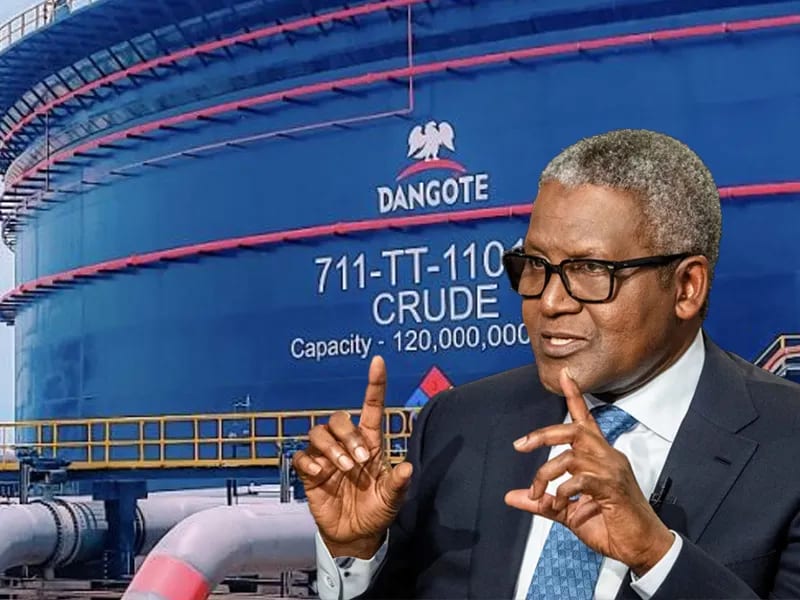
Dangote Petroleum Refinery and Petrochemicals FZE, the giant refinery at Lekki in Lagos, is selling shares to the public for the first time. The Securities and Exchange Commission (SEC) approved the offer at ₦525 per share, and the company is offering 4.1 billion new shares. If every share is taken up, that raises about ₦2.15 trillion, or roughly $1.6 billion. Reporters have widely called it Africa's largest initial public offering.
Vetiva, a Lagos investment bank, is running the deal. Its role has been described as Lead Adviser and Lead Issuing House. That makes it the firm coordinating everyone else working on the sale.
This matters even if you never buy a share. The refinery is one of the biggest private assets in Africa, and its listing will change what the Nigerian Exchange (NGX) looks like. It also tests whether millions of ordinary Nigerians and other Africans can be drawn into the stock market. This piece explains how the deal works, who does what, and what the money is actually for.
What is an IPO, and why is Dangote doing one?
An initial public offering, or IPO, is when a privately owned company sells shares to the general public for the first time and then lists them on a stock exchange, so they can be bought and sold freely afterwards.
This is a primary offer. The 4.1 billion shares are newly created, so the cash goes to the refinery itself and not to existing owners cashing out. According to the prospectus, as summarised by Technext, the company expects net proceeds of about ₦2.11 trillion after roughly ₦41.5 billion in offer costs. That money is earmarked for expansion spending.
The expansion is large. IPO documents describe a plan to double capacity to 1.4 million barrels a day by 2029, at a cost of about $14.3 billion. The share sale covers only part of that bill. The rest is meant to come from the refinery's own cash and other financing.
What exactly does Vetiva do as lead adviser?
An "issuing house" is the investment bank that prepares a share sale and takes it to market. It helps draft the prospectus (the legal document that tells investors everything material about the company), deals with the SEC and the exchange, sets the timetable and organises the sale. The lead issuing house coordinates the others.
Here, the others are numerous. Nairametrics counted more than 60 institutions, including 25 joint issuing houses and 32 stockbroking firms, alongside lawyers, accountants and registrars. BusinessDay's count was 24 joint issuing houses, with FirstCap among them. Premium Times named Chapel Hill Denham, Absa Capital Markets, Afrinvest and Stanbic IBTC Capital among the joint issuing houses too.
Why so many? Each bank and broker brings its own clients and sales channels. An offer aimed at millions of small investors needs that reach.
How big is the offer, and what does it value the refinery at?
| Item | Figure |
|---|---|
| New shares offered | 4.1 billion |
| Price per share | ₦525 |
| Gross proceeds if fully subscribed | about ₦2.15 trillion |
| Shares in issue before the offer | about 120.13 billion |
| Minimum application | 10 shares (₦5,250) |
| Possible extra shares if oversubscribed | up to 30%, subject to SEC approval |
At ₦525 a share, the roughly 120.13 billion existing shares are worth about ₦63.07 trillion. Renaissance Capital put that at $47.22 billion at ₦1,335.50 to the dollar. The 4.1 billion new shares would be about 3.3% of the enlarged company (Derived.), so the public is buying a small slice.
Control stays where it is. The prospectus shows Aliko Dangote's beneficial stake (shares held directly or through companies he controls) at 87.27% before the offer. Nairametrics calculated that it falls to about 84.34% afterwards, The prospectus share register shows the state oil company NNPC holding about 6.8%.
Analysts disagree about whether the price is fair. In October, Renaissance Capital set a value of ₦700.41 per share, a 33.4% premium to the offer price. Treat that as one broker's estimate, not a promise.
Is this deal about paying off the refinery's debts?
No. Our earlier version of this story described the offer as a refinancing that swaps construction loans for equity. The prospectus does not support that. The proceeds are for growth spending on the expansion.
Debt was a real issue in the past. Reuters reported in 2024 that the refinery cost $20 billion and still had about $2.7 billion of construction debt to repay. But the latest figures look very different. Unaudited results for the nine months to September 2026 show a net profit of $4.73 billion on revenue of $22.48 billion, and Nairametrics reported that the company has moved from net debt to a net cash position.
What does this mean for the Nigerian stock market?
At its offer valuation, the refinery would rank among the largest companies on the NGX. Ecofin Agency estimated that once it lists, Dangote-controlled companies could make up nearly 38% of the market's value, counting Dangote Cement, Dangote Sugar and NASCON.
RainingMoney's reading: that weight cuts both ways. A large, profitable new listing can draw local and foreign money into the market. But it also means the NGX's main index will move heavily with one family of companies. Anyone who owns an index fund will own a lot of Dangote without choosing to.
Where does the offer stand now?
The offer opened on 14 September and was due to close on 13 October. Update, October 2026: with SEC approval, the company extended the closing date to 27 October. The company said it wanted to give investors elsewhere in Africa more time, and Dangote said subscriptions had already passed the original target. The company also said applications had come from 51 African countries. No official subscription figure has been published.
Under the revised timetable reported by The Kenya Times, the proposed allotment (how many shares each applicant actually gets) goes to the SEC on 10 November. Clearance is expected by 17 November, and trading is expected to start in early December. As of 20 October, the shares have not listed.
What to watch
- Whether the offer closes on 27 October as planned, and the official subscription level.
- Whether the 30% extra-share option is used, which could lift proceeds towards $2.1 billion.
- How allotment treats small applicants if demand far exceeds supply.
- The listing date and first-day price against the ₦525 offer price.
- Progress on the 1.4 million barrels-a-day expansion that the money is meant to fund.
The bottom line
Vetiva is the lead coordinator of a primary share sale that could raise about ₦2.15 trillion for a refinery expansion. The public is buying around 3.3% of the company, Aliko Dangote keeps firm control, and the money is for growth, not for paying down old loans.
For investors, the questions are the usual ones: is ₦525 a fair price for a business whose profits have only recently surged, and how comfortable are you with one company carrying so much weight on the exchange?
Sources & Verification
- (Other sources) - Nigerian Exchange Limited (NGX) Application & Listing Requirements.
- Debt Management Office (DMO) / CBN Corporate Debt Syndicate Disclosures.
- Vetiva Advisory Services Transaction Structure & Syndicate Member List.

Founder and Editor-in-ChiefAbuja
Betini Udom
Founder and Editor-in-Chief of RainingMoney. Covers Nigerian, pan-African and global markets, finance and economic policy.
Author profile & archive →The Money Print
Market intelligence before the market opens.
Pan-African capital flows and the stories behind the numbers, on weekday mornings.