
MarketsMedium
DR Congo Halts Cobalt Exports Again: What It Tells Africa
DR Congo will halt all cobalt exports from 30 November to lift weak prices. What the move says about export controls, batteries and Nigeria's lithium plans.
By Chiamaka Prudence Published 7 min read Editorial Policy Report a correction
The Democratic Republic of Congo will stop all cobalt exports from 30 November 2026 and keep them stopped until further notice. The country's strategic minerals regulator, the Authority for the Regulation and Control of Strategic Mineral Substances Markets (ARECOMS), announced the move on Monday, 23 November. It blamed a market with too much cobalt, weak prices and inventories that keep growing. The halt covers cobalt from large industrial mines and from small artisanal diggings alike.
This is the second time Congo has shut the door on cobalt shipments in under two years. The first suspension began in February 2025 and ended in October 2025, when the government switched to a system of export quotas. Now the quotas themselves are on pause. ARECOMS said it will use the break to rework how quotas are shared out, so that exports line up better with what the world is actually buying. It plans to review the halt after four months, and it has warned that a review will not automatically mean shipments restart.
What is cobalt, and why does Congo have so much say over it?
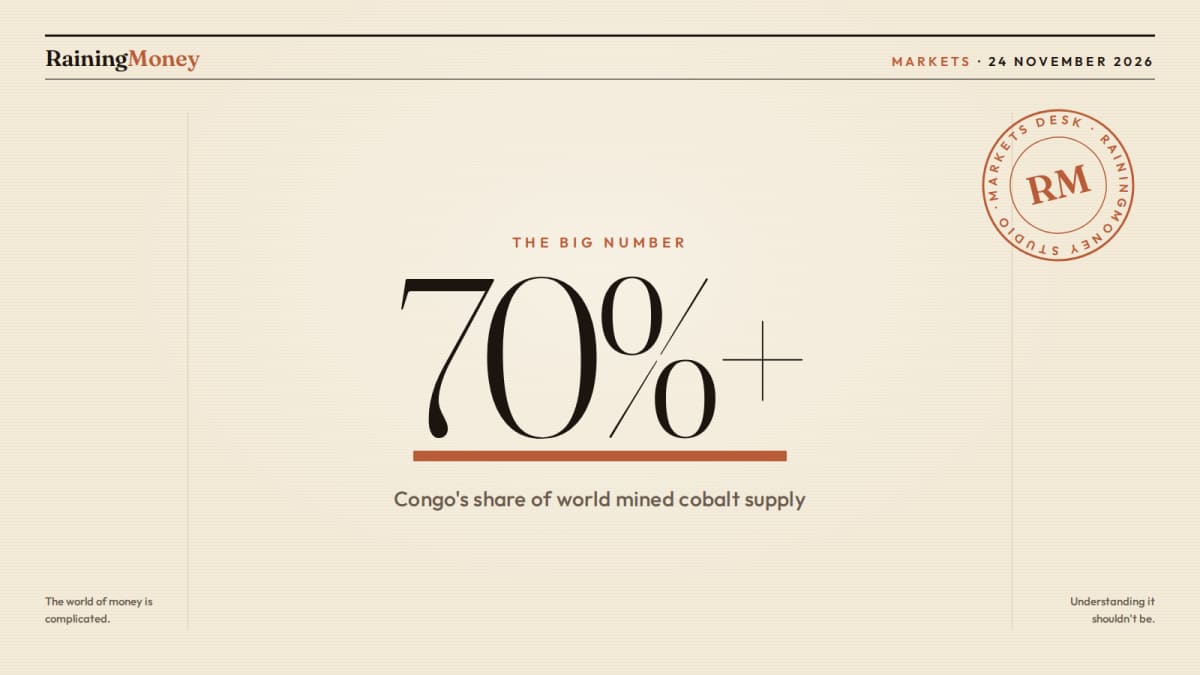
Cobalt is a hard, bluish metal. Its biggest modern use is in the rechargeable lithium-ion batteries that power phones, laptops and many electric cars, where it helps the battery hold its charge and stay stable. Congo mines more than 70% of the world's cobalt supply. When one country controls that much of a product, its decisions can move the global price on their own.
Think of a market in which one trader supplies seven out of every ten baskets of tomatoes. If that trader holds back stock, buyers have few other places to go, and the price tends to climb. Congo is trying to play that role in cobalt.
Why is Congo doing this again?
Because the price fell hard, recovered, and has come under pressure again. Cobalt traded above $77,000 a tonne after the pandemic. By 2025 it had dropped to about $22,000 a tonne, its lowest in nine years, as supply outran demand. After the 2025 export freeze and the quotas that followed, the price climbed back to about $57,000 a tonne by December 2025.
| When | Price |
|---|---|
| After the pandemic (peak) | Above $77,000 |
| 2025 (nine-year low) | About $22,000 |
| December 2025 | About $57,000 |
Derived from those figures: the fall from above $77,000 to $22,000 wiped out at least 71% of the price (22,000 divided by 77,000 is about 0.29). The rebound from $22,000 to $57,000 was a rise of about 159% (57,000 divided by 22,000 is about 2.59). That rebound is the result Congo's officials want to protect.
This year the pressure returned. ARECOMS points to oversupply, weak prices and rising stocks of unsold cobalt. When warehouses fill up, buyers know they can wait, and sellers lose bargaining power. Stopping exports is Congo's way of draining that excess and forcing the market to rebalance.
How did the quota system work, and why pause it?
Under the quotas, Congo set a basic national export limit of 96,600 tonnes for 2026 and handed each miner a share. Glencore, the Swiss-based commodities group, received a 2026 quota of 22,800 tonnes. CMOC, the Chinese group that is the world's largest cobalt supplier, was allowed to export 31,200 tonnes, even though it had guided for up to 120,000 tonnes of cobalt from its Congo operations. Eurasia Resources Group was given 12,325 tonnes.
Derived: those three companies alone held 66,325 tonnes (22,800 plus 31,200 plus 12,325), or about 69% of the 96,600-tonne national quota.
Miners reacted in different ways. Glencore's cobalt output fell 39% year on year in the first quarter of 2026, to 5,800 tonnes, as it put copper first. CMOC kept producing at record levels and held on to the extra metal. Eurasia Resources Group cut its cobalt hydroxide output by 70% in 2025. The regulator also gave itself the right to buy back cobalt held above quota to build a national reserve, though it has not been clear whether it would pay market prices or only cover production costs.
RainingMoney's reading: a quota caps what leaves the country, but it does little about metal piling up in yards at the mines. If companies keep producing and storing, that stock hangs over the market and holds prices down, because everyone knows it will be sold eventually. A full halt, plus a rewrite of the quota rules, gives the regulator a reset.
Is this like OPEC and oil?
In spirit, yes. The Organization of the Petroleum Exporting Countries (OPEC), which Nigeria belongs to, sets output targets for its members so that oil prices do not collapse when demand is soft. Congo is doing something similar with one metal. The difference is that it acts alone, controlling supply at its own border without any deal with other producers.
Congo is not the only African producer using export rules this way. Zimbabwe, Africa's biggest lithium producer, banned lithium exports and then about two months later granted special export quotas to Chinese firms. It also plans to stop exports of lithium concentrate from January 2027, and its miners have asked for more time to build processing plants first.
RainingMoney's reading: export controls give a country pricing power only when it supplies a large share of the world. Congo, with more than 70% of mined cobalt, can move prices. A producer with a small share that cuts exports mostly loses sales to rivals.
What does this mean for batteries and electric cars?
Battery makers and car companies depend on a steady flow of cobalt, and most of the world's mined supply comes from Congo. A halt with no end date makes it harder for them to plan, and it tends to push buyers to draw down stocks or look harder at battery designs that use less cobalt. Shares in Chinese cobalt producers jumped after the announcement, a sign that the market expects tighter supply and firmer prices.
For a Nigerian household, any effect on the price of phones or other gadgets is likely to be small and slow. Cobalt is one input among many, and stocks already in the system will cushion the first months. RainingMoney's reading is that the bigger lesson for Nigeria lies in strategy.
Where does Nigeria fit in?
Nigeria is working on its own place in the battery supply chain through lithium. In July 2026, the federal government inaugurated a lithium processing plant in Endo, Nasarawa State, owned by Diamond New Energy Company. It cost $250M, was built by the Chinese companies Jiuling and Canmax, and is designed to process about 3 million tonnes of lithium ore a year. The Minister of Solid Minerals Development, Dele Alake, has said Chinese companies put about $1.3B into Nigerian lithium processing between 2023 and 2025.
The government's stated policy is to discourage exports of raw minerals and push processing at home, which officials say will create jobs and skills. The United Nations Conference on Trade and Development (UNCTAD) projects that lithium demand will rise by 353% between 2024 and 2040.
RainingMoney's reading: Congo shows both the power and the limits of controlling a mineral. A dominant producer can lift prices by holding back supply, but its own miners lose sales while the taps are shut, and buyers may look for other sources or other technologies. Nigeria's approach so far is different. It is trying to earn more from each tonne by processing it at home, while leaving the volume of exports to the market.
What don't we know yet?
- How long the halt will last. The four-month review is a checkpoint, and ARECOMS has said it will not automatically restart exports.
- What the new quota rules will look like. The regulator has said it will revise allocations, but it has not published new numbers.
- Whether the ban holds on the ground. One mining analyst, Peter Major of Modern Corporate Solutions, has argued that Congo's many unregulated artisanal miners make export bans only partly effective, and that they hurt large, transparent producers more than opaque ones.
- How high prices go. Neither the regulator nor the companies have given a target, and the size of stocks already held outside Congo will shape the response.
- What happens to stockpiles inside Congo. The terms on which the state might buy surplus cobalt for its reserve remain unclear.
For now, the world's main source of cobalt is about to go quiet for at least four months. How Congo uses that time, and how buyers respond, will show other African mineral producers how far export controls can take them.
Sources & Verification
- Sources: Bloomberg
- Editorial note: This explainer is an original RainingMoney adaptation of the report, RainingMoney has added explanatory context.

Correspondent, OnitshaOnitsha
Chiamaka Prudence
I am a technology and finance enthusiast with a keen interest in digital innovation, emerging financial trends, and the evolving ways technology is shaping businesses and everyday life. I enjoy…
Author profile & archive →The Money Print
Market intelligence before the market opens.
Pan-African capital flows and the stories behind the numbers, on weekday mornings.