EconomyMedium
South Africa's Inflation Jumps to 5.2% Ahead of Rate Call
South African prices rose 5.2% in a year in October, the fastest in over two years, as food costs climbed. What it means before Thursday's rate decision.
By Betini Udom Published 4 min read Editorial Policy Report a correction
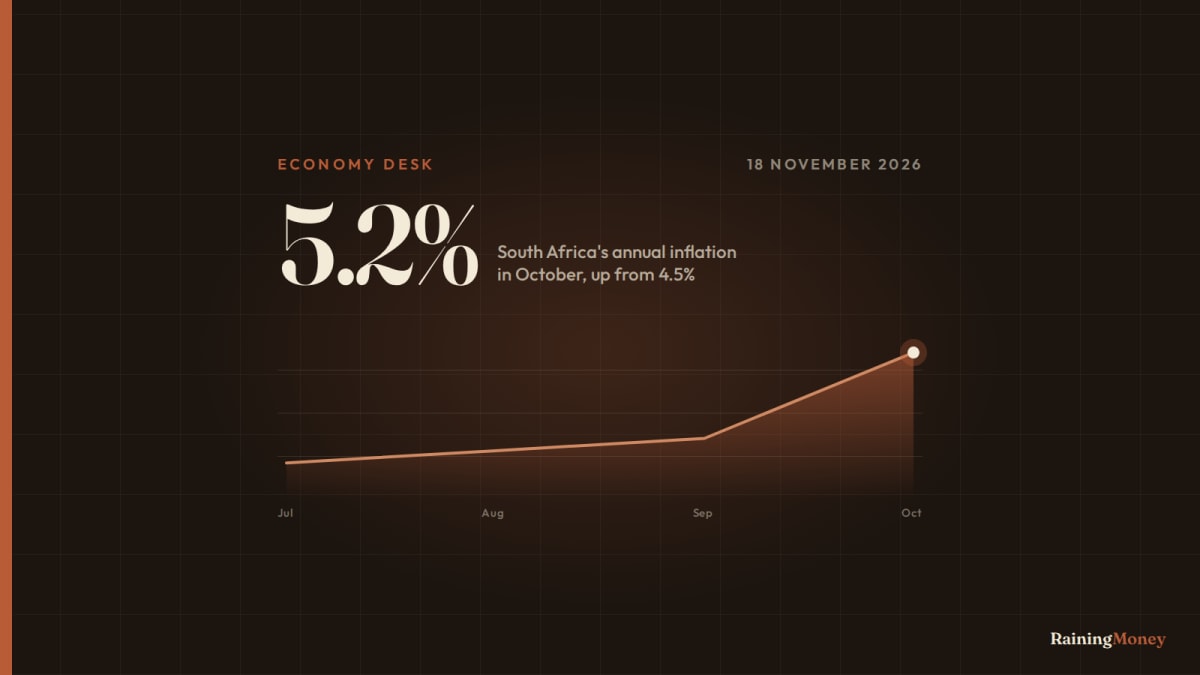
Prices in South Africa are rising at their fastest pace in more than two years. Annual inflation jumped to 5.2% in October from 4.5% in September, Statistics South Africa said on Wednesday, 18 November 2026. That is the highest rate since May 2024, when it was also 5.2%. The figure lands a day before the South African Reserve Bank (SARB) announces its next interest rate decision.
Inflation is the rate at which the general level of prices goes up over a year. A rate of 5.2% means that a basket of goods and services that cost 100 rand in October 2025 cost about 105.20 rand in October 2026.
How fast has inflation been rising?
South African inflation has risen in each of the last three months. The table shows the annual rate reported for each month since July.
| Month | Annual inflation |
|---|---|
| July | 4.3% |
| August | 4.4% |
| September | 4.5% |
| October | 5.2% |
Derived: the rate rose 0.1 percentage points in each of August and September, then 0.7 percentage points in October (5.2 minus 4.5). October's jump was seven times the size of each of the two before it.
What pushed prices up in October?
Food. Annual inflation for food and non-alcoholic drinks rose to 1.4%, its third monthly increase in a row. Inside that group, some everyday items rose sharply:
- Vegetables were 8.1% dearer than a year earlier, up from 3.5% in September. In May, vegetable prices had been falling, at 6% below a year before.
- Onions rose 53.6% in a year, potatoes 14.9% and cabbage 12.1%. Tomatoes rose 13.2% in a single month.
- Fish and seafood rose 8.4%, up from a low of 3% in February. Fish fingers were up 13.2% and hake 11.2%.
Some staples moved the other way. Cereal products were 2% cheaper than a year earlier, the ninth month in a row of annual declines. Maize meal fell 9% and white rice 7.3%. Meat prices barely moved, with annual inflation of 0.2%, down from 0.7% in September.
Fuel is the other pressure. South Africa imports most of its fuel, and energy markets have been unsettled since the Iran war broke out in late February. In September, transport costs were up 10.8% on a year earlier and made the single biggest contribution to inflation, adding 1.5 percentage points to the headline rate.
What will the central bank do?
The SARB's job is to keep inflation close to its 3% target, with a tolerance band of one percentage point either side. At 5.2%, inflation is now above the top of that band.
The bank has already been raising its main lending rate, the repo rate. It raised it to 7% in May, its first increase since 2023, and to 7.25% in September. When it raised rates in September, it forecast that inflation would rise above 5% later in 2026 and in early 2027 before returning to about 3% towards the end of 2027. October's figure is in line with that forecast.
Policymakers are widely expected to leave the rate unchanged at Thursday's meeting. At least one bank, Bank of America, had forecast another increase in November, which would take the rate to 7.5%.
A higher repo rate makes borrowing dearer. Banks pass it on to people with home loans, car loans and business credit, which slows spending and, over time, eases pressure on prices.
What happened to the rand?
The rand fell to its weakest level against the dollar in seven months on Wednesday, down more than 1% at 17.13 to the dollar by early afternoon in Johannesburg. A fall in the gold price, which dropped below $3,800 an ounce, weighed on the currency. South Africa is a major gold producer, so a lower gold price means less money from its exports.
A weaker rand also feeds inflation, because imported goods such as fuel cost more in rand terms.
Why should Nigerians care about South African prices?
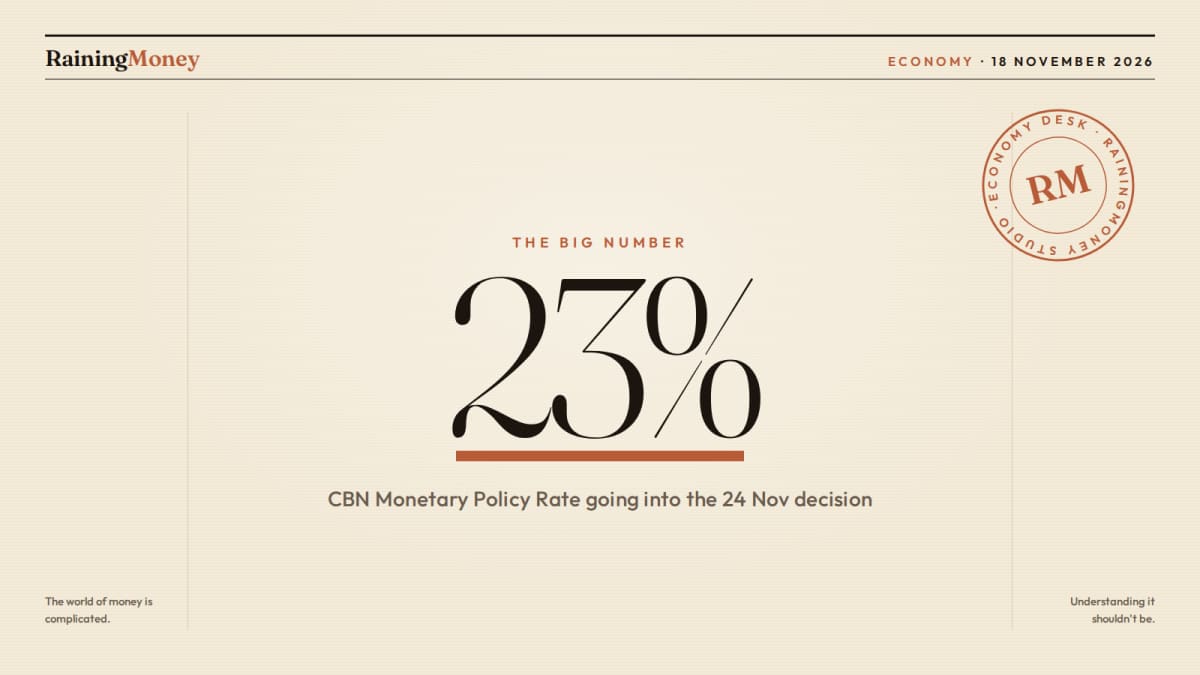
The two economies are moving in opposite directions. Nigeria's inflation slowed to 14.06% in October from 14.63% in September, and the Central Bank of Nigeria (CBN) cut its Monetary Policy Rate to 23% in September. Its Monetary Policy Committee meets again on 23 and 24 November. South Africa, by contrast, is raising rates as its inflation rises.
RainingMoney's reading: that gap matters for money that moves around Africa. South African pension funds and asset managers are among the continent's largest investors, and they were among the foreign buyers bidding for shares in the Dangote refinery IPO this month. Higher rates at home can make South African assets more attractive to those same investors. Several large companies that operate in Nigeria, including MTN, have their home base in South Africa, so a weaker rand and slower spending there can affect their group results.
What do we not know yet?
- Whether the SARB holds or raises rates on Thursday, and what it says about the months ahead.
- Whether October's food jump, driven by vegetables such as onions and potatoes, will fade as harvests change, or spread to other items.
- How long the energy shock linked to the Iran war lasts, which matters for both South Africa and Nigeria.
RainingMoney will follow the rate decision and what it means for African markets.
Sources & Verification
- Sources: Bloomberg
- Editorial note: This explainer is an original RainingMoney adaptation of the report, RainingMoney has added explanatory context.

Founder and Editor-in-ChiefAbuja
Betini Udom
Founder and Editor-in-Chief of RainingMoney. Covers Nigerian, pan-African and global markets, finance and economic policy.
Author profile & archive →The Money Print
Market intelligence before the market opens.
Pan-African capital flows and the stories behind the numbers, on weekday mornings.