
EnergyHigh
Why Cooking Gas Prices Are Rising Again and What It Means for Your Kitchen Budget
Dangote Refinery raises LPG gantry price by 8.1% to ₦1,000/kg, signaling fresh retail price hikes for Nigerian households and small businesses using cooking gas.
By Janefrances Neche Published 5 min read Editorial Policy Report a correction
What exactly happened to cooking gas prices?
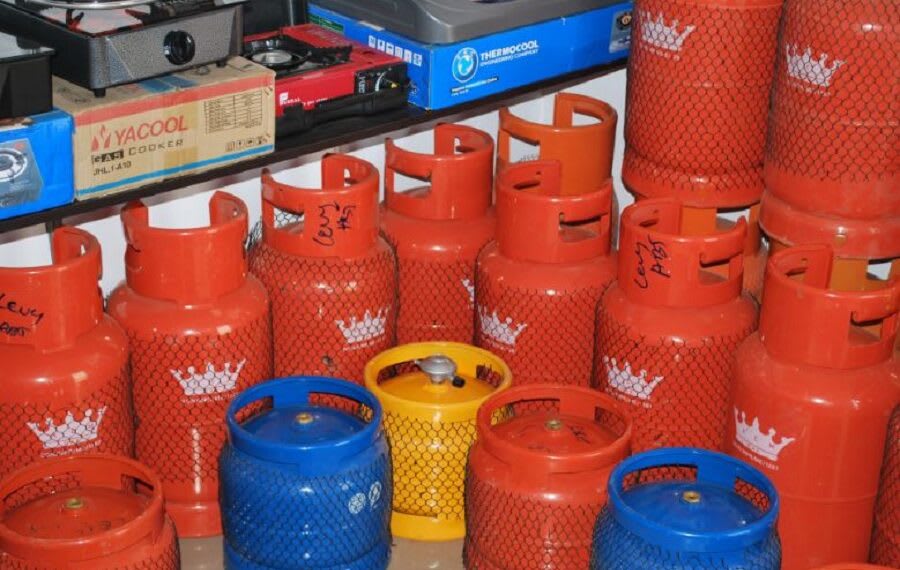
Dangote Petroleum Refinery has adjusted its wholesale price for liquefied petroleum gas (LPG)—the fuel millions of Nigerian families and food businesses use for cooking—upward to ₦1,000 per kilogram. Prior to this adjustment, the refinery sold the product at its loading gate for ₦925 per kilogram.
This represents an 8.1% increase, adding ₦75 to every single kilogram of gas loaded at the facility. While an extra ₦75 per kilogram might sound modest on paper, its effect multiplies once the gas travels through the supply chain to neighborhood refilling plants and retail cylinder stations.
To put this price change into everyday terms:
- Small 6kg cylinder: The raw product cost at the refinery gate increases by ₦450 (derived: 6kg × ₦75).
- Standard 12.5kg cylinder: The base product cost at the refinery gate increases by ₦937.50 (derived: 12.5kg × ₦75).
- Large 50kg commercial cylinder: Used predominantly by bakeries, hotels, and industrial kitchens, the base cost rises by ₦3,750 (derived: 50kg × ₦75).
What do terms like "gantry price" and "depot price" actually mean?
Understanding energy news requires breaking down the jargon that traders and refiners use daily. When discussing cooking gas, three distinct price points determine what you eventually pay at your local station:
1. Gantry Price: The gantry is the physical loading rack at a refinery or processing plant where heavy road tankers park to load bulk fuel. The gantry price is the wholesale rate charged directly to licensed bulk buyers (known as off-takers) before any transport, bridging fees, or regional distribution costs are added. Dangote's new rate of ₦1,000/kg is a gantry price.
2. Depot Price: A depot is a large coastal or inland storage facility, often connected to marine jetties. Depot owners store bulk gas that has been brought in via sea vessels (either imported from abroad or shipped from offshore gas fields). As of 5 November 2026, private depot prices stood at ₦1,450 per kilogram—which is ₦450 higher than Dangote's refinery gantry rate.
3. Retail Price: This is the final rate per kilogram charged to you at the neighborhood gas plant or refilling point, incorporating local transport, electricity for pumping, cylinder testing, and the retailer's operational profit margin.
Why is there a ₦450 difference between refinery gas and depot gas?
A reader might naturally wonder why private coastal depots charge ₦1,450 per kilogram while the refinery gate rate is ₦1,000 per kilogram. The two figures are not directly comparable because they represent entirely different supply routes.
Coastal depot operators rely heavily on imported LPG or domestic cargoes shipped via marine tankers. Their prices must account for international dollar-denominated gas benchmarks, ocean freight rates, vessel chartering, port discharge tariffs, and marine insurance. When foreign exchange rates fluctuate or global shipping rates rise, coastal depot costs move up automatically.
By contrast, refinery gantry gas is loaded directly into trucks on dry land. However—in RainingMoney's reading—refineries periodically align their gantry prices with broader market realities to reflect rising operational inputs, equipment maintenance, and energy costs within their own processing units.
How does a price increase move from the refinery to your cylinder?
The journey of cooking gas from the refinery gate to your kitchen burner happens in four distinct stages, with costs accumulating at every stop:
- Refinery Loading: A 20-tonne long-distance road tanker buys bulk gas at the gantry for ₦1,000/kg (equating to ₦20,000,000 for a full truckload).
- Bridging & Transit: The tanker travels by road to urban distribution hubs in Lagos, Ibadan, Kano, or Enugu. Drivers pay diesel fuel costs, highway tolls, vehicle maintenance, and transit security.
- Secondary Depots & Retail Plants: The gas is discharged into regional storage tanks. Plant owners factor in running generators for pumping power, staff wages, regulatory compliance fees, and local government levies.
- Final Cylinder Refill: You bring your empty cylinder to the station. Retailers add a final margin to cover losses from evaporation during transfer and daily operational expenses.
Because transport and running costs vary across states, a ₦75 increase at the refinery gate often translates to a ₦100 to ₦150 per kilogram increase by the time the gas reaches final consumers in distant inland markets.
How will this impact your household budget and small businesses?
For the average Nigerian family, cooking gas is not a luxury item—it is an essential monthly utility. Over the past five years, millions of urban households made the clean energy switch away from kerosene stoves and dirty charcoal.
When cooking gas prices rise, families face immediate choices. A household that consumes two 12.5kg cylinders per month could see its total monthly cooking fuel expense rise by ₦2,000 to ₦3,500 depending on location. For a family earning a modest salary, this extra expenditure directly squeezes funds available for food staples, transport, and school fees.
"Persistent price hikes in cooking gas risk undoing years of progress in Nigeria's transition to clean energy, forcing vulnerable households back to health-hazardous fuels like charcoal and wood."
Industry body National Association of LPG Marketers (NALPGM) has consistently warned that rising LPG costs create severe public health and environmental risks. When gas becomes unaffordable, low-income households revert to firewood and charcoal, increasing indoor smoke pollution and driving deforestation.
Small businesses face an equally tough dilemma. Buka operators, fast-food outlets, bakeries, and dry-cleaning services use large volumes of gas daily. Because competition limits how much they can raise food prices without losing customers, many will absorb the cost by reducing portion sizes or cutting other operating expenses.
What does this tell us, and what remains unknown?
This development tells us that domestic refining capacity alone does not automatically insulate consumers from price adjustments. While local refining eliminates ocean freight charges on domestic volumes, baseline production costs remain linked to broader economic conditions and energy prices.
What remains unknown at this stage is whether domestic LPG output will expand rapidly enough in the coming months to replace expensive imported cargoes entirely. Furthermore, it is not yet clear whether transport unions and LPG marketers will absorb part of the gantry increase or pass the full ₦75—plus added transport markups—directly to retail customers.
Sources & Verification
- Sources: National Association of LPG Marketers (NALPGM) Industry Bulletins
- Editorial note: This explainer is an original RainingMoney adaptation of the report, RainingMoney has added explanatory context.

Correspondent, AbujaAbuja
Janefrances Neche
Janefrances is a finance correspondent specializing in emerging markets, consumer economics, and policy analysis. Most recently reporting for regional business desks, she has tracked shifting…
Author profile & archive →The Money Print
Market intelligence before the market opens.
Pan-African capital flows and the stories behind the numbers, on weekday mornings.