EnergyHigh
US election results and oil prices: what they could mean for Nigeria's oil income
Democrats made gains in the US midterms and Brent crude slipped below $100. Here is how a vote in America can reach Nigeria's oil income, and what is still unknown.
By Janefrances Neche Published 8 min read Editorial Policy Report a correction
American voters have just changed the balance of power in Washington. Oil traders reacted fast. Brent crude, the price benchmark for Nigeria's oil, fell almost 9 percent in a night to below $100 a barrel for the first time in two months. It then fell another 2 per cent to $95.
Nigeria sells crude to earn dollars and to fund its government. So a move in the oil price matters here, even when the trigger is an election thousands of kilometres away. This explainer walks through what happened, how it could reach your pocket, and what nobody knows yet.
What happened in the US election?
The Democratic Party made gains in the United States midterm elections. These are votes held halfway through a president's term. They decide who controls Congress, the body that passes laws and approves spending.
The results complicate President Donald Trump's plans. He has pushed for more American oil and gas output, and he has taken a particular line on climate policy and on dealing with other countries over energy.
Energy costs were a big theme in the vote. In Texas, the biggest oil-producing state, voters elected a Democrat to the Railroad Commission for the first time since 1990. That body regulates the state's oil and gas industry. Republicans still hold a 2-1 majority on its three seats. Texas voters also unseated Governor Greg Abbott, a Republican, in favour of Democrat Gina Hinojosa, who promised tougher rules on new data centres, the energy-hungry buildings that run computing and artificial intelligence.
Why did oil prices fall?
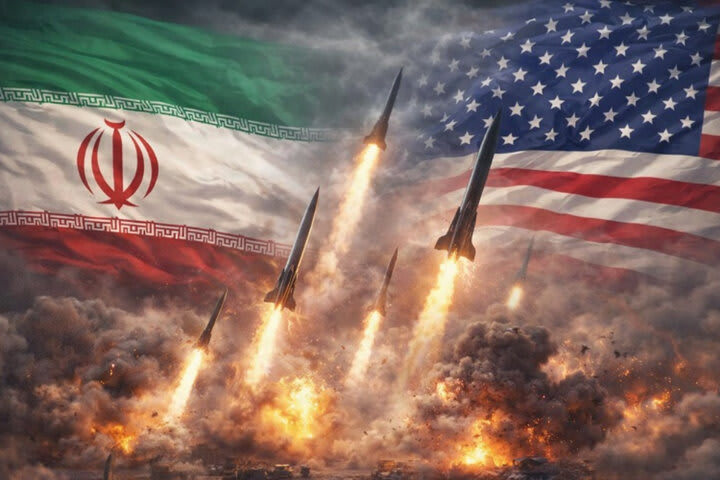
The main reason is the Iran war, according to the source's account of how traders were thinking. Traders bet that the election results would push Mr Trump to end the US-Iran conflict sooner. A war in the Middle East can threaten oil supply, so buyers pay extra to be safe. If peace looks closer, that extra charge shrinks and prices drop.
One analyst at Deutsche Bank said in a note that oil flows through the Middle East have largely recovered. He said the market is still pricing in a large risk premium. A risk premium is simply the extra amount built into a price because something bad might happen. If the fear fades, the premium can come out quickly.
A Peterson Institute economist, Jacob Funk Kirkegaard, said on social media that Congress will probably get little done in the next two years. He said the scale of the Republican defeat might push Mr Trump to be less erratic. He added that a deal with Iran and lower energy prices are the most important political goals now.
Some analysts expect further falls. One at GasBuddy said Brent could drop by more than $10 in the coming days. An adviser at Gulf Oil said the weeks before Christmas are usually hostile to higher fuel prices, and prices could be considerably lower by the second half of December if the US and Iran avoid worsening the conflict. These are forecasts. They can be wrong.
Why does a US vote matter to OPEC?
OPEC is the Organisation of Petroleum Exporting Countries, a group of oil-producing nations that coordinate how much crude they pump. Nigeria is a member. The United States is not.
Even so, the US shapes the market. Its production, its decisions on its emergency oil stocks, its sanctions and its relationships with big producers all affect prices and the choices OPEC members make.
A Democratic-led Congress is likely to stress environmental protection, emissions cuts and renewable energy. It could also look again at subsidies for fossil fuels, federal oil leasing and the environmental effects of drilling.
That does not mean American oil output will fall soon. The source says US shale producers mainly respond to crude prices, drilling costs and what investors demand in returns. A less predictable rule book could still weigh on long-term investment decisions.
If American output growth did slow, OPEC would face a different competitive picture. But lower American output would not automatically lift prices. If global demand weakens, or other producers pump more, prices can still fall.
What is the Strait of Hormuz, and why is it in this story?
The Strait of Hormuz is a narrow sea passage in the Persian Gulf. A large share of the world's oil ships through it. The Iran conflict has raised fears that those shipments could be disrupted.
The source says Democrats now have more leverage to challenge the administration's handling of the war, including military spending and diplomacy. An economist at Rystad Energy said in a note that Democratic control of both chambers could shorten the administration's political runway and increase pressure to reach an agreement on Hormuz. The idea is that Congress could push Washington toward a settlement that keeps the waterway open.
That is a possibility, not a certainty. Nothing in the source says a deal is close.
How exposed is Nigeria?
Very exposed. Nigeria is Africa's largest crude producer. The source says oil exports underpin the country's foreign-exchange earnings, government revenue, and its ability to pay for imports and meet its external obligations.
Foreign exchange simply means foreign money, mostly dollars. Nigeria needs dollars to pay for imported goods and to repay money it owes abroad. Oil sales are its main source.
Output has recovered after years of weakness caused by theft, pipeline disruption and underinvestment. The Nigerian Upstream Petroleum Regulatory Commission (NUPRC) said the country produced an average of 1.53 million barrels a day of crude in September, not counting condensates, a very light oil from gas fields. The regulator said that was about 102 percent of Nigeria's OPEC quota of 1.5 million barrels a day. A quota is the production limit a member is given. It was the fifth straight month Nigeria met its allocation, the regulator said on 13 October.
Here is our working, labelled derived. 1.53 million minus 1.5 million is 0.03 million, so Nigeria produced about 30,000 barrels a day above its quota. And 1.53 divided by 1.5 gives 1.02, which is the 102 percent.
More output helps when prices are high. It does less when prices fall. The source says that if prices drop sharply, extra barrels may not be enough to protect government receipts, especially if production growth stalls or costs rise. In plain terms, the government needs both more barrels and a firm price.
How could lower oil prices reach my money?
The source does not trace every step to households, so what follows is general explanation of how this tends to work, not a forecast.
- Government income. The government plans its yearly budget using an expected oil price. If actual prices run below that, less money comes in than planned. The source says a sustained slide could undercut revenue projections and complicate budget execution, meaning the government may struggle to spend as planned.
- Dollar supply. Fewer oil dollars coming in means less foreign currency in the system. The source says a price slide could add pressure on dollar supply.
- Prices in the shops. Nigeria buys many goods from abroad. When dollars are scarce, the naira can weaken, and imported goods can cost more. That is how a story about crude oil can show up in the price of a bag of rice or a phone. The source does not say this will happen now, and the size of any effect is not known.
None of this is certain. A brief dip in prices is different from a long slide. The source describes the risk as arising from a sustained fall.
What about renewable energy and the NNPC listing?
The source says a stronger push in Congress for renewables could improve the outlook for solar, wind and battery storage. It has been reported that renewable energy companies welcomed the election results. This is unconfirmed in the material we have. A chief executive of a Gulf solar company said at an energy conference that he expects more adoption of renewable energy.
That could mean more competition for investors' money. The source says Nigeria needs heavy investment in oil, gas and power, so the shift is both a risk and an opening. It adds that oil will stay central to transport, petrochemicals and industry for decades.
The outcome also bears on the planned share sale, known as an initial public offering or IPO, of Nigerian National Petroleum Company Ltd. A more uncertain oil market could change how foreign investors judge its long-term earnings, including its exposure to crude prices, production and government policy.
What do we not know yet?
- Whether the Iran war actually ends sooner. Traders are betting on it. No deal is described in the source.
- Whether oil prices keep falling. Analysts give different views and forecasts often miss.
- How much Nigeria's oil income would fall. The source gives no figures for Nigeria's revenue, budget oil price or dollar earnings.
- How far a Democratic Congress will change American energy policy. The source says output will not fall soon, and long-term investment is the more likely channel.
RainingMoney's reading: the election does not change Nigeria's oil income directly. The link runs through oil prices, and those depend mostly on the Iran war and global demand. That is why the next few weeks of price moves will say more than the election result itself.
What should readers watch next?
Watch the Brent price, any sign of talks between the US and Iran, and the NUPRC's next monthly output figures. Those three will show whether Nigeria's higher production is being met by firm prices, or whether the budget and dollar supply come under pressure.
Sources & Verification
- Source: BusinessDay
- Editorial note: This explainer is an original RainingMoney adaptation of the report, RainingMoney has added explanatory context.

Correspondent, AbujaAbuja
Janefrances Neche
Janefrances is a finance correspondent specializing in emerging markets, consumer economics, and policy analysis. Most recently reporting for regional business desks, she has tracked shifting…
Author profile & archive →The Money Print
Market intelligence before the market opens.
Pan-African capital flows and the stories behind the numbers, on weekday mornings.