TechnologyMedium
Africa Has 92% Mobile Coverage, yet 64% Still Aren't Online
Mobile broadband now reaches 92% of Africans, yet 64% of people covered do not use mobile internet, a new GSMA index says, with phone costs the biggest barrier.
By Betini Udom Published 5 min read Editorial Policy Report a correction
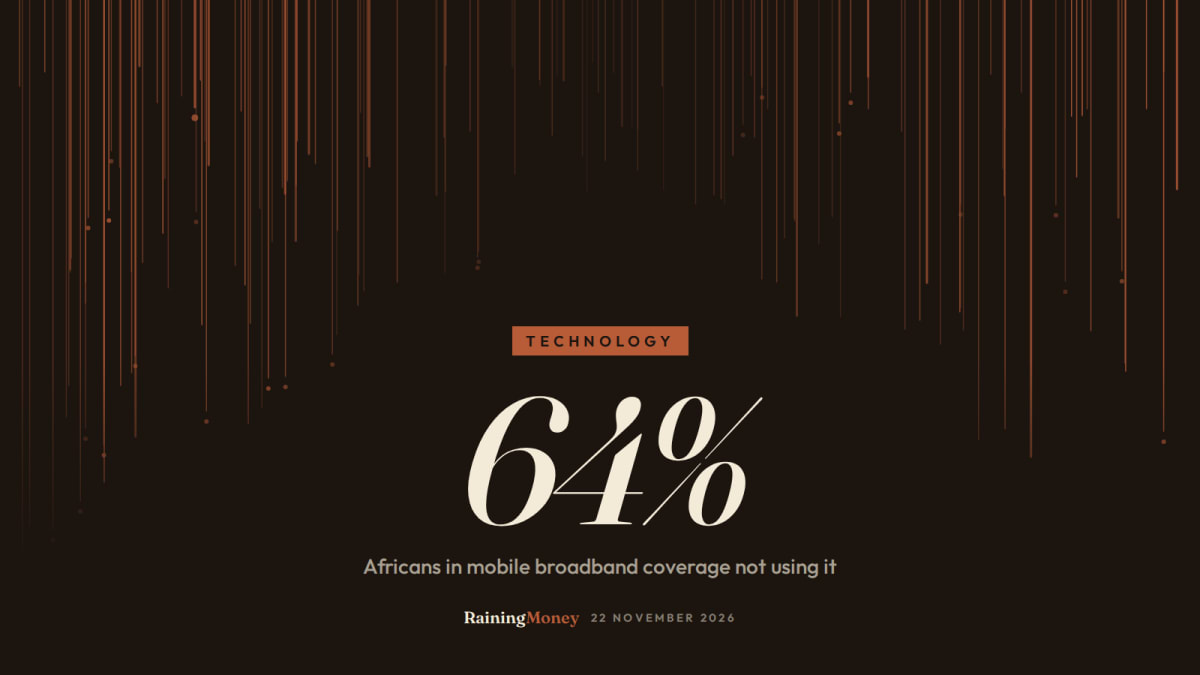
Mobile broadband networks now cover 92% of Africa's people, but 64% of the population still does not use mobile internet, according to the GSMA's Digital Africa Index 2026. The GSMA, the global body for mobile network operators, launched the index on 18 November at its Digital Africa Summit in Cape Town, South Africa. It says only 28% of Africans use mobile internet on a device of their own.
What is the "usage gap"?
There are two reasons a person might not be online. The first is that no network reaches them; that is the coverage gap. The second is that a network does reach them, but they still do not use it; that is the usage gap.
In Africa, the second problem is now far bigger than the first. The GSMA says Africa's usage gap is the largest of any region in the world. In plain terms: the towers have mostly been built, and the people living under them are not yet connected.
For Nigeria, the GSMA estimates that about 140 million people were in the usage gap in 2025, according to its State of Mobile Internet Connectivity 2026 report.
Why are people not going online?
The GSMA points to three main barriers:
- The cost of a smartphone. For many households, the device itself is the biggest hurdle.
- Digital skills. Many people do not know how to use the internet, or how it could help them.
- Relevant content. There is too little useful material in local languages and for local needs.
Earlier this year, at a GSMA workshop in Abuja in July, the association's senior director for public policy in Africa, Caroline Mbugwa, said customers are willing to use mobile services but the cost of devices remains a barrier. She also argued that affordable smartphones are a precondition for Africans to benefit from artificial intelligence.
Do taxes make phones dearer?
The GSMA says so. Its index found that only 9 of the 54 African countries it assessed charge neither sector-specific taxes nor import duties on mobile handsets, down from 10 in 2024. That means more countries now tax phones in these ways than two years ago.
The association holds up South Africa as an example of what removing the tax can do. In April 2025, South Africa scrapped its 9% excise duty on smartphones priced below R2,500. Monthly sales of entry-level smartphones then rose about 80%, from around 250,000 units in March 2025 to 460,000 in February 2026, according to GSMA analysis.
An excise duty is a tax charged on specific goods, such as alcohol, fuel or, in this case, phones. When it is removed, sellers can cut prices, and more people can afford to buy.
RainingMoney's reading: the South African numbers show a correlation, not proof. Other things, such as cheaper devices from manufacturers or changes in household incomes, may also have played a part. But an 80% jump in sales is large enough to explain why the GSMA leans on it.
What does the GSMA want governments to do?
The index lists three main recommendations:
- Remove import duties and sales taxes on entry-level smartphones.
- Expand device financing, so people can pay for a phone in instalments instead of all at once.
- Release radio spectrum, the airwaves mobile networks use, at prices that leave operators money to invest in their networks.
In July, the GSMA also urged regulators to stop tying licences to specific technologies, so operators could use options such as satellite, and to review Universal Service Funds. These are levies operators pay to fund connections in poor or remote areas; the GSMA says many of these funds sit unused, which turns them into an extra tax on the industry.
How did Nigeria do in the index?
Better than in 2024. The index groups countries by how developed their digital economy is and how supportive their policies are. Ten countries are now in the top group, which pairs stronger digital development with enabling policy, up from three in 2024. Nigeria joined that group this year, alongside Egypt, Ghana, Rwanda, Senegal, Seychelles and Tunisia. They join Kenya, Mauritius and South Africa, which were already there.
South Africa and Kenya had the highest scores on the index's measure of digital development, at 69 and 65 out of 100. Egypt and Ghana improved most on the policy and regulation measure since 2024, thanks to reforms in cybersecurity, spectrum management, consumer protection and digital inclusion. The index does not, in the published summary, give Nigeria's own score.
The GSMA's head of Africa, Angela Wamola, said Africa has made real progress in extending mobile broadband coverage. The index's message is that the next gains depend on getting people to use it.
What does this mean for Nigerians and Nigerian businesses?
For individuals, being offline now has a cost. Mobile money, bank transfers, online marketplaces, job applications and many government services increasingly run through a smartphone. A trader who can't receive transfers or check prices online is at a disadvantage against one who can.
For telecom operators, fintech firms and online businesses, the 140 million Nigerians in the usage gap are a large market that is not yet being served. RainingMoney's reading: networks already reach these people, so each one who comes online adds revenue without the cost of building new towers. That makes cheaper phones one of the cheapest ways to grow the digital economy.
For government, the trade-off is revenue. Taxes and duties on phones bring in money today; removing them gives that up in the hope of a bigger, more productive digital economy later. The GSMA's report does not put a figure on what Nigeria would gain or lose.
What happens next?
The GSMA wants governments to use the index to guide their policies. Whether Nigeria changes how it taxes handsets is the thing to watch: the country moved into the index's top group on policy, but its usage gap, measured in people, is one of the largest on the continent.
Sources & Verification
- Sources: Nairametrics
- Editorial note: This explainer is an original RainingMoney adaptation of the report, RainingMoney has added explanatory context.

Founder and Editor-in-ChiefAbuja
Betini Udom
Founder and Editor-in-Chief of RainingMoney. Covers Nigerian, pan-African and global markets, finance and economic policy.
Author profile & archive →The Money Print
Market intelligence before the market opens.
Pan-African capital flows and the stories behind the numbers, on weekday mornings.