EnergyMedium
FG Pays ₦1.23tn of Power Plant Debts: What It Means for You
The government has paid ₦1.23tn of the ₦3.3tn it owes power plants, raised through bonds. What it means for gas, electricity supply, tariffs and taxpayers.
By Betini Udom Published 6 min read Editorial Policy Report a correction
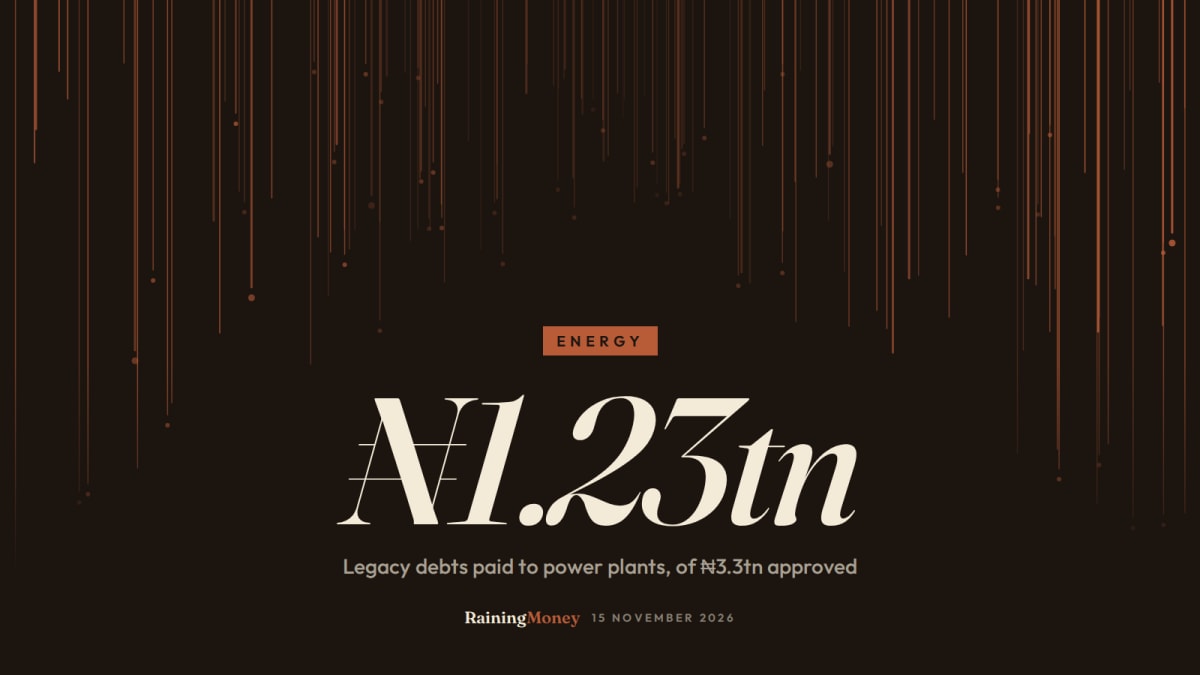
The federal government has paid ₦1.23tn of the old debts it owes to the companies that generate Nigeria's electricity, the Minister of Power, Joseph Tegbe, said. He gave the figure at a luncheon with senior editors in Lagos on Friday, and said the government is betting that clearing these arrears will help revive a power sector that has stalled.
The payment is part of a ₦3.3tn settlement plan that President Bola Tinubu approved in April 2026. The minister also conceded that Nigerians are right to be frustrated with unreliable supply. Below, we explain what the debt is, where the money came from, and what it could mean for the light in your home or shop.
What exactly did the minister announce?
In plain terms, the government says it has settled more than a third of the bill it agreed to pay. Here are the main figures:
- Paid so far: ₦1.23tn, which the minister said was paid down over the last few months.
- Total approved: ₦3.3tn, for debts the government has checked and accepted.
- Left to pay: about ₦2.1tn (derived: ₦3.3tn minus ₦1.23tn is ₦2.07tn). In an earlier television interview, the minister rounded this to ₦2tn and said it would be paid next year.
The share already settled works out at about 37% (derived: ₦1.23tn divided by ₦3.3tn).
What are these "legacy debts" and who is owed?
Generation companies, often called GenCos, own the power plants. They sell electricity into the national grid, and distribution companies (DisCos) deliver it to homes and businesses and collect the bills. When customers pay less than electricity really costs, or DisCos fail to collect, the shortfall travels back up the chain and the GenCos go unpaid.
For years, the government covered part of that gap but did not pay in full. The unpaid amounts piled up. "Legacy" simply means old: the government said the debts in this plan built up between February 2015 and March 2025.
The GenCos say they are owed more. They put the sector's debt, including what they owe their gas suppliers, at about ₦6.8tn as of March 2026. The government ran a verification exercise, a check of each claim against records, which cut the claims it accepts from more than ₦4tn to about ₦3.3tn. That gap between what the companies claim and what the government accepts has not been settled publicly.
Where did the ₦1.23tn come from?
The government did not pay from one year's budget. It raised the money by selling bonds. A bond is a loan from investors: they hand over money today, and the borrower pays them interest and returns the money on a set date. The bonds were issued through Nigerian Bulk Electricity Trading Plc (NBET), the government-owned company that sits between the power plants and the distribution companies.
| Series | Amount | Details |
|---|---|---|
| Series 1 | About ₦501bn | ₦300bn in cash and ₦201bn in non-cash bonds; seven years at 17.5%; eight GenCos took part |
| Series 2 | ₦728.979bn | ₦402bn in cash and ₦326.979bn in non-cash bonds; settlement began 9 October 2026; 11 GenCos took part |
| Total | About ₦1.23tn | Derived: ₦501bn plus ₦729bn |
A "non-cash" bond means some creditors received the bond itself in place of money, so they now hold a government-backed paper that pays interest over time. The first series paid its first interest instalment, about ₦63.5bn, on 14 July 2026.
This matters for taxpayers. The arrears have been turned into a new debt that carries interest. RainingMoney's reading: the government has swapped an unpaid bill for a loan, which gives the power plants cash now but adds to what the country must repay later.
Why should paying power plants change anything for me?
The minister's argument runs like this. Nigeria has enough gas, he said, but GenCos often cannot pay for it because they are owed so much. A power plant that cannot buy gas or pay for repairs produces less, or stops. In March 2026, industry data showed 16 of Nigeria's 33 power plants were not supplying the grid, and the rest produced a combined 3,705 megawatts (MW). A megawatt is a unit for measuring how much electricity a plant produces at a time.
The minister said the money has eased the pressure on generators. RainingMoney's reading: plants that can pay for gas are more likely to keep running, which could mean more electricity reaching the grid over time.
There is a limit to what this payment alone can do. Recent outages in Lagos came from planned maintenance at the Egbin power plant and vandalism of a transmission line, which together cut supply by hundreds of megawatts. Money paid to generators does not fix broken lines or poles. The minister has said Nigerians should feel the effect of the government's power programmes within three to five years.
Will my electricity tariff go up because of this?
The minister has said several times this year that the government has no plan to raise tariffs beyond their current level, and that it is focusing on metering, grid stability and collecting revenue instead. More than 2.8 million customers were metered between 2023 and October 2026, he said.
Keeping tariffs flat has a cost. Tariffs remain below what it costs to supply power, so the government pays a subsidy to close the gap. In the second quarter of 2026, that subsidy came to ₦321.26bn, or 49.6% of the ₦647.72bn the DisCos were invoiced by the GenCos, according to the electricity regulator. In other words, about half the cost of the power that left the plants in that quarter was covered by the government.
RainingMoney's reading: if the subsidy is not paid in full and on time, new arrears can build up even as the old ones are cleared.
What does it mean for small businesses and households?
For a barber, a tailor or a cold-room operator, steadier power means less money spent on petrol and diesel for generators. That is the payoff the government is aiming for. For now, it is a promise, and the gains depend on gas supply, the transmission grid and the distribution companies, as well as the generators.
For households, the most direct effects are the tariff freeze, which holds bills where they are, and meters, which let customers pay for what they use rather than an estimate.
What should we watch next?
- When and how the remaining ₦2tn to ₦2.1tn is paid, and whether it is again raised through bonds.
- Whether the GenCos accept ₦3.3tn as the final figure, given their larger claim.
- Grid output in the coming months, and progress on the government's 10,000 MW generation target.
- The regulator's next subsidy figures, which show whether new debts are building up.
Sources & Verification
- Source: BusinessDay
- Editorial note: This explainer is an original RainingMoney adaptation of the report, RainingMoney has added explanatory context.

Founder and Editor-in-ChiefAbuja
Betini Udom
Founder and Editor-in-Chief of RainingMoney. Covers Nigerian, pan-African and global markets, finance and economic policy.
Author profile & archive →The Money Print
Market intelligence before the market opens.
Pan-African capital flows and the stories behind the numbers, on weekday mornings.