
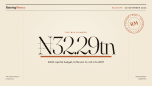
Nigeria’s reserves hit $55 billion in October. The naira still got weaker. Here is why.
The naira lost ₦16.17 against the dollar in October, even as reserves rose and the CBN sold about $1.98 billion. Rising prices outside food and a US central bank leaning towards higher rates help explain it.
The exchange rate decides what you pay for imported food, medicine, phones, fuel and school fees abroad. When the naira slips even in a good month for reserves, it tells you the pressure on prices has not gone away. An exchange rate is a price: how many naira it takes to buy one US dollar. Like any price, it moves with supply and demand. When more people and companies want dollars than are on offer, the naira weakens. When dollars are plentiful, it strengthens. Nigeria’s foreign reserves, the dollars and other foreign assets held by the Central Bank of Nigeria (CBN), are meant to steady that price by giving the central bank something to sell when demand runs ahead of supply.
## What happened to the naira in October?
On the official market, the naira started October at ₦1,330.09 to the dollar and ended it at ₦1,346.26, a loss of ₦16.17, or about 1.2%.[1] On the street, the parallel market rate fell from ₦1,360 to ₦1,385.[1] The gap between the official and street rates closed the month at about ₦39.[1]
The month was not smooth. Between 21 and 23 October, the official rate went from ₦1,334.72 to ₦1,361.84, a loss of ₦27.12 in two trading days, before partly recovering.[2] A second tracker, using slightly different reference days, puts October’s fall at about 1.31%.[2]
> **Big number: ₦1,346.26 per $** (was ₦1,330.09). The official naira rate at the start and end of October 2026, in naira per US dollar.
## Didn’t the reserves go up?
They did. External reserves stood at $55.24 billion on 29 October, up 28.02% from $43.15 billion a year earlier.[1] Trading also picked up: turnover on the main official market, the Nigerian Foreign Exchange Market, rose to $16.64 billion in October from $12.98 billion in September, and trading between banks rose 77.97% to $5.25 billion.[1]
So why did the naira weaken? Reserves are a buffer, not a guarantee. The central bank decides how much to sell, and buyers decide how much they want. A large stock of reserves does not stop the price falling if demand on any given day runs ahead of what is offered.
## How much did the CBN sell, and was it enough?
The CBN sold about $1.98 billion into the market in five separate interventions in October: $430.6 million, $200 million, $950 million, $100 million and $300 million.[2] Demand was fully met in only two of the five, a 40% success rate.[2] In the other three, buyers wanted more dollars than the central bank offered.
Analysts expect demand for dollars to rise further ahead of the festive season,[2] when importers stock up and families pay for travel and school fees abroad. Finance Minister Taiwo Oyedele has also pointed to wealthy individuals buying dollars, and warned that any return to petrol subsidies could renew pressure on the naira and push money out of the country.[1]
| Measure | Figure |
| Official rate, start of October | ₦1,330.09/$ |
| Official rate, end of October | ₦1,346.26/$ |
| Parallel market, end of October | ₦1,385/$ |
| External reserves, 29 October | $55.24bn |
| CBN sales in five interventions | about $1.98bn |
| Interventions where demand was fully met | 2 of 5 |
*Sources 1 and 2. Rates differ slightly between trackers depending on the reference day.*
## What do prices have to do with it?
A currency weakens when the money it buys loses value faster than other currencies. Nigeria’s headline inflation fell to 14.63% in September from 15.39% in August, but almost all of that improvement came from food prices dropping at harvest time.[3] Food prices fell 1.55% between August and September.[3]
Outside food, prices sped up. Core inflation, which leaves out farm produce and energy because their prices jump around, rose 1.11% in September alone, after a small fall in August.[3] At that monthly pace, core prices would rise about 14.2% over a year, faster than the published annual core rate of 12.95%.[3] Rents, school fees, transport fares and manufactured goods were all more expensive.[3] The split showed up between town and country too: rural prices fell 0.89% in the month, while urban prices rose 0.53%.[3] City households, which buy more of their food and pay higher rents, felt the opposite of the headline. An economist quoted on the figures put it simply: the September headline “flatters the picture”.[3]
Rising core prices matter for the naira because they eat into what naira savings are worth. Savers who expect prices to keep rising are more likely to move money into dollars, adding to demand.
## What is the US central bank doing?
On 28 October, the US Federal Reserve kept its benchmark interest rate in a range of 3.75% to 4%.[4] Two of the twelve voting members, Governor Lisa Cook and Cleveland Fed President Beth Hammack, wanted to raise it by a quarter of a percentage point.[4] The Fed had already raised rates in September, its first increase since 2023, and its September projections pointed to rates of between 4.1% and 4.4% by the end of the year.[4]
Higher US rates make dollar savings and US government bonds more attractive. That can pull investment money out of markets like Nigeria’s, adding to demand for dollars at exactly the moment the naira needs supply.
## What does it mean for a Nigerian household or business?
For an importer, October’s move means a $100 order cost about ₦1,617 more at the end of the month than at the start *(derived)*. For a parent paying fees abroad, the parallel market rate is the one that often applies, and it moved more: ₦25 per dollar over the month.[1]
For borrowers, the picture is still tight. The CBN’s benchmark rate is 23%, and the finance minister said in October that borrowing costs are “close to 30%”.[5] He set a goal of bringing inflation to low single digits before the end of 2027, so that borrowing can become cheaper.[5] That goal depends on the core price pressures above easing, and on the naira holding steady.
October shows the limits of reserves. A record buffer helps, but it cannot hold the rate if the central bank sells less than buyers want, and in three of five auctions it did.
The real warning is in core inflation, not the headline. Rents, fees and fares rising faster is what keeps people moving savings into dollars.
December is the test. Festive-season demand, a Federal Reserve leaning towards higher rates and pre-election spending all point the same way.
- - How much dollar demand went unmet in October. The CBN publishes what it sold, not what was asked for.
- - Who the main buyers were: importers, investors leaving, or households saving in dollars.
- - Whether the Federal Reserve will raise rates in December. Its next decision is still to come.
- - October’s inflation figures, which the National Bureau of Statistics has not yet released.
Sources
- 1. [Naira loses ₦16.17 in October despite rising reserves and higher FX turnover](https://ratecaptain.com/naira-loses-%E2%82%A616-17-in-october-despite-rising-reserves-and-higher-fx-turnover), RateCaptain, 4 November 2026
- 2. [Dollar scarcity threatens naira as CBN’s $1.98bn intervention fails to meet demand](https://legit.ng/business-economy/economy/1739348-dollar-scarcity-threatens-naira-cbns-198bn-intervention-fails-meet-demand), Legit.ng, 3 November 2026
- 3. [Nigeria’s inflation mirage: food prices fall, but core pressures mount](https://nairametrics.com/2026/10/18/nigerias-inflation-mirage-food-prices-fall-but-core-pressures-mount/), Nairametrics, 18 October 2026
- 4. [US Federal Reserve holds interest rates steady](https://www.gktoday.in/us-federal-reserve-holds-interest-rates-steady/), GKToday, 29 October 2026
- 5. [Nigeria targets single-digit inflation by end-2027 to unlock cheaper borrowing, minister says](https://www.cnbcafrica.com/2026/nigeria-targets-single-digit-inflation-by-end-2027-to-unlock-cheaper-borrowing-minister-says), CNBC Africa (Reuters), 26 October 2026
How we made this. Every figure is checked against the source it links to. Figures marked “derived” were calculated by RainingMoney. “Our reading” is our judgement, kept apart from the facts. This is explanation, not financial advice. See our editorial policy.