
EnergyMedium
TotalEnergies Deploys Ultra-Deepwater Rig to Nigeria's Akpo Field: What It Means for Oil Output and Your Money
TotalEnergies has deployed the Noble Black Rhino drillship to Nigeria's offshore Akpo field to drill up to six new wells, aiming to boost crude and condensate output.
By Janefrances Neche Published 5 min read Editorial Policy Report a correction
What just happened offshore Nigeria?
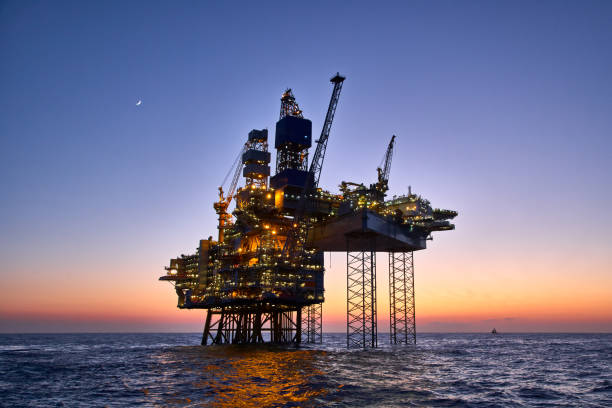
A massive deepwater vessel has positioned itself off the Nigerian coast to dig for fresh oil and gas reserves. The operator of the Akpo field, TotalEnergies Upstream Nigeria Limited, has brought in an ultra-deepwater drillship named the Noble Black Rhino. The vessel completed a 738-nautical-mile journey from Côte d'Ivoire, entering Nigerian territorial waters on 2 November 2026 before arriving at the field location at 6:00 a.m. on 3 November.
The company confirmed that preparations are underway to begin drilling the campaign’s first well, officially designated as well AFE-1X, on 13 November 2026. This initial well forms part of a broader field extension project aimed at drilling up to six additional production and injection wells over the coming months.
What is an ultra-deepwater drillship, and why is it needed at Akpo?
To extract oil miles beneath the ocean floor, standard drilling rigs cannot be used. An ultra-deepwater drillship is a heavy-duty ocean vessel fitted with advanced drilling apparatus designed to operate in ocean depths exceeding 1,000 meters.
The Akpo field lies in Petroleum Mining Lease 2 (formerly known as block OML 130), located roughly 130 to 150 kilometers off the Nigerian coast. The ocean floor at Akpo sits in water depths ranging between 1,300 and 1,500 meters—equivalent to stacking nearly five Lagos Civic Towers on top of one another under sea level.
Oil reservoirs buried beneath such intense sea pressure naturally lose natural pressure over time as oil and gas are extracted. To maintain output levels, operators must periodically bring in drillships to open new production channels (infill wells) or drill water injection wells to push remaining hydrocarbons up toward the surface vessel.
How does deepwater oil extraction work at Akpo?
Deepwater fields do not use solid platform legs anchored to the ocean floor. Instead, they rely on subsea technology connected to a floating processing factory known as an FPSO (Floating Production Storage and Offloading vessel).
Here is how the mechanism functions step by step:
- Step 1: Drilling the wellhead. The drillship lowers high-strength pipes and drill bits through more than a kilometer of seawater to drill thousands of meters into the seabed rocks.
- Step 2: Subsea completion. Heavy steel control valves, known as "Christmas trees," are installed on the sea floor to seal the wellhead and manage oil flow.
- Step 3: Subsea tie-back. Pipelines laid along the ocean floor connect the new well directly back to the existing Akpo FPSO vessel anchored nearby.
- Step 4: Separation and storage. The FPSO receives the liquid mixture, separates raw crude oil, light liquids (condensate), and natural gas, and stores the processed liquids in its hull until export tankers haul them to international buyers.
This "tie-back" approach allows energy companies to unlock new wells rapidly without building expensive new surface platforms, keeping extraction costs low and bringing new barrels online faster.
What is condensate, and why is it important for Nigeria?
While conventional crude oil is thick and heavy, the Akpo field is particularly rich in condensate. Condensate is a ultra-light liquid hydrocarbon that exists as a gas underground under high pressure but condenses into a clear liquid when brought to the surface.
Condensate is highly valued by petroleum refineries because it requires less refining effort to turn into premium gasoline, diesel, and aviation fuel. Furthermore, under international petroleum guidelines set by OPEC (the Organization of the Petroleum Exporting Countries), condensate output does not count against a nation's strict crude oil production quotas.
When TotalEnergies brought the nearby Akpo West tie-back project into production in February 2024, it instantly added 14,000 barrels per day of condensate to Nigeria's daily output. Drilling six additional wells under the new campaign aims to stem natural decline and add thousands of extra barrels per day of high-value crude and condensate.
How does more oil from Akpo affect your daily budget?
While offshore deepwater drilling might feel distant from daily life in Lagos, Kano, or Port Harcourt, the dollars generated by these wells directly impact local prices and public infrastructure.
Here is how the economic mechanism reaches households across Nigeria:
- Foreign exchange reserves and the naira: Crude oil and condensate exports represent Nigeria’s largest single source of foreign currency (US dollars). When deepwater fields yield more export barrels, the Central Bank of Nigeria (CBN) collects higher dollar royalties and taxes. More dollars in central bank reserves give policymakers the firepower needed to stabilize the naira against the dollar, tempering the cost of imported items such as rice, electronics, and medicine.
- Government budget allocations: TotalEnergies operates the block with a 24% stake alongside partners CNOOC (45%), Prime 130 (16%), and South Atlantic Petroleum (15%), under a production sharing arrangement with state-owned NNPC Limited. Increased crude production generates higher tax receipts and profit oil for the Federation Account, boosting funds distributed monthly to federal, state, and local governments for roads, health centers, and public salaries.
- Domestic fuel supply reliability: High-grade light crude and condensate produced offshore provide crucial feedstock for domestic refineries, supporting national energy security and lowering the long-term cost of transporting fuel across the country.
What does this news tell us, and what remains unknown?
This deployment demonstrates that international energy companies are actively committing capital back into Nigerian offshore projects following recent regulatory clarifications under the Petroleum Industry Act (PIA). Deepwater projects offer stable security environments compared to onshore pipelines that historically faced pipeline vandalism and crude theft.
However, key operational details remain undisclosed by the operator:
- Expected yield per well: TotalEnergies has not publicly disclosed the exact daily barrel capacity expected from well AFE-1X or the full six-well package.
- Completion timeline: While drilling spuds on 13 November 2026, the company has not specified the exact date when the first new oil from AFE-1X will reach the FPSO for commercial export.
Sources & Verification
- Sources:TotalEnergies Operational Announcement & Deepwater Rig Deployment Update
- Editorial note: This explainer is an original RainingMoney adaptation of the report, RainingMoney has added explanatory context.

Correspondent, AbujaAbuja
Janefrances Neche
Janefrances is a finance correspondent specializing in emerging markets, consumer economics, and policy analysis. Most recently reporting for regional business desks, she has tracked shifting…
Author profile & archive →The Money Print
Market intelligence before the market opens.
Pan-African capital flows and the stories behind the numbers, on weekday mornings.