EconomyLow
How the CBN rebuilt trust in the committee that sets Nigeria's interest rate
Cardoso says stronger independent members reduced groupthink at the CBN's MPC. The reforms, the September rate cut, and what remains unverified.
By Betini Udom Published 7 min read Editorial Policy Report a correction
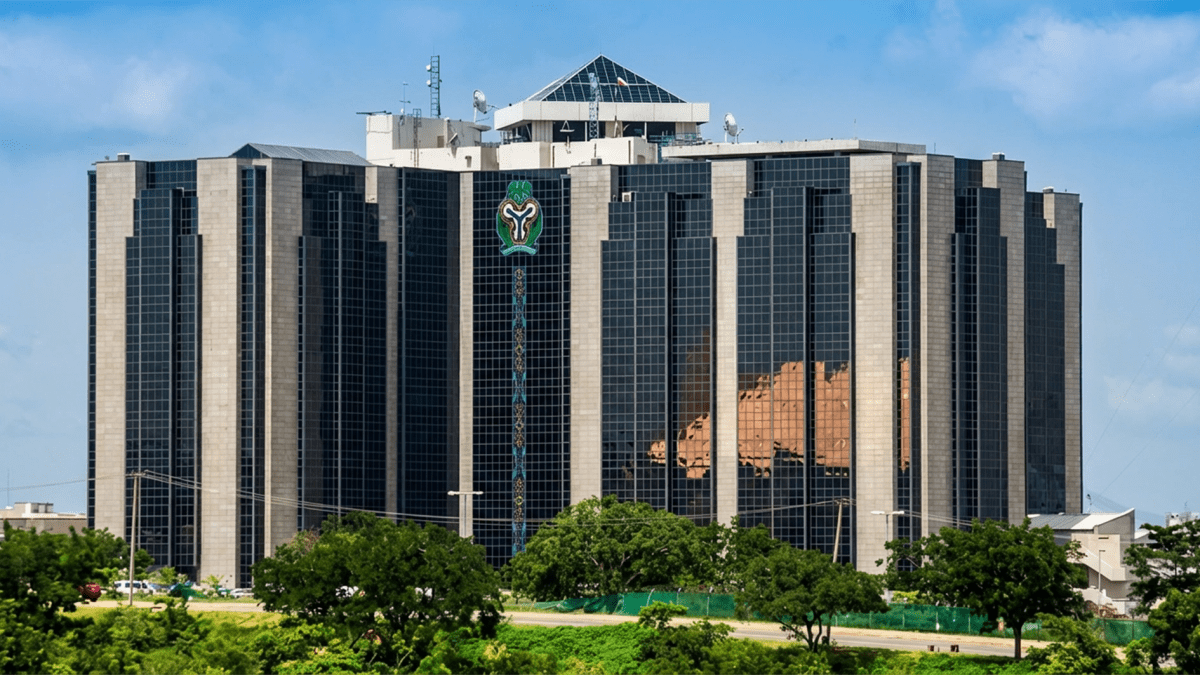
Olayemi Cardoso, governor of the Central Bank of Nigeria, has given a public account of how the bank set about rebuilding confidence in its rate-setting committee after Nigeria's currency crisis.
Speaking at the IMF and World Bank Annual Meetings, he said the CBN deliberately strengthened the position of the independent external members of its Monetary Policy Committee — the members who are not CBN staff. They were chosen, he said, for their standing and their willingness to think independently, and the effect was that the risk of the committee agreeing too easily with itself fell sharply.
He argued that rebuilding trust required durable changes to how decisions are made rather than temporary relief, and that a central bank needs standing with investors before it can act decisively at all.
In Simple Terms
Nigeria's main interest rate is set by a committee, not by the governor alone. Some of that committee comes from outside the central bank.
Cardoso is saying the CBN made those outside members harder to overrule: it gave them the information earlier, the standing to challenge the staff who prepare the material, and the means to get a second opinion. His claim is that the committee's decisions are better argued as a result, and that investors can therefore take them more seriously.
The underlying idea is that a decision's credibility depends on how it was reached. The same rate cut means one thing from a committee known to argue and another from a committee assumed to defer.
The Money
The committee's decisions set the price of borrowing for the whole economy.
At its September 2026 meeting the committee cut the monetary policy rate by 350 basis points, from 26.5% to 23%. A basis point is a hundredth of a percentage point, so this was a cut of 3.5 percentage points — the largest single reduction since December 2006, when the rate fell by 400 basis points.
On a ₦10 million loan priced directly off the policy rate, 3.5 percentage points is about ₦350,000 less in annual interest. (Derived, and illustrative: banks do not pass policy rates through in full, which is central to this story.)
At the same meeting the committee kept the cash reserve ratio for commercial banks at 45%, with merchant banks at 16%. The cash reserve ratio is the share of customer deposits a bank must leave at the central bank instead of lending. For every ₦100 a commercial bank takes in deposits, ₦45 stays at the CBN. (Derived from the 45% ratio.)
Follow the Money
Who this reaches. Beyond the decisions themselves, the tracing below is Rainingmoney's reading.
Borrowers stand to gain most if the cut reaches lending rates. A business refinancing at 3.5 points less has materially more room. Whether that happens depends on transmission, not on the committee.
Savers and depositors face the mirror image: a lower policy rate eventually means less on deposits, though with inflation at 15.39% most savers were already losing purchasing power.
Banks keep a constraint and gain an opportunity. With 45% of deposits held at the CBN, the quantity of lendable money has not changed even though its price has.
Holders of Nigerian debt are the audience for the credibility argument. A central bank believed to act on evidence rather than instruction commands a lower risk premium, which lowers the government's borrowing cost.
The federal government is therefore an indirect beneficiary of the CBN being believed, which is also why the bank's independence has to be demonstrable rather than asserted.
The Bigger Picture
Nigeria's monetary policy credibility problem was not invented by this committee and will not be settled by one speech. Through the currency crisis the question foreign investors asked was not what the CBN would decide but whether its decisions meant anything — whether published rates described the real cost of money, and whether the committee was weighing evidence or ratifying a position already taken.
Cardoso's answer is institutional. Rather than promise better decisions, he is describing a process designed to produce them: outsiders with real standing, information in advance, the right to interrogate staff work, and the capacity to model alternatives.
It is also a step toward something more demanding. He said external members were involved from the beginning of the move toward inflation targeting — a framework where the bank names the inflation rate it is aiming for and accepts being judged against it. A central bank that publishes a target cannot describe itself as credible; it either hits the number or explains why not.
The Jargon
Monetary Policy Committee (MPC) — the group that sets Nigeria's main interest rate, mixing CBN officials with external members from outside the bank.
Monetary policy rate (MPR) — the CBN's benchmark rate, the anchor for what banks charge borrowers and pay savers.
Basis point — one hundredth of a percentage point. 350 basis points is 3.5 percentage points.
Groupthink — when a group agrees too readily because dissent feels awkward, so weak decisions go unchallenged.
Cash reserve ratio (CRR) — the share of deposits a bank must keep at the central bank rather than lend out.
Monetary policy transmission mechanism — the chain by which a rate decision reaches real lending rates, savings rates and prices. When it is weak, the committee can move the policy rate and little changes in the real economy.
Inflation targeting — a framework in which the central bank commits publicly to a specific inflation rate and sets policy to achieve it.
Secretariat — the staff who prepare the data and analysis a committee votes on. Who controls that material shapes what the committee can consider.
What Happens Next
Known. The policy rate is 23%. The commercial bank cash reserve ratio is 45%. Inflation was 15.39% in August and easing. The CBN has begun moving toward inflation targeting, with external members involved from the outset. Cardoso has said the bank will explain its reasoning when a decision surprises the market.
Possible. If transmission is as weak as the committee agrees it is, the September cut may do less for borrowers than its size suggests. A formal inflation target would make the bank measurable in a way it currently is not. Published split votes would turn Cardoso's account from a claim into a record.
Unknown. How many external members there are and who they are, neither of which the account specifies. How often they have actually dissented. Whether improved procedure, rather than higher oil receipts and a calmer global environment, explains the stronger position. And what inflation target the bank will adopt.
Rainingmoney's Take
Analysis, not reporting.
The reforms Cardoso describes are the right ones. Information asymmetry is how committees get captured: if the staff control what members see and when they see it, independence is nominal. Giving external members data in advance, standing to question the secretariat and access to outside expertise addresses that directly, and it is more substantial than most public commitments to central bank independence.
But this is an institution assessing its own reform, at a venue where investor confidence is the point of the exercise. Cardoso introduced these changes, and he is reporting that they worked. That is not a reason to disbelieve him. It is a reason to want the record rather than the account.
The record is available, and it is specific. A committee that genuinely argues produces split votes, and split votes appear in communiqués. If the next several show external members voting against the majority and give their reasoning, the claim is demonstrated by evidence nobody managed. If they show unanimity decision after decision, the reforms may be real while their effect is not.
The more immediate test is narrower. The committee has conceded that its own transmission mechanism is weak and has left 45% of bank deposits at the central bank. Whether a 3.5-point cut reaches an actual borrower in Lagos or Kano over the coming months will say more about the CBN's power than any account of its procedure.
Sources & Verification
- Cardoso's remarks reported from the IMF and World Bank Annual Meetings.
- September 2026 MPC decisions from the CBN communiqué.
- Inflation from the National Bureau of Statistics and reserves from CBN data.
The Money Print
Market intelligence before the market opens.
Pan-African capital flows and the stories behind the numbers, on weekday mornings.