CompaniesMedium
A $10m pipe factory in Rivers State tells you where Nigeria's oil is going next
Tenaris spent about $10m upgrading a deepwater pipe-coating plant in Onne, Nigeria. What the plant does, why it matters, and what it signals.
By Chiamaka Prudence Published 4 min read Editorial Policy Report a correction
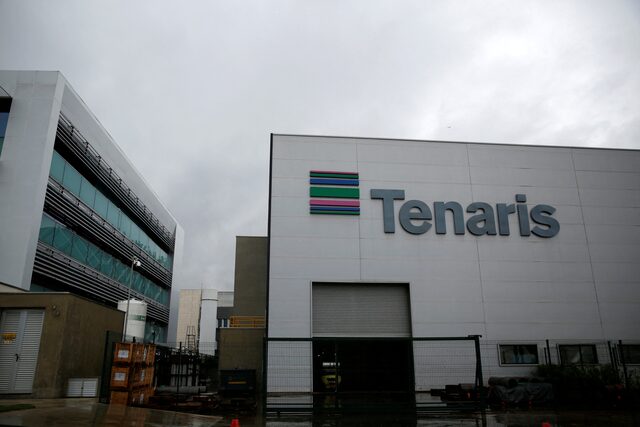
Tenaris, a global maker of steel pipes for the oil industry, says it has spent about $10 million upgrading a plant in Onne, Rivers State. The plant wraps pipes in five layers of insulation so they can work on the deep seabed. Tenaris runs it through its Nigerian company, Pipe Coaters Nigeria Limited.
The company announced it at an event marking 25 years in Nigeria, and said it has finished coating the pipes for Bonga North, a deepwater oil project off the Nigerian coast.
Why would a pipe need insulation?
Because oil does not like being cold.
Bonga North sits in deep water, where the seabed is close to freezing. Crude oil travelling through a pipe at that temperature thickens, and the wax and heavy compounds in it can settle out and block the line. A blocked subsea pipeline is extremely expensive to clear, and sometimes impossible.
So the pipe gets wrapped — in this case in five layers, each doing a different job: sticking to the steel, keeping water out, and holding heat in. The oil arrives warm enough to keep flowing.
That is the whole product. It is unglamorous, and nothing offshore works without it.
Why does doing it in Onne matter?
Onne is Nigeria's main base for oil-service companies, inside the Oil and Gas Free Zone. Tenaris says this is the only plant of its kind in Sub-Saharan Africa — a claim worth noting is the company's own, not an independent assessment.
If it is right, the pipes for a Nigerian deepwater project no longer have to sail to Europe or Asia to be coated and sail back. The coating happens a boat ride from where the pipes will be laid.
That changes three things: the time a project takes, the cost of shipping heavy steel twice across an ocean, and where the payment lands. Coating done in Onne is paid to a company operating in Nigeria, employing people in Rivers State. This is exactly what Nigeria's local content rules — overseen by the Nigerian Content Development and Monitoring Board — were written to produce. Heineken Lokpobiri, Minister of State for Petroleum Resources, chairs that board's governing council and spoke at the event.
Is $10 million a lot of money?
Not in oil terms, and that is the point.
Bonga North, the project whose pipes this plant just coated, was reported at around $5 billion when Shell and its partners committed to it. Set against that, Tenaris's $10 million is about 20 cents for every $100 going into Bonga North. (Derived.)
Supplier spending is small, but it comes first. A company does not upgrade a coating line for projects it does not expect to see. That is why a modest number can be a more useful signal than a large one.
What is Bonga North, and is it finished?
Bonga North is a deepwater development that connects into Bonga Main, an existing floating production vessel Shell operates. Shell committed to it in December 2024. The published figures: 16 wells — 8 pumping oil out, 8 pushing water in to keep pressure up — a peak of 110,000 barrels a day, and more than 300 million barrels of oil equivalent expected to be recovered. First oil is expected by the end of this decade.
So no, it is not finished. What is finished is the pipe coating — one work package among many. Anyone reading that the "Bonga North campaign is complete" should not take it to mean the oil is flowing.
Isn't everyone leaving Nigerian oil?
That has been the headline for years, and onshore it is largely true. Shell sold its onshore joint venture to Renaissance Africa Energy in a deal reported at about $2.4 billion, completing in March 2025.
But the two moves are not opposites. The majors are stepping back from onshore fields and concentrating on deepwater, where the fields are bigger and the operations are further from community disruption and crude theft. A supplier building deepwater capability in Onne is following that shift, not fighting it.
Tenaris also says it stayed through the long industry downturn from 2014 to 2023, when many pipe and engineering firms left Nigeria, and kept its well-pipe threading plant at Onne running. Over the past decade it says it supplied more than 20,000 tonnes of well pipe for the fields Renaissance now runs — an average of roughly 2,000 tonnes a year. (Derived.)
What to watch
This section is Rainingmoney's reading.
Whether the next projects get sanctioned. Tenaris named Bonga Southwest, Obodo and Zabazaba as developments it is positioning for. These are prospects, not committed projects — Zabazaba in particular has been stalled for years. A coating plant needs a queue of work to pay for itself.
Whether other suppliers follow. One upgraded line is a company decision. Several would be a sector repricing Nigeria's risk.
Whether the local content holds. The test is not the ribbon-cutting. It is whether operators actually route the work through Onne when a foreign yard quotes cheaper.
The bottom line: $10 million is a small number attached to a large signal. The companies that sell to the oil industry are spending money in Nigeria again, and they only do that when they expect orders.
Sources & Verification
- Tenaris's 25th-anniversary event in Onne.
- Bonga North project details from Shell's December 2024 announcement

CorrespondentOnitsha, Anambra State.
Chiamaka Prudence
I am a technology and finance enthusiast with a keen interest in digital innovation, emerging financial trends, and the evolving ways technology is shaping businesses and everyday life. I enjoy…
Author profile & archive →The Money Print
Market intelligence before the market opens.
Pan-African capital flows and the stories behind the numbers, on weekday mornings.