CompaniesMedium
Warren Buffett has stepped down as chairman. What he actually proved is worth more than the news.
Warren Buffett has stepped down as Berkshire Hathaway chairman, with Howard Buffett taking over. The full account of the succession, the numbers and the open questions.
By Betini Udom Published 3 min read Editorial Policy Report a correction
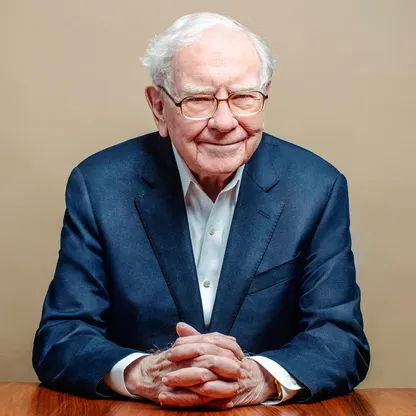
Berkshire Hathaway announced on Friday that Warren Buffett is no longer its chairman. He becomes chairman emeritus, effective immediately, and stays on the board. His son Howard Buffett, a director since 1993, takes the chairman's seat.
This is the last piece of a handover that began at the end of 2025, when Greg Abel replaced Buffett as chief executive. Buffett had kept the chairman title then. Now that has gone too.
What does chairman emeritus actually mean?
Less than it sounds, and that is deliberate.
A company's chief executive runs the business day to day. The chairman leads the board, the group that hires and fires the chief executive and signs off on the big decisions. Those are two different jobs, which is why Buffett could hand over one in December and keep the other until now.
Chairman emeritus is an honorary title. Berkshire says Buffett remains a member of the board and will keep offering his judgement. He no longer leads it.
In his letter to shareholders, Buffett wrote that "Father Time always wins." He said he was stepping back partly because Abel has exceeded his expectations.
Why did the share price barely react?
Because the market had been told this was coming for years, and got used to the idea in stages.
Buffett spent more than a decade naming a successor, then handed over the chief executive role nine months ago and gave the market time to watch Abel run the company. By the time the chairman title moved, there was nothing left to be surprised by. Class B shares were down about 0.3% before the market opened.
For anyone wondering what good succession planning looks like from the outside, this is it: the founder leaves and the price does nothing. (Rainingmoney's reading.)
What did he actually achieve?
Berkshire's market value grew at an average of about 19% a year over Buffett's tenure. That number sounds modest. Watch what it does over time.
Put ₦100 into something growing 19% a year and leave it for 56 years — the span of his chairmanship. It becomes roughly ₦1.7 million.
Now run the same ₦100 at 10% a year, closer to what a broad market index tends to deliver, for exactly the same 56 years. It becomes about ₦20,800.
Same money, same time, nine percentage points of difference a year. One ends up more than 80 times the other. (Both figures derived by compounding, for illustration. Berkshire's actual returns varied year to year.)
That is the whole argument. Not stock tips. Arithmetic, repeated without interruption for longer than most people's working lives.
Is Berkshire in trouble now?
Nothing in the announcement suggests so, and Buffett's own letter says he is more confident than ever about what lies ahead.
There is one honest uncertainty. Investors have for years paid a little extra for Berkshire shares simply because Buffett was there — what the market calls the Buffett premium. Whether that premium survives its namesake is a real question, and it cannot be answered by a press release.
What to watch
This section is Rainingmoney's reading.
Whether the premium holds. Watch how Berkshire trades over the next few quarters, not the next few days.
What Abel does with the cash. The chief executive now makes the calls on where Berkshire's money goes, without Buffett in the chairman's seat.
The family question. Howard Buffett's role has always been described as protecting Berkshire's culture rather than picking investments. Watch whether that stays true.
The bottom line: the news is a formality. The lesson underneath it is not.
This article is for information only and is not investment advice.
Sources & Verification
- Berkshire Hathaway statement and Warren Buffett's letter to shareholders.
- Net worth and ranking from Bloomberg's Billionaires Index.
The Money Print
Market intelligence before the market opens.
Pan-African capital flows and the stories behind the numbers, on weekday mornings.