
EnergyCritical
Saudi oil under attack: why a Yemen conflict could reach Nigerian fuel and gas prices
Houthi strikes have reached Saudi Arabia's Shaybah oilfield and Brent is at $108. Here is what that means, how oil prices travel to Nigeria, and what nobody knows yet.
By Janefrances Neche Published 8 min read Editorial Policy Report a correction

Oil is trading at $108 a barrel, and the world's biggest exporter may be in the firing line. A report from OilPrice.com dated 20 October 2026 says Yemen's Houthi militia has extended its strikes in the Saudi-Houthi conflict to the Shaybah oilfield in Saudi Arabia. That raises the risk that Saudi Arabia could be forced to shut in some of its production. This explainer sets out what that means, in plain words, and what it could mean for the money Nigerians spend on fuel, transport and cooking gas.
One caution first. The source does not give any Nigerian prices. It says nothing about petrol at the pump, diesel in the depot or the naira. Where we link world events to your pocket below, we say so, and we label it as RainingMoney's reading.
What has happened?
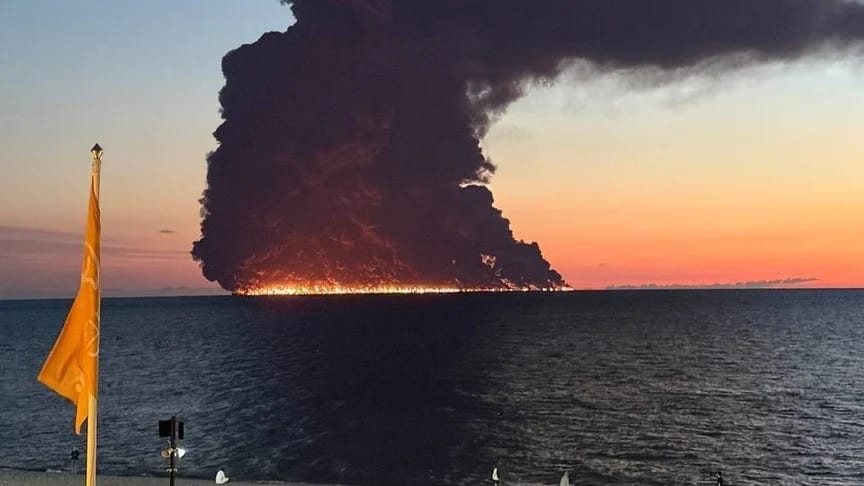
According to the report, the conflict between Saudi Arabia and the Houthis, a militia group from Yemen, is now the main supply story of the week. The Houthis have gone beyond hitting infrastructure sites. They have struck the Shaybah oilfield. The report says this raises the chance that Saudi Arabia would have to shut in some production across the country.
The report does not say how badly Shaybah was damaged. It does not say how much oil has been lost, and it does not quote the Saudi government. So the story today is a risk, not a confirmed shortage.
What does "shut in" mean?
To shut in production means to stop pumping oil from wells that could otherwise produce. A company or government might do this because a site is damaged, or because it is too dangerous to keep workers and equipment running. Oil that stays underground does not reach buyers. If enough of it stays there, supply falls, and buyers compete harder for what is left. That competition is what pushes prices up.
What is Brent, and why does $108 matter?
Brent is the most widely quoted price for crude oil sold internationally. It is the price per barrel, and a barrel is about 159 litres. The report says Brent is at $108 a barrel.
The report also mentions WTI, the main US benchmark. Brent is trading $5 above it. That means, by our working, WTI is near $103 (derived: $108 minus $5). The report says the gap narrowed after the November WTI contract expired. A contract here is simply an agreement to buy oil for delivery in a given month. The page does not say what Brent was before this week, so we cannot tell you how much it has risen.
Brent matters to Nigerians because it is the reference many oil deals around the world are measured against. When Brent rises, fuel becomes more expensive to buy abroad. Nigeria also sells crude, so higher prices can bring in more dollars. The page does not discuss either effect.
How does a price abroad reach a Nigerian pump?
The report does not describe this path, so what follows is general explanation and RainingMoney's reading of how it usually works.
- A supply scare pushes up the world price of crude oil.
- Refiners, the companies that turn crude into petrol, diesel and kerosene, pay more for their raw material.
- Fuel that is imported, or priced against world levels, costs more at the depot where tankers load.
- Depot owners pass some of that cost to filling stations and bulk buyers.
- Stations raise pump prices, and transporters raise fares and freight charges.
- Traders add the higher transport cost to the price of food and goods.
Not every step happens at the same speed or in the same size. Exchange rates, government decisions and local competition all play a part. The report gives no information on how fast any of this has happened in Nigeria in October 2026.
Why are gas prices in the news too?
The same report says Asian prices for liquefied natural gas, or LNG, have reached their highest level since December 2022. LNG is natural gas cooled into liquid so ships can carry it. The Asian price benchmark, called JKM, is above $30 per MMBtu. MMBtu is a unit of energy used to price gas.
Why the jump? The report points to repeated attacks on tankers across the Middle East and to Europe's worsening winter outlook. It says UKMTO reported the first Houthi attack on LNG shipping. A laden vessel, meaning one carrying cargo, was struck as it tried to pass through the Strait of Bab el-Mandeb. That is a narrow sea passage between Yemen and Africa that ships use to reach the Red Sea.
Europe also matters. The report says EU-wide gas stores are capped below 75% of capacity, and that the filling of those stores has effectively stopped. A continent that fears a cold winter with half-full stores will bid hard for gas. That pulls prices up for everyone buying LNG.
What else is squeezing supply?
The report lists several other pressure points. Each is a sign that fuel markets are tight, and none is a Nigerian story on its own.
- Diesel emergency stocks. The head of the International Energy Agency (IEA), Fatih Birol, said members could coordinate more emergency oil releases. He put the immediate release of 20 million barrels of diesel first. He also admitted that 2027 offers little chance of returning to normal.
- Saudi contracts. Talks between Saudi Aramco and Asian refiners over 2027 supply are stalled. The dispute is over whether spot purchases made during the US-Iran war count toward 2026 obligations. A spot purchase is a one-off buy at the current price, not under a long contract.
- Diesel for farmers. The United States announced an $8 billion fuel relief programme for farmers to offset soaring diesel and fertiliser costs.
- Gulf diesel for France. France secured commitments of around 100,000 tons a month each from Bahrain, Saudi Arabia and the UAE for October and November. The report says this is despite a largely closed Hormuz, the sea route out of the Gulf.
What does the report say about Nigeria?
One line concerns Nigeria directly. The report says Nigeria plans to build its strategic petroleum reserves from the current 20 days' worth of consumption to 90 days. It also says Nigeria targets 45 days of product self-sufficiency by early 2027, because imports now only cover 25% of domestic fuel demand.
A strategic reserve is fuel that a country keeps in storage for emergencies. The numbers are counted in days of use. Going from 20 days to 90 days would add 70 days of cover (derived: 90 minus 20). That is a large increase. The report gives no cost, no timetable beyond early 2027 and no details on where the fuel would be stored.
Why would a country want a bigger cushion? In RainingMoney's reading, a country with only 20 days of fuel in store has little room to wait out a supply shock like the one described here. A bigger reserve could give it time. The report does not make this argument, and it does not say whether the plan was prompted by events in Saudi Arabia.
The 25% figure also needs care. The report says imports now cover only 25% of domestic fuel demand. It does not say where the rest comes from, and it does not explain what "product self-sufficiency" counts. We have not tried to fill that gap.
Could this push up what I pay?
In RainingMoney's reading, higher world oil and gas prices tend to raise costs for anyone who buys fuel, transport or cooking gas. That is the general pattern. Whether it happens in Nigeria, how fast and by how much, depends on factors the source does not cover, including the naira exchange rate, local refining and government decisions.
What the report does support is narrower. Oil is at $108, gas prices in Asia are at a near four-year high, and one of the world's largest producers is under attack. Those are conditions in which price pressure is more likely than not. That is not a forecast of any specific price.
What do we not know?
- How much damage Shaybah has suffered, and how much oil Saudi Arabia may have to shut in.
- Whether the Houthis will strike more Saudi sites.
- How long Brent will stay near $108.
- What Nigerian petrol, diesel or cooking gas prices are doing in response.
- How the 90-day reserve plan would be paid for or when it would be reached.
What should I watch next?
This is a list of things to follow, not advice on what to do with your money.
- Official word from Saudi Arabia on production at Shaybah.
- The Brent price, and whether the gap with WTI stays near $5.
- Any further attacks on tankers near the Strait of Bab el-Mandeb.
- Whether the IEA coordinates more emergency releases.
- Any Nigerian announcement on the strategic reserve plan.
For now, the sound reading is this. A real threat to a major supplier has appeared, prices are high, and gas markets are tense. Nigeria has said it wants a thicker fuel cushion. How all of this lands at the filling station and the gas refill point is not yet known.
Sources & Verification
- Source: OilPrice
- Editorial note: This explainer is an original RainingMoney editorial adaptation of reporting by OilPrice. RainingMoney has added explanatory context and independently calculated derived figures from

Correspondent, AbujaAbuja
Janefrances Neche
Janefrances is a finance correspondent specializing in emerging markets, consumer economics, and policy analysis. Most recently reporting for regional business desks, she has tracked shifting…
Author profile & archive →The Money Print
Market intelligence before the market opens.
Pan-African capital flows and the stories behind the numbers, on weekday mornings.