PoliticsLow
Nigeria at UNGA 81: what Shettima is asking for, and what would count as a result
Shettima leads Nigeria at the 81st UN General Assembly, pressing for reform of global finance, climate finance and a stronger African voice. The full picture.
By Betini Udom Published 4 min read Editorial Policy Report a correction
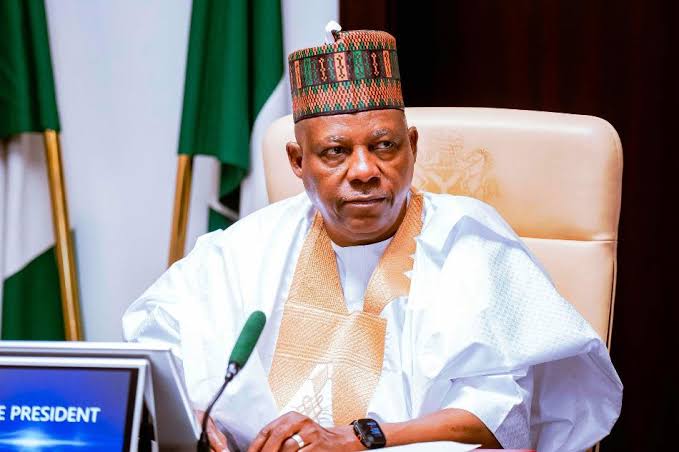
Vice President Kashim Shettima has arrived in New York at the head of Nigeria's delegation to the 81st session of the United Nations General Assembly, representing President Bola Tinubu.
According to Stanley Nkwocha, the vice president's senior special assistant on media, Shettima travelled with Rivers State Governor Siminalayi Fubara, Minister of State for Budget and Economic Planning Doris Uzoka-Anite and other senior officials. The wider delegation includes Solid Minerals Development Minister Dele Alake and Nigeria's Permanent Representative to the UN, Jimoh Ibrahim. Lagos Governor Babajide Sanwo-Olu was among those who received him.
Shettima is expected to deliver Nigeria's national statement during the general debate and to hold bilateral meetings with world leaders, international organisations and development partners. His office says Nigeria will use the week to press on five fronts: reform of the international financial system, sustainable development, climate finance, access to technology, and stronger African representation in global decision-making.
In Simple Terms
Once a year, nearly every country on earth sends its leader or a senior stand-in to New York to state its position on the world's problems. Nigeria's position this year is that the institutions running the global economy were built for a different era and should give countries like Nigeria more say.
Shettima put it as a belief in shared international institutions, paired with a demand that they "must become more representative, equitable, and responsive". Nigeria, he said, will engage its partners from the standpoint of its own national interest while arguing for developing countries to have a louder voice and a fairer chance to grow.
For now, this is a statement of intent. The speech hasn't been delivered and no meeting has concluded.
The Bigger Picture
Rainingmoney context — background not in the source report.
"International financial architecture" is the jargon for the institutions and rules that govern lending between countries. At its centre are the International Monetary Fund, which lends to countries in difficulty, and the World Bank, which finances development.
Voting power at the IMF is tied largely to how much each member contributes. Developing countries have argued for years that this leaves them with limited influence over the lending terms they depend on most. Nigeria's call is part of that long-running argument, not a new one, and reform calls of this kind are a familiar feature of the General Assembly.
What makes this year's version worth tracking is the delegation. A budget minister and a solid minerals minister are not ceremonial additions. Their presence suggests Nigeria intends the side meetings to cover financing and investment, not only diplomacy. (Rainingmoney's reading — the statement does not say what the bilateral meetings will cover.)
The Jargon
General Assembly — the UN body where every member country has a seat and an equal vote.
General debate — the annual session in which each country delivers a national statement setting out its positions.
Multilateralism — solving problems through shared international institutions rather than country-by-country deals.
Bilateral meeting — talks between two countries, usually where specific agreements are discussed.
International financial architecture — the institutions and rules behind global lending, chiefly the IMF and World Bank.
Climate finance — money for poorer countries to cut emissions and adapt to climate change, largely expected from richer ones.
What Happens Next
Known. Shettima will deliver Nigeria's national statement during the general debate and hold meetings on the sidelines. Nigeria has named its five priority areas.
Possible. Announcements from bilateral meetings, particularly on investment or financing, given who is on the delegation. A national statement that goes beyond principles to name specific proposals.
Unknown. The date of Nigeria's slot in the general debate, which the report does not give. Who Shettima will meet. Whether any agreement will carry a figure. And whether any of this translates into change at the IMF and World Bank, where such reforms are actually negotiated. (Rainingmoney context.)
Rainingmoney's Take
Analysis, not reporting.
This is an arrival story, and it should be read as one. Nigeria has said what it wants; it has not yet said anything specific or achieved anything measurable, and that is simply where the week stands.
The standard to hold the trip to is concrete. A national statement that proposes something specific on debt terms, lending rules or climate money would move this from diplomacy into economics. A bilateral meeting that ends with an announced agreement and a number attached would do the same. Without either, the week will have restated a familiar position well.
Nigeria's case for a fairer global financial system is a reasonable one, shared across much of the developing world. The question for Rainingmoney readers isn't whether the case is right. It's whether this trip brings anything back.
Sources & Verification
- Statement from the Office of the Vice President's media team. Background on the IMF, World Bank and where their reform is negotiated is Rainingmoney context.
The Money Print
Market intelligence before the market opens.
Pan-African capital flows and the stories behind the numbers, on weekday mornings.