
EconomyMedium
What Nigeria's draft crypto rules mean for exchanges, traders and the taxman
The SEC's proposed crypto rules prioritize cross-border transaction tracking, giving Nigeria unprecedented visibility into capital outflows and taxable digital wealth.
By Betini Udom Published Last edited 6 min read Editorial Policy Report a correction

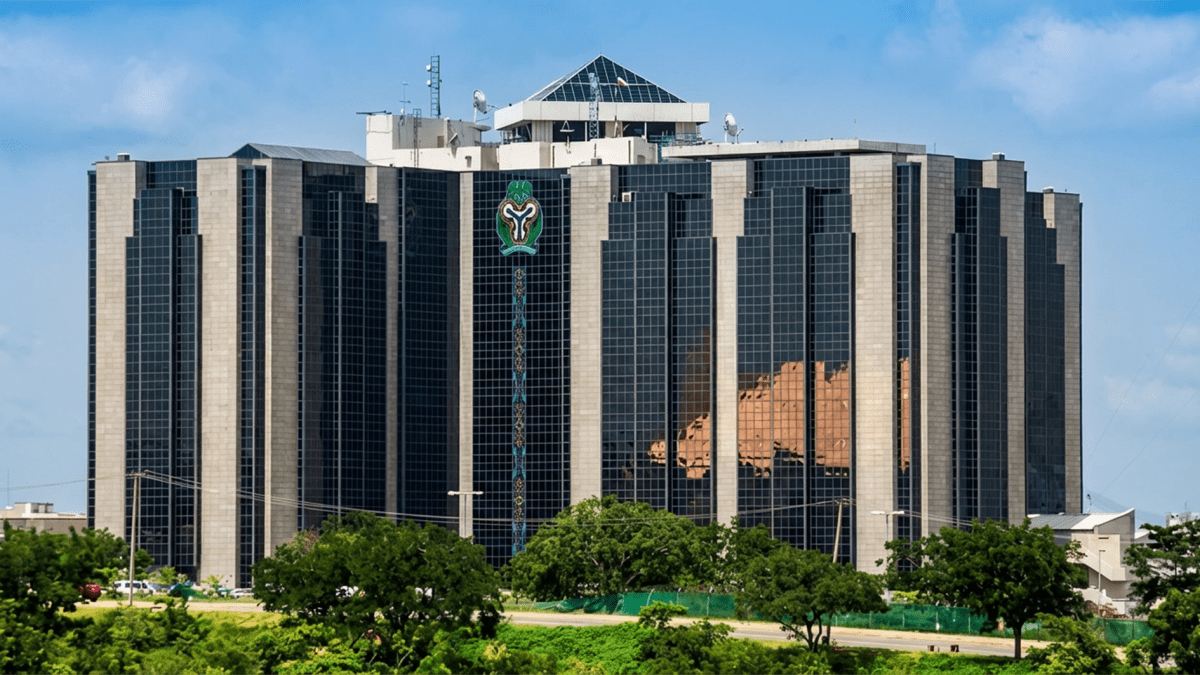
On 20 August 2026 Nigeria's Securities and Exchange Commission (SEC) published a draft rulebook for crypto businesses. Its title is the proposed Rules on Digital and Virtual Asset Operations, Custody and Markets. The draft would raise the money exchanges must hold to ₦2 billion. It would also let the regulator ask for live electronic access to firms' transaction and wallet data (TechCabal).
The draft came less than three weeks after the tax authority issued its own crypto tax guidelines. Together the two documents bring crypto, which spent years in a grey zone, into the same rooms as banks and taxpayers. Nigeria received about $92.1 billion in crypto in the 12 months to June 2025, the most in sub-Saharan Africa (Business A.M., citing Chainalysis), so the rules reach a lot of people.
This piece explains what was proposed, what is already law, and where RainingMoney thinks the bigger story lies.
Why does the SEC regulate crypto at all?
Because the law now says crypto assets are securities. Securities are investments such as shares and bonds, and the SEC regulates them. In March 2025 President Bola Tinubu signed the Investments and Securities Act 2025 (ISA 2025), which replaced the 2007 law (TechCabal). Its definition of securities includes virtual and digital assets, and it lets the SEC register and supervise digital asset exchanges and virtual asset service providers (VASPs), the businesses that hold, swap or move crypto for customers (Mondaq).
It has been a long road. In February 2021 the Central Bank of Nigeria (CBN) told banks to stop handling crypto transactions, which pushed trading onto person-to-person (peer-to-peer, or P2P) platforms. In December 2023 it reversed course and let banks open accounts for VASPs, but only for those licensed by the SEC (Afriwise). The SEC's first digital asset rules, issued in 2022, required exchanges to hold at least ₦500 million (Finance Magnates).
What does the August draft propose?
The headline is capital: money a firm's owners must put in and keep, so that it can absorb losses without touching customers' funds. Under the draft:
| Type of firm | Proposed minimum |
|---|---|
| Digital asset exchange | ₦2 billion |
| Digital asset custodian | ₦2 billion |
| Platform operator, offering platform, real-world asset tokenisation platform | ₦500 million each |
| Virtual asset service provider | ₦200 million |
For exchanges, that is four times the 2022 floor. (Derived.) The draft sets a registration fee of ₦30 million for exchanges (Legit.ng) and would require at least 80% of customers' crypto to be kept offline in "cold storage", out of hackers' reach (TechCabal).
Other changes:
- Offshore firms are covered. Any business serving people living in Nigeria would have to register, even if it is based abroad, and firms would have to report security incidents within 24 hours (Olaniwun Ajayi).
- Local presence. Operators would need a Nigerian company and office and a chief executive living in Nigeria (Rio Times).
- Caps for small investors. Retail buyers of new token offerings would be limited to ₦10 million a year in total (Rio Times).
- A data window. The SEC could require firms to give it access, through an application programming interface (API, a direct machine-to-machine link) or other electronic means, to transaction, wallet, custody and settlement data. TechCabal says this would give the regulator deeper visibility into crypto moving in and out of the country (TechCabal).
The draft is not law. It went out for a short public comment period, which TheRadar described as two weeks. RainingMoney found no final rules as of 20 October 2026. Separately, an SEC circular of January 2026 had already raised minimum capital across the market, VASPs included, and gave existing firms until 30 June 2027 to comply (SEC Circular 26-1).
How is crypto taxed now?
The tax rules are already in force. The Nigeria Tax Act 2025, signed on 26 June 2025, took effect on 1 January 2026. Under it, an individual's crypto profits are taxed as income at rates of up to 25%. Before, they were taxed at a flat 10% capital gains rate (Mariblock). The same reforms replaced the Federal Inland Revenue Service (FIRS) with the Nigeria Revenue Service (NRS) (Mondaq).
The NRS guidelines of 3 August 2026 fill in the details (Nairametrics; Premium Times):
- Holding crypto is not taxed. Tax arises when you sell, swap or otherwise dispose of it. Moving coins between your own wallets is not a sale.
- Companies earning from crypto pay the 30% company income tax unless they qualify as small companies.
- Exchanges must collect each customer's tax identification number (TIN), keep records and report transactions to the NRS. Failing to do so costs ₦10 million for the first month and ₦1 million for each month after (Nairametrics).
Is this really about capital flight and tax?
The original version of this article argued that it was. Here is the evidence, and then our view.
The evidence: in February 2024, CBN governor Olayemi Cardoso said $26 billion had passed through Binance Nigeria in a year from sources and users the bank could not identify (Ripples Nigeria). That was an allegation, not an audited number, and Binance disputed it. Chainalysis links Nigerians' crypto use to inflation and difficulty getting dollars, with stablecoins (tokens pegged to the dollar) serving as dollar substitutes (Chainalysis).
RainingMoney's reading: a securities regulator's main jobs are registration, capital, custody and supervision, and the draft is built around them. But once licensed exchanges must show their data to the SEC and report customers' trades to the NRS, the state can see where crypto money goes and who owes tax on it. That visibility is a real effect, whatever the stated aim. The risk runs the other way too. High capital floors and heavy reporting could leave the market to a few large licensed players and push smaller traders back to the informal P2P channels these rules are meant to replace. The data window will also need clear data-protection limits if users are to trust it.
What to watch
- The final SEC rules: whether the ₦2 billion floor, the 80% cold-storage rule and the API access survive the consultation.
- Which exchanges are registered by the June 2027 capital deadline, and which leave.
- How the NRS enforces reporting, including the ₦10 million penalty.
- Whether P2P trading volumes rise as rules tighten.
The bottom line
Since 2025 Nigerian law has treated crypto as a security, and since January 2026 it has taxed crypto gains as income. The SEC's August draft would add far higher capital requirements and a direct view into firms' data. For ordinary users, that means safer, better-funded platforms and much less privacy. Whether it also means fewer platforms depends on what the SEC finally adopts.
Sources & Verification

Founder and Editor-in-ChiefAbuja
Betini Udom
Founder and Editor-in-Chief of RainingMoney. Covers Nigerian, pan-African and global markets, finance and economic policy.
Author profile & archive →The Money Print
Market intelligence before the market opens.
Pan-African capital flows and the stories behind the numbers, on weekday mornings.