CompaniesHigh
Dangote got $19.8bn richer in ten days without selling anything. Here's how
Forbes values Aliko Dangote at $51.3bn, up $19.8bn in ten days as the refinery IPO opened. What paper wealth means and why Bloomberg disagrees.
By Betini Udom Published 5 min read Editorial Policy Report a correction
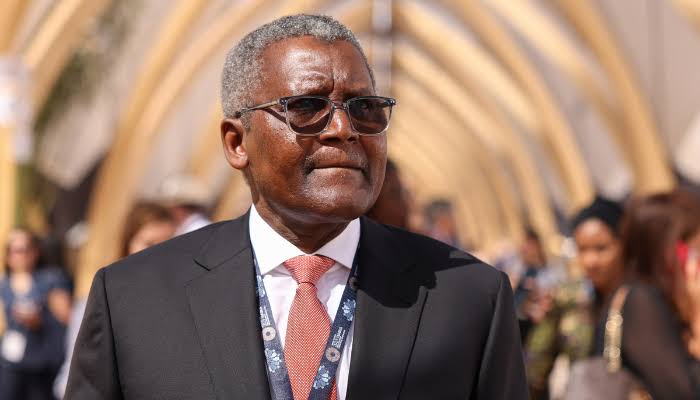
Forbes' real-time billionaire tracker valued Aliko Dangote at $51.3 billion on Monday, ranking him 36th among the 3,397 billionaires it follows.
On 4 September, the same tracker put him at $31.5 billion. The increase is $19.8 billion in ten days, and his fortune is now more than double the $25.6 billion Forbes estimated at the end of last year.
The move coincides with the opening on 14 September of the initial public offering of Dangote Petroleum Refinery and Petrochemicals, expected to be Africa's largest-ever share sale. Forbes attributed the increase to the higher valuation now attached to Dangote's refinery holdings.
In Simple Terms
No money arrived. A price tag moved.
Wealth rankings do not count cash. They estimate what someone's businesses would fetch if sold, then multiply by how much of each they own. When the estimated value of a business rises, the owner's number rises without them doing anything.
What rose here is the market's asking price for the refinery. In July, a $2.5 billion private placement — a share sale to institutional investors rather than the public — valued it at around $40 billion. The public offer now prices it at about $48 billion. Dangote owns the controlling stake, so his estimate moved with it.
The Money
The offer puts 4.1 billion ordinary shares on sale at ₦525 each, about 3.3% of the company. Fully subscribed, it raises roughly ₦2.15 trillion, or $1.6 billion.
Shrink the refinery to ₦100: this sale offers about ₦3.30 of it and keeps ₦96.70 in existing hands. (Derived from the 3.3% figure.)
The minimum subscription is 10 shares — ₦5,250. The offer is Shariah-compliant and available through conventional brokers and digital investment platforms. It closes on 13 October, with trading expected to begin in November. Proceeds are earmarked partly for the refinery's expansion.
Follow the Money
Who this reaches. Beyond the reported facts, this is Rainingmoney's reading.
Retail investors get access at ₦5,250 to an asset previously reachable only by institutions. They also buy at a valuation set before any market has tested it.
July's institutional buyers put in $2.5 billion at roughly $40 billion. On the IPO's own numbers, that stake is now marked about 20% higher (derived) — before a single public share has traded.
The refinery itself gains access to public capital for a $14.3 billion expansion, reducing how much must come from debt or the founder.
Nigeria's capital market gets its largest listing and a test of whether it can raise money at this scale domestically.
Nigerian fuel buyers are further from this than the headline suggests. The refinery has helped make the country a net exporter of refined products; who owns 3.3% of it does not change pump prices.
The Bigger Picture
Dangote has been here before, and the comparison is instructive.
In 2013, Forbes reported his fortune crossing $20 billion — the first African to reach that mark — as Dangote Cement shares surged, carrying him into the global top 25. His wealth then was built on cement and established industrial businesses.
Thirteen years on, the engine has changed. The refinery, one of the largest private industrial investments ever made in Africa, is becoming the centre of a group that also spans cement, fertiliser, sugar, salt, petrochemicals and logistics.
One figure captures the shift: at $51.3 billion, Dangote's estimated fortune now exceeds the refinery's entire $48 billion IPO valuation (derived). Everything else he owns sits on top of an asset that alone is worth more than he was in 2013.
The Jargon
Paper wealth — value that exists as an estimate of what assets could sell for, not money held. It falls as easily as it rises.
Private placement — selling shares directly to selected institutional investors rather than the public. July's placement set the earlier $40 billion benchmark.
IPO (initial public offering) — the first sale of a company's shares to the general public.
Valuation — an estimate of what a whole company is worth. Before shares trade, it is a considered opinion, not a market fact.
Shariah-compliant — structured to meet Islamic finance rules, which prohibit interest-based returns.
Net exporter — a country that sends out more of something than it brings in.
bpd — barrels per day, the standard measure of refinery capacity.
What Happens Next
Known. The offer closes on 13 October. Trading is expected to begin in November. The minimum subscription is ₦5,250 for 10 shares. The expansion to 1.4 million barrels a day is targeted for 2029 at a cost of $14.3 billion.
Possible. Forbes has noted the public offering could create further upside as individual investors gain access. Bloomberg has said a higher refinery valuation could take its own estimate toward $58 billion. Both are conditional statements about a price that does not yet exist.
Unknown. Whether the offer fills. What the shares do once they trade. Whether the $48 billion valuation holds, rises or falls when a market rather than a seller sets the number. Forbes itself notes its estimates move as listed holdings shift and as it periodically reassesses private assets.
Rainingmoney's Take
Analysis, not reporting.
The ranking will travel further than anything else in this story, and it is the part that matters least. A position on a rich list is a by-product of an estimate, and estimates of unlisted assets are opinions held with varying confidence — which is precisely why Forbes and Bloomberg can be $16 billion apart on the same man on the same day.
The substantive event is that a Nigerian company is asking the public to buy into a valuation that has risen 20% in two months without a market test. That may prove conservative; refineries with this capacity are rare assets, and the expansion is real. It may also prove optimistic. Nobody knows yet, and anyone who tells you otherwise is quoting an estimate as though it were a measurement.
For readers weighing ₦5,250, the useful question is not how rich Dangote is. It is whether ₦525 is a fair price for one 4.1-billionth of a share of an asset whose price has never been set by anyone but its owner. That answer arrives in November.
This article is for information only and is not investment advice.
Sources & Verification
- Wealth estimates from Forbes and Bloomberg's Billionaires Index; IPO and refinery figures from the offer documents.
The Money Print
Market intelligence before the market opens.
Pan-African capital flows and the stories behind the numbers, on weekday mornings.