TechnologyHigh
The Russia-Ukraine war has opened a front on data centres
A drone attack started a fire at a Yandex data centre in Ryazan, the first major strike on a Russian data hub. Why digital infrastructure is now a target.
By Betini Udom Published 4 min read Editorial Policy Report a correction
Thursday's news out of Ukraine was dominated, rightly, by a glide bomb that hit two city buses in Kramatorsk and killed at least 30 people. That attack has no economic story in it. It was a mass killing of civilians at a bus stop, and anyone presenting it as a market event would be misreading it badly.
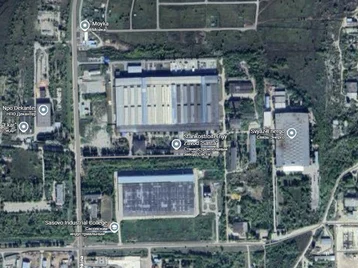
But the same news cycle carried a second development that does belong on this desk, and it has been building for a month. Drones started a fire at a Yandex data centre in Sasovo, in Russia's Ryazan region — reported as the first major attack on a Russian data hub since the full-scale invasion began. Russia, for its part, has spent recent weeks striking Ukrainian data centres and telecommunications infrastructure.
Both sides are now going after the buildings where a modern economy keeps its information.
| What | Figures | What it tells you |
|---|---|---|
| Kramatorsk deaths | At least 30, rising to 33 in later reports | A developing toll, confirmed by Ukrainian authorities |
| Kramatorsk wounded | 18, per police | Reported consistently across outlets |
| Pryluky deaths, Wednesday | 22, including five children | The bus attack was not an isolated day |
| UN-verified civilian deaths since 2022 | More than 17,000 | A documented minimum; the UN says the real figure is considerably higher |
| Major strikes on Russian data hubs since 2022 | Reported as the first | What makes the Yandex fire |
Casualty figures are as confirmed at the time of writing and were still moving.
Why data centres became targets
For most of this war, infrastructure strikes meant the power grid. The logic was straightforward and brutal: no electricity means no heating in winter, no water pumps, no industry.
Data centres are a different kind of target, and hitting them signals a different theory of pressure. A data centre is where a country's payments clear, where its government records sit, where its companies run. It is also physically concentrated in a way that a power grid is not. A grid has thousands of nodes and can be patched; a data hub is a small number of very specific buildings, each one a single point of failure for everything that runs on it.
That concentration is what makes them attractive militarily and alarming commercially. (Rainingmoney's reading — neither side has published a doctrine for this.)
What this means beyond the war zone
The uncomfortable general lesson has nothing to do with Russia or Ukraine specifically.
The cloud is marketed as something abstract — a service you rent, located nowhere in particular. It is not. It is a finite number of warehouses full of servers, connected by a finite number of cables, in identifiable places. When those places are in or near a conflict, the abstraction stops holding.
For Nigerian and African businesses, the relevant question is not whether anyone will bomb a Lagos data centre. It is narrower and more practical: do you know which physical facility your critical systems actually sit in, and what happens to your operations if that one building goes offline for a week? Most companies that think they have redundancy have two servers in one building, or two buildings on one cable route.
War risk is also one of the standard exclusions in commercial insurance. A company whose systems are destroyed in an act of war generally is not covered. (This is a general feature of war risk exclusions, not a comment on any specific policy.)
The diplomatic clock is the thing to watch
Zelensky said Ukrainian negotiators will be in the United States on Friday and Saturday to press President Trump to increase pressure on Russia. Secretary of State Marco Rubio has described the war as a dangerous stalemate and said Washington wants a lasting, fair settlement.
So this week's escalation — on buses, on apartment blocks, on data centres — arrives immediately before a negotiation. Whether it hardens Washington's position or accelerates a push for settlement terms is genuinely unknown, and anyone claiming to know which is guessing.
Rainingmoney's take
Analysis, not reporting.
Two separate things happened this week and they deserve to be kept separate. Kramatorsk was a mass civilian casualty event, and its significance is human and legal, not financial. The data centre strikes are a strategic shift with commercial consequences that will outlast this war.
What makes the second one worth a business reader's attention is the precedent, not the damage. Once digital infrastructure is established as a legitimate military target by both sides of a major conflict, that becomes part of how every future conflict is fought — and part of how every multinational has to think about where its systems physically live.
That is a slow-moving risk rather than a market event. But it is the kind that gets priced in late and all at once.
Sources & Verification
- The Yandex data centre attribution comes from a former head of Ukraine's Centre for Countering Disinformation— not an official Ukrainian claim of responsibility.
- Casualty figures from Ukrainian police and regional authorities; civilian totals from the United Nations.
The Money Print
Market intelligence before the market opens.
Pan-African capital flows and the stories behind the numbers, on weekday mornings.