TechnologyHigh
Why Is Google Sending an AI Chip Into Space?
One chip. Fifteen-minute bursts. And a 10-year rocket bet that will decide whether data centers ever leave Earth.
By Betini Udom Published 2 min read Editorial Policy Report a correction
5 things you need to know
- Google's first orbital AI chip launched on a SpaceX rocket.
- The test will show if a TPU can get 1 kilowatt of power, stay cool and run models in space.
- A two-satellite demo follows next year, linked by laser.
- The long-term plan is an orbital data center of 81 satellites.
- The plan needs Starship to fly about 180 times a year. It has never flown more than five.
The Big Number: 180. That's roughly how many Starship flights a year Google's paper implies it needs (our derived figure from about 1,800 launches over 10 years). Starship's record is five.
The Money Map: where the cost sits
- Chip: Google's own TPU, so no Nvidia dependence for this test.
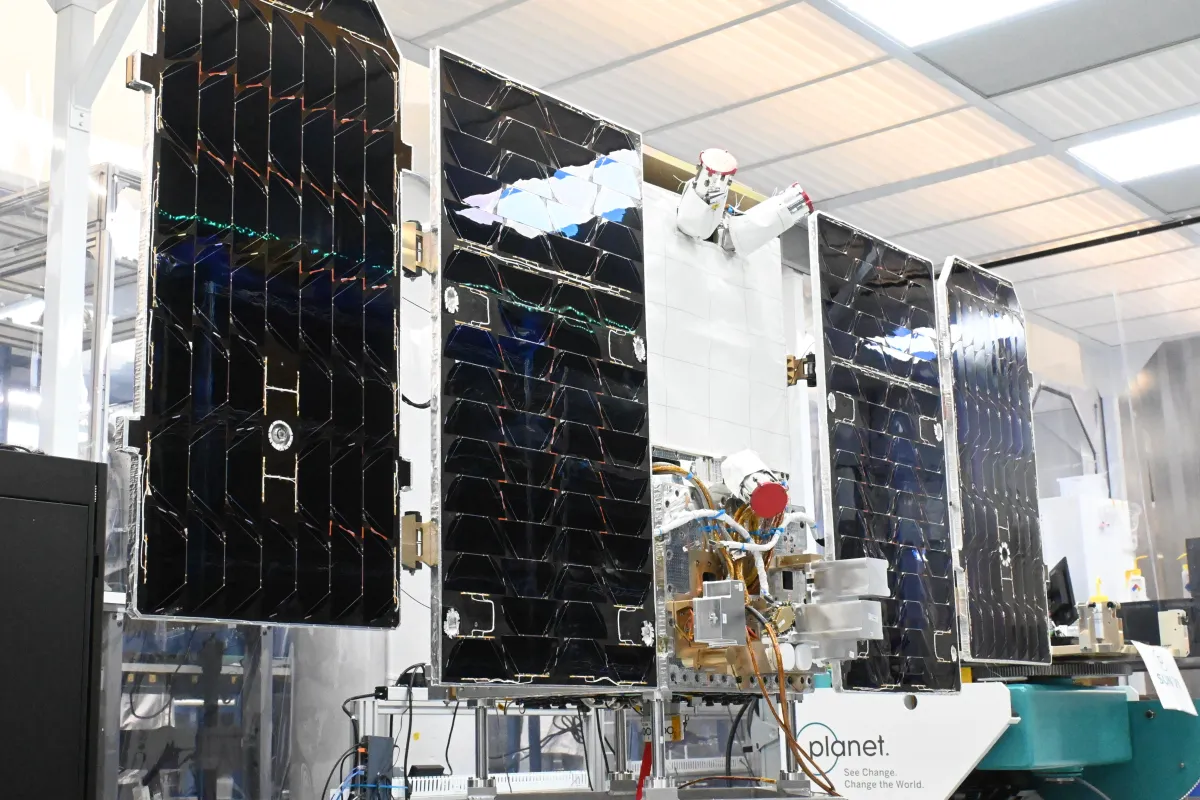
- Satellite: a standard Planet Labs platform for the prototype. Purpose-built ones come next year.
- Launch: the biggest unknown. The paper assumes about $200/kg by 2035, but the authors say they aren't claiming economic feasibility.
- Power and cooling: the point of the test. Power is the thing orbit is meant to make cheaper, and cooling is the thing orbit makes harder.
What changed
- Before: orbital data centers were mostly a concept paper.
- Now: hardware is in orbit, and the paper has passed peer review.
- Also changed: Google redid its radiation tests after finding its first setup was too protective. The corrected tests showed slightly more errors.
What caught our attention
- Google calls this a long-term moonshot and openly says the rockets it needs don't exist yet.
- The paper says it isn't an economic feasibility study, yet it carries a detailed launch-price forecast.
- Google is a major investor in SpaceX, its launch provider and a company that stands to gain if launch demand grows.
- Radiation errors are fine for everyday AI use (about one in a million operations, per Google), but were already a concern for months-long training runs.
Finance Speak → Human Speak
- TPU: Google's custom chip for AI, like a specialised engine.
- Inference: using a trained AI model to answer questions, as opposed to training it.
- Learning curve (20% a year): each time you build more, the cost drops, and here it's assumed to drop about 20% a year.
Rainingmoney's reading (not Google's): the hardware test is likely to succeed in some form. The harder-to-forecast part is whether launch costs fall fast enough, which is why this is a decade-long project and not a product.
Comprehension check
- Why does Google run the chip in 15-minute bursts? To avoid straining the satellite's power and heat systems.
- What would Starship need to do for the plan's cost assumptions to hold? Fly roughly 180 times a year.
The Bottom Line: Today's launch is a small test of a very large idea. The chip is the part Google controls, while the cost of getting to orbit is the part that decides whether the idea works.
Sources & Verification
- Google Research blog. Exploring a space-based, scalable AI infrastructure system design. Google says its initial analysis shows space-based ML compute isn't ruled out by fundamental physics or insurmountable economic barriers.
- The Keyword (Google's announcement). Meet Project Suncatcher. It announced the plan to launch two prototype satellites with Planet by early 2027 to test the hardware in orbit.
The Money Print
Market intelligence before the market opens.
Pan-African capital flows and the stories behind the numbers, on weekday mornings.