EnergyHigh
South Africa stopped refining its own fuel. The bill is now visible
Reserve Bank economists estimate South Africa's oil import bill ran R76bn ($4.68bn) higher from 2021 to 2024 after refinery closures, with 5,400 jobs lost.
By Betini Udom Published 5 min read Editorial Policy Report a correction
Economists at the South African Reserve Bank have published an estimate of what the closure of much of the country's refining industry has cost.
Their finding: between 2021 and 2024, South Africa's oil import bill ran about R76 billion ($4.68 billion) higher than it would have otherwise, because the country was buying finished petroleum products instead of processing crude at home. Around 5,400 jobs went with the plants, counting both refinery employment and the jobs that depended on it.
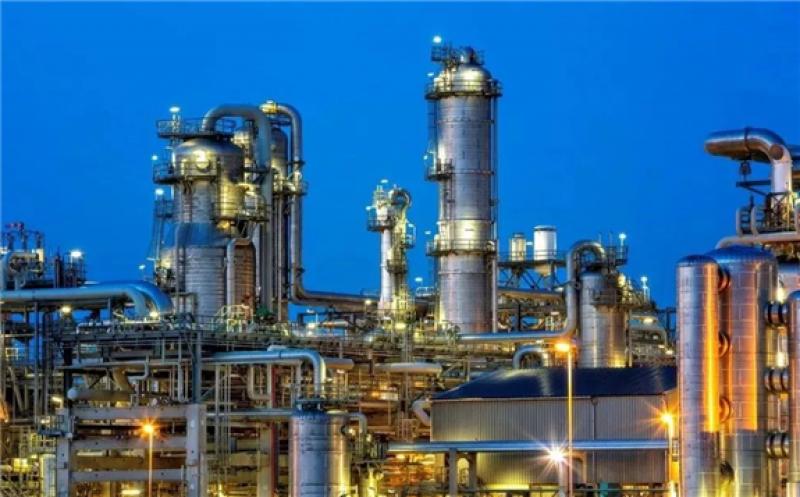
Refineries accounting for almost half of South Africa's capacity have closed since 2020. The economists attribute the decline to ageing plants, high operating costs and prolonged regulatory uncertainty, which together discouraged new investment.
In Simple Terms
A refinery turns crude oil into things people actually use: petrol, diesel, jet fuel, road tar. Crude oil on its own is nearly useless.
South Africa still buys oil. It has simply stopped doing much of the turning-into-useful-things part, and buys those products ready-made instead. That means paying someone else for the work, and — more importantly — losing the buffer that sits between a world oil price rise and the domestic fuel bill.
The Money
The R76 billion figure needs unpacking, because it is a comparison rather than a receipt.
Between 2010 and 2019, roughly 25% of South Africa's petroleum imports arrived already refined. The economists modelled what would have happened if that share had held from 2021 to 2024. Their conclusion is that the oil import bill would have been 6.1% lower on average, which across the period totals about R76 billion.
On a R100 scale: for every R100 spent importing oil in those years, about R94 would have done, had refining stayed at the old level. (Derived from the 6.1% figure.)
So it is a modelled estimate of avoidable spending, not a cash loss anyone can trace through the books. That distinction matters when the number gets quoted.
Follow the Money
Beyond what the notes state, this section is Rainingmoney's reading.
Foreign refiners capture the processing margin South Africa used to keep. The work still happens; it happens elsewhere and is paid for in dollars.
The rand carries the pressure. A larger import bill means steadier demand for foreign currency, which the economists warn can feed indirectly into inflation by raising the cost of everything else imported.
Construction absorbed a cost few anticipated. With Natref, the country's only bitumen producer, stopping production in September 2025, road and airport building now depends on imported binder.
Former refinery workers number in the thousands, in an economy with well-documented unemployment. The notes give a headline figure without a breakdown of who and where.
Fuel importers and, eventually, motorists sat at the front of the price shock this year, absorbing at least R56 billion in extra costs over six months.
The Bigger Picture
The individual closures were commercial decisions. Ageing plants and thin margins are real, and no single company was positioned to weigh the national cost of shutting down against its own balance sheet. Add them up and the result is a structural change nobody chose.
The Reserve Bank notes describe the decline as a structural shift in the country's energy and industrial sectors, and that framing is the important one. This isn't a bad year. It is a different economy, with a permanently thinner buffer against events in the Gulf.
For Nigerian readers the mirror is hard to miss. Nigeria spent two decades as the textbook case of a crude producer importing its own fuel, and is only now reversing it — the Dangote refinery runs at roughly 700,000 barrels a day, with an announced expansion to 1.4 million. (Rainingmoney context from our earlier coverage, not from the Reserve Bank notes.) South Africa's recovery plan targets about 400,000 barrels a day at a plant that has been idle since 2022.
Capacity takes decades to build and a handful of years to lose.
The Jargon
Refining capacity — how much crude oil a country can process into usable fuel, usually measured in barrels per day.
Refined petroleum products — the output: petrol, diesel, jet fuel, bitumen. Importing these rather than crude means paying for someone else's processing.
Oil import bill — the total spent buying oil and oil products from abroad in a period.
Trade deficit — buying more from the rest of the world than you sell to it.
Bitumen — the black binder that holds road surfaces together. A refinery product, not a separate industry.
Strait of Hormuz — the narrow sea passage carrying a large share of world oil. Disruption there raises prices and freight costs globally.
What Happens Next
Known. The Central Energy Fund is pursuing a plan to at least triple local crude processing, including reviving Sapref in KwaZulu-Natal at a target of about 400,000 barrels a day. Sapref has been out of operation since floods damaged it in 2022.
Possible. The Reserve Bank economists say restoring refining capacity would reduce exposure to external shocks — but add that stronger fuel storage, logistics and supply-security systems would be needed alongside it. A refinery alone is not energy security.
Unknown. Whether Sapref restarts, on what timeline, and at what cost. Whether the conditions that closed the refineries — operating costs and regulatory uncertainty — have changed enough to attract the investment. And whether these findings shape policy at all: the notes were published to stimulate discussion and are explicitly not formal Reserve Bank positions, though they were approved for publication by chief economist Konstantin Makrelov, who sits on the Monetary Policy Committee.
Rainingmoney's Take
Analysis, not reporting.
The headline number will travel further than the caveat attached to it, so it is worth restating: R76 billion is what a model says could have been avoided, measured against a benchmark the economists chose. Reasonable people could pick a different benchmark and get a different number.
What survives that caution is the mechanism, and the mechanism is not in doubt. A country importing finished fuel absorbs price shocks in full, with nothing in between. South Africa's second quarter — a R205 billion trade deficit driven by fuel — is the mechanism working in real time, not a projection.
The part worth sitting with is how this happened. There was no decision to dismantle South Africa's refining industry. There were several separate decisions, each rational for the company making it, taken in an environment where nobody could say with confidence what the rules would be in five years. That last part is the policy lesson, and it applies well beyond South Africa.
Sources & Verification
- Discussion notes by South African Reserve Bank economists, approved for publication by chief economist Konstantin Makrelov, and a study by the Centre for Research on Energy and Clean Air.
The Money Print
Market intelligence before the market opens.
Pan-African capital flows and the stories behind the numbers, on weekday mornings.