TechnologyMedium
Meta's Muse, the full picture: what was announced, what it costs, what is missing
Meta's Muse agent is getting an avatar, smart glasses, Mac control, its own email and shopping partners. How Meta plans to make money from it.
By Betini Udom Published 5 min read Editorial Policy Report a correction
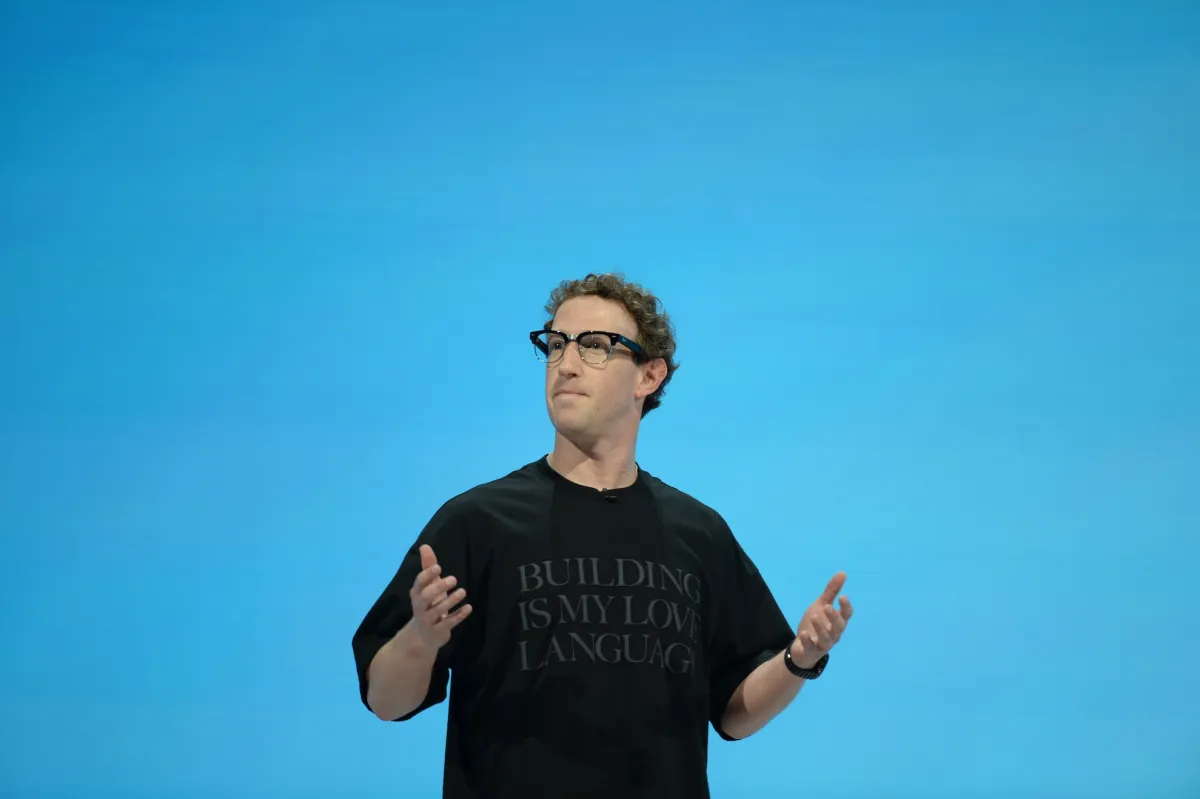
Mark Zuckerberg opened Meta's annual Connect event in Menlo Park on Wednesday with a keynote built almost entirely around Muse, the personal AI agent the company launched in early September.
Muse connects to a user's apps and accounts — email, calendar, shopping services — and carries out tasks on their behalf. It runs on Muse Spark, Meta's multimodal model built for agentic work. Its physical avatar, Zuckerberg said, is named Jolly.
The announcements covered a digital avatar users can video call, integration with Meta's smart glasses, the ability to operate a Mac, an email address of the agent's own, and a wide set of shopping and software connectors. Zuckerberg framed Muse as the centrepiece of Meta's vision and predicted it would grow into a personal superintelligence used by billions.
In Simple Terms
A chatbot answers questions. An agent carries out tasks.
The difference is access. Answering a question requires only the question. Booking an appointment, ordering groceries or clearing an inbox requires the keys to those accounts. What Meta announced on Wednesday is a steady expansion of how many keys Muse holds and how many places it can act.
The Money
Zuckerberg addressed the business model directly. Meta is making Muse free across a large usage allowance, expecting that <q>we will profit by taking a small fee from transactions</q>.
Shrink it to a basket. For every ₦100 Muse spends on your behalf, Meta intends to keep a portion. It has not said how much. (Illustration derived from Meta's stated intention; no rate has been published.)
This differs from how Meta earns today. Advertising charges a brand for the chance to be seen by you. A transaction fee charges for the completed purchase, which ties Meta's revenue to the agent actually doing things rather than to attention alone.
It also explains the shape of the partner list. Muse can reach Shopify's entire product catalogue, with payments through Stripe, PayPal and Shop Pay, and retail connections to Walmart, Best Buy, Sephora, Gap and Wayfair, plus Expedia, with Instacart to follow. Meta is positioning itself as the layer between shoppers and shops rather than as a shop.
Follow the Money
Who this reaches, and how. Beyond what Meta stated, this is Rainingmoney's reading.
Meta gains a revenue line that grows with usage rather than ad inventory, and a reason for users to attach payment methods to its platform.
Retailers gain access to customers who never open their apps, and give up both margin and the direct customer relationship. Large partners can negotiate those terms. The small businesses Alexandr Wang said Meta wants on the platform generally cannot.
Payment companies — Stripe, PayPal, Shop Pay — sit on rails that would carry a new category of automated spending.
Developers get a new platform to build connectors for, which Wang described as a generational opportunity. That framing comes from the company hosting the platform.
Users trade account access and payment details for convenience, at a fee that has not been disclosed.
The Bigger Picture
Meta is not alone here. Wednesday's Mac announcement puts Muse in the same territory as agents from OpenAI and Anthropic, both of which already operate desktop applications. The competitive question is not capability but distribution, and distribution is where Meta's existing user base is the whole argument.
The commerce layer is the genuinely distinctive piece. Rivals have built agents that can use a computer. Meta has built one wired directly into a product catalogue, three payment providers and a row of large retailers, with a stated intention to earn from each completed purchase.
Rainingmoney context: Stripe, one of those payment partners, owns Paystack, the Nigerian payments company it acquired in 2020.
The Jargon
AI agent — software that carries out multi-step tasks on your behalf, rather than only replying to you.
Multimodal model — an AI system that handles more than one kind of input, such as text, images and speech together.
Connector — a piece of software that lets an agent work inside another service, like a shop, a calendar or a code repository.
Tokens — the units AI systems are metered in, roughly chunks of text. A free token allowance is a usage allowance.
Wake word — the spoken phrase that activates a voice assistant.
Agentic commerce — buying carried out by software on a person's instructions rather than by the person clicking.
What Happens Next
Known. Muse launched in early September and runs on Muse Spark. Meta announced the avatar, glasses, Mac, email and commerce features at Connect, and named its retail, payment and software partners. Zuckerberg stated the transaction-fee intention on stage.
Possible. Rivals with their own agents may add commerce layers. Retailers not on the initial list may join, or hold back rather than concede margin. Regulators in some markets may take an interest in an agent that both recommends and purchases.
Unknown. The fee rate. The size of the free allowance. Firm launch dates for any of the announced features. Which countries the shopping features will work in — Meta published no availability list, and the named retailers are overwhelmingly American, which matters directly for Nigerian readers.
Rainingmoney's Take
Analysis, not reporting.
Keynote announcements are intentions, and this one was unusually forward-looking even by that standard: a product weeks old, with most of its roadmap described as coming soon.
What deserves attention is not the feature list but the sentence about the fee. Meta has spent two decades earning from attention. It is now describing a model where it earns from completed purchases, which requires something advertising never did — that users hand an automated system their payment details and let it act unsupervised.
Every consumer-facing announcement on Wednesday, from the friendly avatar to the voice in your glasses, serves that requirement. Whether users go along with it is the actual test, and the fee they will be paying for the privilege has not yet been published.
For readers here, the near-term reality is narrower. The features may arrive; the shopping engine that carries Meta's fee is built on retailers that do not serve this market. The model, though, travels faster than the product. If agent commerce works, local platforms will reach for the same structure, and the question to ask them will be the same one Meta has not yet answered: how big is the slice? (Rainingmoney's reading.)
Sources & Verification
- Meta's Connect keynote in Menlo Park. All product details, figures and quotations as presented by Meta on stage.
The Money Print
Market intelligence before the market opens.
Pan-African capital flows and the stories behind the numbers, on weekday mornings.