TechnologyHigh
Mafab paid $273.6m for 5G. Now it's handing the airwaves to MTN
Mafab Communications is seeking approval to transfer its spectrum to MTN Nigeria, four years after outbidding the field for a 5G licence. The regulator is looking at other holders too
By Betini Udom Published 6 min read Editorial Policy Report a correction
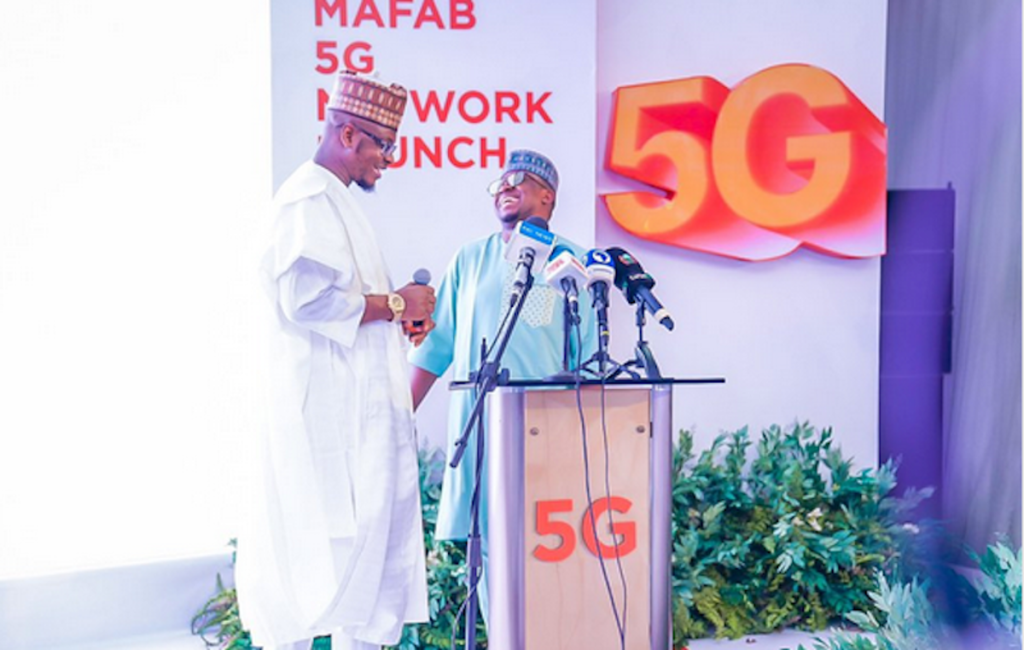
Mafab Communications is seeking regulatory approval to transfer its main spectrum holdings to MTN Nigeria, according to TechCabal, which cites people familiar with the transaction.
The holdings in question are a 2×20 MHz allocation in the 2.1 GHz band and the 100 MHz block in the 3.5 GHz band — the block Mafab won in Nigeria's first 5G auction in December 2021 for $273.6 million. The transfer has not been approved.
In Simple Terms
Spectrum is the range of radio frequencies mobile networks use to reach your phone. It cannot be made, and two operators cannot share the same slice in the same area without jamming each other. That is why governments sell the rights to it and why companies pay hundreds of millions of dollars for a slice.
Mafab bought one of those slices to become a 5G operator. It has spent four years struggling to build the physical network that would make the slice useful. Now it wants to hand it to a company that already has that network.
The Money
The auction figures are public and worth setting out plainly.
In December 2021 the NCC offered two 100 MHz blocks in the 3.5 GHz band. Mafab and MTN each won one. Each paid $273.6 million, against a reserve price — the minimum the regulator would accept — of $197.4 million.
That means each winner paid about $76.2 million above the floor, roughly 39% more than the minimum, and the two blocks together raised about $547.2 million. (All three figures derived from the published auction prices.)
What Mafab will receive for the transfer has not been reported. Without that number, it is impossible to say how much of the $273.6 million is being recovered.
One comparison exists. Megatech Engineering's 2.6 GHz licence, acquired from the NCC in March 2020, was later transferred to Globacom in a deal reported at more than ₦20 billion, described in the reporting as about $15.01 million. Different band, different year, different circumstances — but it is the only publicly reported price for a Nigerian secondary spectrum deal in this cluster.
Follow the Money
Beyond what the reporting states, this section is Rainingmoney's reading.
Mafab exits a business it could not scale, at a price nobody has published.
MTN Nigeria gains capacity in two bands without waiting for an auction — though it may be required to release other holdings in exchange.
ntel is the quiet loser if the Mafab deal proceeds. It currently earns from leasing its underused 900 MHz and 1800 MHz capacity to MTN. A buyer with fresh spectrum of its own has less need to rent someone else's.
Subscribers are the intended beneficiaries. Moving frequencies to an operator that can deploy them should mean better coverage and capacity sooner. That is the theory behind the clean-up, and it is testable.
Competitors face a market where one operator may hold more of the usable spectrum than before. Whether that is offset depends entirely on the conditions the NCC attaches.
The Bigger Picture
Nigeria's 5G auction was designed to do two things at once: raise money and create a new competitor. It succeeded completely at the first and appears to have failed at the second.
The reason is structural. MTN and Airtel entered 5G with towers, fibre, backhaul and power already built. Mafab was a greenfield operator with a licence and nothing underneath it. TechCabal reports that regulatory delays, difficulty connecting sites, foreign-exchange pressure and the rising cost of imported equipment compounded the problem. Launch events in January 2023 were not matched by infrastructure, and the company later narrowed its deployment to Abuja and Kano.
Meanwhile the incumbents kept building. Three separate cases — Mafab, Megatech and ntel — now show the same shape: spectrum held by a smaller player, never fully deployed, moving toward an operator with existing infrastructure.
The NCC's framing is efficiency. One person familiar with the review told TechCabal the regulator wants limited, valuable spectrum in the hands of those who need it. That is a defensible goal. It is also, in practice, a consolidating one.
The Jargon
Spectrum — the radio frequencies mobile networks use. Finite, and licensed by the regulator.
MHz and bands — a band is a neighbourhood of frequencies; MHz measures how wide a slice is. Wider slices carry more data.
2.1 GHz, 2.6 GHz, 3.5 GHz — different neighbourhoods with different properties. Lower frequencies travel further; higher ones like 3.5 GHz carry more data over shorter distances, which is why 3.5 GHz is the 5G workhorse.
Greenfield operator — a company building its network from nothing, with no existing towers or fibre to build on.
Backhaul — the links carrying traffic from a mast back into the core network. Without it, a mast is a dead end.
Secondary spectrum market — spectrum changing hands between companies after the original auction, subject to regulatory approval.
Reserve price — the minimum an auctioneer will accept.
What Happens Next
Known. The transfer is under regulatory review and has not been approved. The holdings involved are the 2.1 GHz and 3.5 GHz blocks. Mafab obtained its full operating licence in July 2022. 5G reached 4.61% of Nigerian mobile connections by June 2026.
Possible. MTN may be required to relinquish some existing spectrum if the transfer is approved — one person familiar with the talks described a likely reshuffle. ntel's arrangements with MTN could change. Other underused holdings may surface as the review continues.
Unknown. The transfer price. What conditions the NCC will attach. Precisely what is being considered in ntel's case. And whether Mafab retains any role in Nigerian telecoms at all once the transfer completes.
Rainingmoney's Take
Analysis, not reporting.
The strongest case for this deal is the simplest one: unused spectrum helps nobody, and a slice sitting dormant in a struggling company's balance sheet is a waste of a national resource. On that measure, moving it to an operator that can deploy it is straightforwardly good for subscribers.
The harder question is what the 2021 auction was for. If a new entrant can pay $273.6 million, obtain every licence it needs, and still fail to build a competitive network, then selling spectrum to challengers does not by itself create challengers. It creates a revenue event followed, some years later, by a transfer to the incumbents — with the entrant absorbing the loss in between.
That is not an argument against this particular transaction, which may well be the best available outcome now. It is an argument for designing the next auction differently, with infrastructure access or sharing obligations attached rather than spectrum alone.
For readers, the number to watch is not the deal value. It is whether MTN gives anything up. An approval with real conditions means the regulator is managing concentration. An approval without them means Nigeria's spectrum policy has quietly become a consolidation policy.
This article is for information only and is not investment advice.
Sources & Verification
- Extracted from a report by Frank Eleanya for TechCabal, citing people familiar with the transactions. Auction prices, spectrum bands, licensing dates and 5G adoption figures from the NCC.
The Money Print
Market intelligence before the market opens.
Pan-African capital flows and the stories behind the numbers, on weekday mornings.