FinanceMedium
Kenya's new CBK bank capital buffer rules explained
Kenya's central bank proposes a capital dial it can turn up in a boom,What the CBK's new 2.5% buffer would mean for Kenya's biggest banks
By Betini Udom Published 6 min read Editorial Policy Report a correction
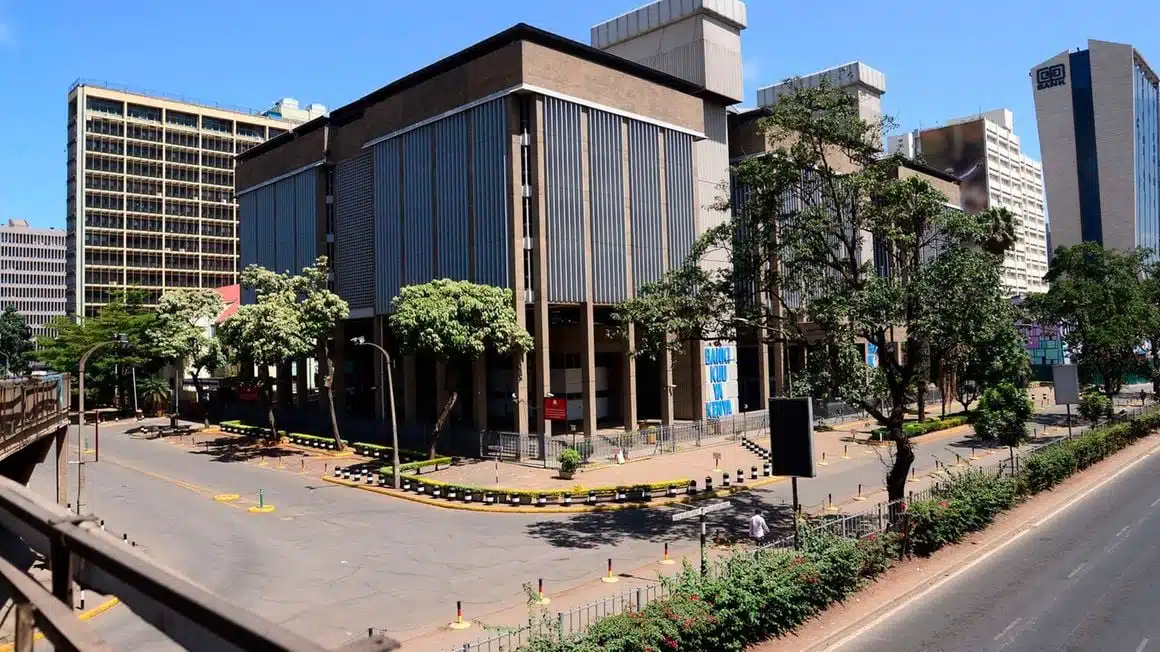
The Central Bank of Kenya has released draft banking rules for public consultation. Three proposals sit at the centre of them.
First, a countercyclical capital buffer of between zero and 2.5% of risk-weighted assets, which the CBK could switch on when credit risk builds across the financial system. It would have to be met entirely with common equity — the strongest form of capital — and would sit on top of existing requirements.
Second, a framework for domestic systemically important banks, under which the largest lenders would carry an additional common-equity surcharge of 0.5% to 2.5%.
Third, a recovery-planning regime requiring banks to prepare for severe stress without assuming any government or extraordinary central bank support.
Comments close on 7 November 2026.
In Simple Terms
A bank's capital is the money its owners have at risk in the business. It is the first thing to absorb losses when loans go bad, which is what stands between a bad year and depositors losing money.
Kenya already sets a minimum for that cushion. What is new is the idea of making part of it move. When the CBK judges that lending is growing in a way that threatens stability, it could require banks to hold more. When conditions ease, it could let the requirement fall again.
The second idea is simpler. If a bank is big enough that its failure would damage the whole economy, it has to carry a thicker cushion than a small bank does.
The third idea is the bluntest. Banks must write down how they would survive a crisis, and they are not allowed to write "the government will help" as part of the answer.
The Money
Everything here is expressed as a percentage of risk-weighted assets — a bank's loans and investments adjusted for how risky each one is, so a government bond counts for less than an unsecured loan. The percentages never apply to a bank's headline asset total.
The draft keeps the existing floors in place:
- 8% in Common Equity Tier 1, the highest-quality capital
- 10% in Tier 1 capital
- 12% in total capital
- plus the existing 2.5% capital conservation buffer
On top of those, the two new tools each add up to 2.5%.
Shrink a bank's risk-weighted assets to Sh100 to see the effect. Today it must hold Sh8 of core equity plus Sh2.50 of conservation buffer: Sh10.50. With both new tools at maximum, that becomes Sh15.50 — about half as much again. (Derived from the draft percentages.)
That is a ceiling rather than a forecast. The countercyclical buffer sits at zero until the CBK activates it, and the surcharge varies by institution.
Follow the Money
Who this reaches, and how. Where this goes beyond the draft, it is Rainingmoney's reading.
The biggest banks carry the heaviest cost. Equity, KCB, NCBA, Co-operative and I&M are named as potentially in scope.
Shareholders feel it first. Capital held as a buffer is capital not paid out, so a live countercyclical buffer generally means retaining more earnings.
Borrowers sit on the other side of the same coin. The stated purpose of a countercyclical buffer is to let banks keep lending in a downturn rather than pulling back sharply — but while it is being built up, capital has to come from somewhere.
Foreign parent banks. Absa, Stanbic and Standard Chartered could be designated, with the CBK engaging their home regulators on recovery and resolution planning.
Taxpayers are the intended beneficiaries of the no-rescue rule. Bail-ins push losses onto investors and certain creditors instead of the public purse.
The Bigger Picture
Kenya's banking sector has been expanding through acquisitions, product diversification and regional operations, while working towards a Sh10 billion core-capital requirement by 2032. Bigger, more complex, more international banks are harder to supervise and more damaging to lose.
The history matters too. The framework follows the collapse of Dubai Bank, Imperial Bank and Chase Bank between 2014 and 2016, which disrupted confidence in Kenya's interbank market — the short-term lending system banks rely on to manage daily cash.
There is also a cross-border question the draft raises but does not settle. At least seven Kenyan banks now operate regionally. Equity is present in Kenya, Uganda, Tanzania, Rwanda, South Sudan and the DRC; KCB in those markets plus Burundi. A buffer calibrated to Kenyan credit conditions would apply to groups whose risk is spread across economies moving on different cycles.
The Jargon
Risk-weighted assets — a bank's loans and investments adjusted for risk, so safer exposures count for less. All these percentages apply to this figure.
CET1 (Common Equity Tier 1) — the strongest capital: mainly ordinary shares and retained earnings. It absorbs losses first.
Countercyclical capital buffer — extra capital required during credit booms and released when conditions worsen.
Capital conservation buffer — a permanent cushion above the minimum. Dipping into it restricts dividends and bonuses.
D-SIB — a domestically systemically important bank, one whose failure would disrupt the wider economy.
Pillar II — extra capital a supervisor can require from one specific bank for risks the standard formulas miss.
Bail-in — forcing losses onto a failing bank's investors and certain creditors instead of onto taxpayers.
Bridge institution — a temporary entity that holds a failed bank's viable operations while a permanent solution is arranged.
Emergency Liquidity Assistance — central bank lending to a solvent but illiquid bank. Under the draft, it cannot be counted on as part of a recovery plan.
What Happens Next
Known. The rules are drafts, out for public consultation, with comments due 7 November 2026. The existing minimum ratios and conservation buffer are unchanged. D-SIB designations would be communicated by 31 March and published by 30 June. Recovery plans would be tested at least every two years and filed by 30 April.
Possible. The CBK could impose institution-specific Pillar II requirements for risks the standard calculations miss. Foreign-owned lenders could be designated systemically important, triggering engagement with home regulators.
Unknown. Whether the proposals survive consultation unchanged. Which banks end up designated, and at what surcharge. When, if ever, the countercyclical buffer would first be activated. And how a Kenya-calibrated buffer would work in practice for groups earning most of their money elsewhere.
Rainingmoney's Take
Analysis, not reporting.
The buffer will get the headlines because it has a number attached. The recovery-planning rule is the more consequential change.
Telling banks they may not assume a rescue does something no capital ratio does: it changes the incentives before anything goes wrong. A bank that knows it will be caught by the state can take risks it would otherwise avoid. Requiring a written, tested plan that excludes state help removes that assumption from the boardroom, not just from the rulebook.
The weakness is the same one every countercyclical regime faces. Its usefulness depends entirely on the regulator identifying a credit boom while it is happening, which supervisors around the world have consistently found difficult. Build the buffer too late and it does nothing; build it too early and it constrains lending for no reason.
For readers outside Kenya, the thing to watch is whether it ever gets switched on. A tool that sits permanently at zero tells you something about how hard the judgement is.
This article is for information only and is not investment advice.
Sources & Verification
- Based on the Central Bank of Kenya's draft rules.
The Money Print
Market intelligence before the market opens.
Pan-African capital flows and the stories behind the numbers, on weekday mornings.