FinanceHigh
Government borrowing gets cheaper again: what the ₦900bn T-bill auction means for your savings
CBN offers ₦900bn in treasury bills on 7 October. What T-bills are, why rates are falling, and what the 364-day bill actually pays savers after inflation.
By Betini Udom Published 6 min read Editorial Policy Report a correction
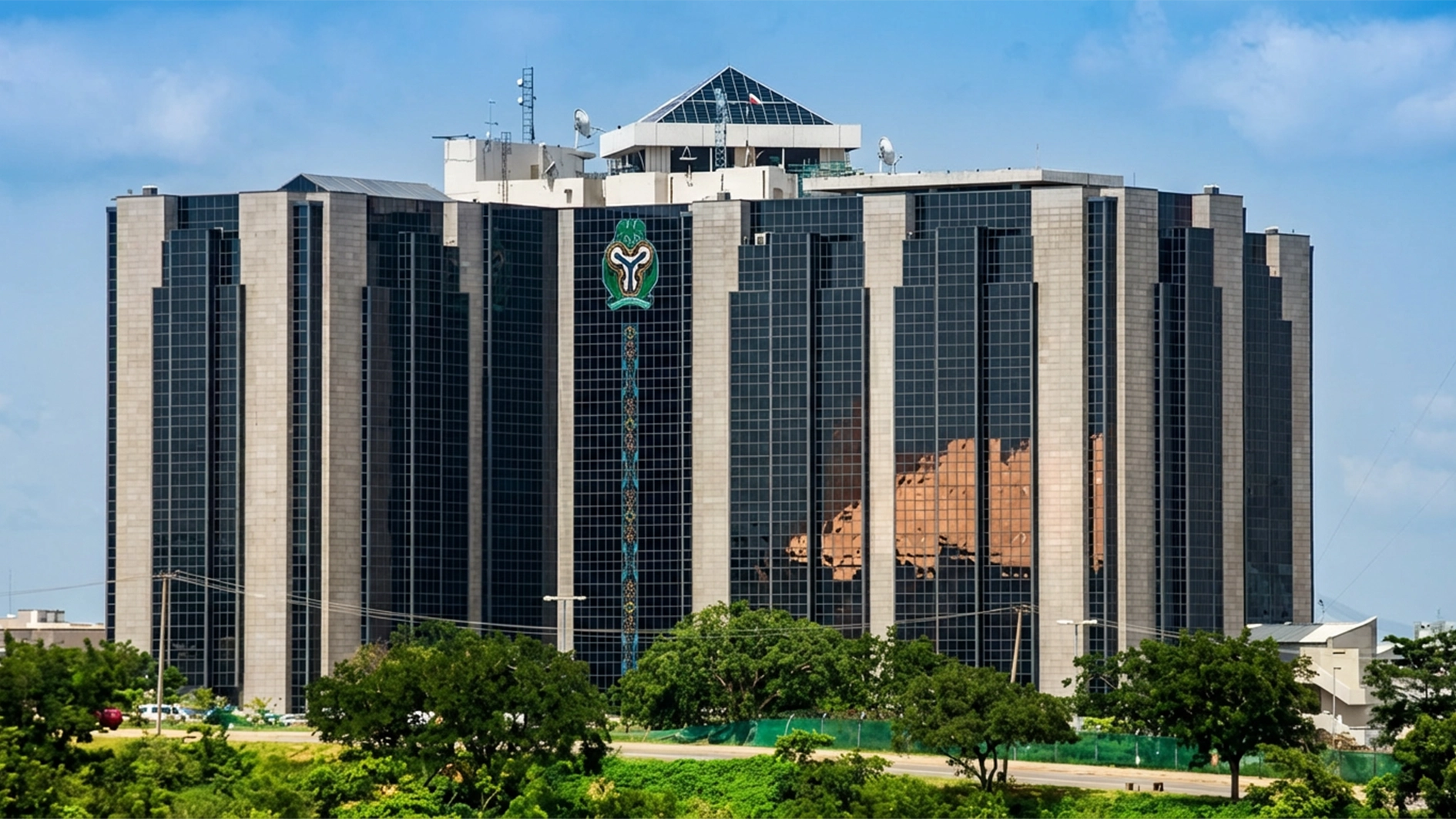
The Central Bank of Nigeria has announced a ₦900bn Nigerian Treasury Bills auction for 7 October 2026, settling the following day. It is the first auction of the fourth quarter.
The offer is weighted heavily towards the longest tenor. The 364-day bill takes ₦700bn. The 91-day and 182-day bills get ₦100bn each.
Rates going into the auction have been falling. At the last auction on 23 September, the one-year bill cleared at 15.89%, down 73 basis points. The six-month bill stood at 15.80% and the three-month at 15.50%.
In Simple Terms
A treasury bill is a short-term loan to the Federal Government. You pay less than the face value today and collect the full face value on a fixed date — in three months, six months or a year. No instalments, no price to monitor, and the payout is known at purchase.
It is treated as the safest place to hold naira, because the borrower is the state. That is why it sets the benchmark every bank must beat to attract your fixed deposit.
What the government is doing on Wednesday is going to the market for ₦900bn and asking lenders what rate they will accept. Because so much more money is on offer than the government wants, lenders end up competing against one another and the rate comes down.
The Money
Shrink the ₦900bn offer to ₦100 and the strategy is visible at a glance: ₦77.80 goes into the one-year bill, with ₦11.10 each in the three-month and six-month. (Derived.)
The scale of money chasing it is the other half of the picture. At the 23 September auction, investors submitted ₦4.23trn in bids and the government accepted ₦497.59bn — roughly ₦11.80 of every ₦100 offered, with about ₦3.73trn turned away. (Derived.)
Behind that sits a pool of cash with nowhere to go. Banks held more than ₦4.6trn at the CBN's Standing Deposit Facility on 2 October — about five times the size of this entire auction, earning a return while doing nothing productive. (Derived.)
Follow the Money
Who this reaches. Beyond the figures themselves, this tracing is Rainingmoney's reading.
The Federal Government is the clear winner. It is raising more than planned at rates 181 basis points below July's, and concentrating it in one-year paper that cannot be repriced upward for twelve months.
Banks and institutional investors keep a positive real return but a shrinking one, and most of their bids are rejected. The rest goes back to the Standing Deposit Facility.
Individual savers face a lower ceiling. When the risk-free government rate falls, no bank needs to offer more on a fixed deposit, so deposit rates follow with a lag.
Borrowers stand to gain. A 350 basis point cut in the policy rate and falling government yields together reduce the benchmark against which loans are priced — though Nigerian lending rates have historically moved down slowly and incompletely.
Taxpayers carry the other side. Cheaper borrowing today is genuinely better than expensive borrowing, but a heavy concentration of one-year bills means a large block of maturities lands in a single window next October, to be refinanced at whatever rates exist then.
The Bigger Picture
September's monetary policy decision is the hinge. The Monetary Policy Committee cut the Monetary Policy Rate by 350 basis points to 23.00% — the largest single reduction since 2006 — against inflation that had eased to 15.39% in August.
That cut did two things at once. It signalled that the central bank believes the inflation fight is being won, and it made holding idle naira less attractive. The money had to move somewhere, and the first place institutional money in Nigeria goes is government paper.
The result is a market where the government, not the lender, holds the pricing power. For most of the past three years the opposite was true: the Treasury paid up because inflation was high, yields had to compensate for it, and funding was tight. Wednesday's auction is a marker of how far that has flipped.
The Jargon
Treasury bill (NTB) — a short-term government loan of up to 364 days, sold below face value and redeemed at full value.
Stop rate — the rate at which an auction clears: the highest rate the government accepts. Bids asking for more get rejected.
Basis point — one hundredth of a percentage point. A 73 basis point fall takes 16.62% to 15.89%.
Tenor — how long the loan runs.
Oversubscription — more money bid than the government offered. The surplus is turned away.
Monetary Policy Rate (MPR) — the CBN's benchmark rate, the anchor for borrowing costs across the economy.
Standing Deposit Facility (SDF) — where banks park surplus cash at the central bank overnight for a modest return. A large balance signals money with nowhere better to be.
Real return — what is left of your return after inflation. The only figure that tells you whether your savings actually grew.
What Happens Next
Known. The auction is on 7 October, settling 8 October, at ₦900bn split ₦700bn / ₦100bn / ₦100bn. The policy rate is 23.00%. Last published inflation is 15.39% for August.
Possible. Rates could fall further, given demand is running about eight times the allotment. The flat yield curve suggests the market itself expects that. Deposit rates at banks would likely follow downward.
Unknown. Wednesday's clearing rates — 15.89% is where September ended, not a forecast. September's inflation figure, due from the NBS in mid-October. The DMO's full Q4 issuance programme, which the source does not state, and therefore whether the government again intends to borrow well above plan.
Rainingmoney's Take
Analysis, not reporting.
This auction is worth reading as a scoreboard rather than an event. The score says the Nigerian government has regained the upper hand in its own debt market after years of paying heavily for short money.
For savers the message is less comfortable but not alarming. You are still ahead of inflation on a one-year bill — meaningfully so, once the discount mechanics are properly accounted for. But that margin has narrowed sharply since July, and the direction of travel is clear enough that anyone planning to park money for a year should be doing the arithmetic now rather than assuming last quarter's rates still apply.
The number we would most like to see, and which no auction notice publishes, is where the rejected ₦3.73trn ends up. If Nigerian institutional money starts flowing into corporate paper and lending rather than back into the central bank's deposit window, the rate cut will have done what it was designed to do. If it simply circles between the Standing Deposit Facility and treasury bill auctions, then cheap government borrowing is the only thing the policy has achieved — and that is a much smaller result than it appears.
Sources & Verification
- Auction details from the CBN's Q4 issuance calendar. Policy rate from the CBN's September MPC decision.
- August inflation from the National Bureau of Statistics.
The Money Print
Market intelligence before the market opens.
Pan-African capital flows and the stories behind the numbers, on weekday mornings.