MarketsHigh
Nigeria is back in FTSE's frontier index. What changed, who gained, and what comes next.
FTSE Russell restored Nigeria to frontier status. What it means, which stocks drew the money, what the data does and doesn't show, and what comes next.
By Betini Udom Published 5 min read Editorial Policy Report a correction

On Monday, 21 September, FTSE Russell's decision to restore Nigeria to its frontier markets index took effect. It ends a three-year absence that, according to the report, was forced by problems converting naira into foreign currency and moving money out of the country.
Thirty-one Nigerian stocks now sit in the FTSE frontier universe. On the first day, the Nigerian Exchange's All-Share Index rose 0.14% to 250,156.80 points — an all-time high. Zenith Bank, GTCO and FirstHoldCo drew most of the buying.
In Simple Terms
A big share of the world's investment money no longer picks stocks. It copies lists. Index providers like FTSE Russell publish those lists, and "tracker" funds buy whatever is on them.
For three years, Nigeria wasn't on this particular list, because investors who put dollars in couldn't reliably get dollars out. Now it is back on, so the funds that follow it have a reason — and in many cases an obligation — to own Nigerian shares again.
The Money
When a tracker fund buys Nigerian shares, it buys them from existing shareholders on the exchange. The money goes to whoever sells, not to the companies themselves. What companies gain is indirect: a higher share price and a deeper pool of buyers makes it easier and cheaper to raise money later.
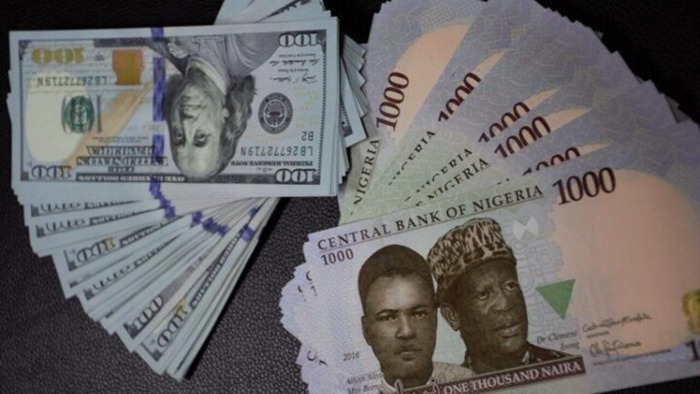
To buy those shares, the funds first need naira, which they get by selling dollars. That is why this matters beyond the stock market: foreign portfolio money is one of the ways dollars enter the Nigerian economy.
Monday's money trail was concentrated. Of ₦38.05bn traded across the whole market, about ₦15.2bn — roughly 40% — went into three banks.
The last three rows sit uneasily together. More trades, smaller average size and less total value is not the obvious signature of big foreign funds piling in. Friday's value may have been lifted by large pre-rebalancing trades, which the report doesn't break out. The honest reading is that Monday's data shows concentrated buying in a few banks — it does not, by itself, measure how much of that buying was foreign.
Follow the Money
Beyond the trading figures, this section is Rainingmoney's reading.
Big bank shareholders are the first winners. Zenith, GTCO and FirstHoldCo are the large, easily-traded stocks that index money reaches first. GTCO rose 3.9% to ₦133.90; Zenith 0.2% to ₦128.60; FirstHoldCo held at ₦160 on ₦1.87bn of trading — more than Access Holdings and UBA combined.
Other qualifying stocks saw selective gains. NASCON Allied Industries rose 10% to ₦176 and Transnational Corporation 6.78% to ₦37.
The heavyweights — MTN Nigeria and Dangote Cement — held flat, absorbing the buying without price distortion.
Sellers took profits in places, with Okomu Oil Palm among the counters that slipped.
The Nigerian Exchange gains credibility and activity. The naira stands to gain if foreign portfolio money arrives in size, since it arrives as dollars.
The Bigger Picture
The reclassification is a verdict on plumbing, not on performance. Nigeria's stock market didn't lose its index status because its companies were poor; it lost it because money couldn't move freely. Getting back in says the plumbing works well enough again.
NGX Group's chief executive, Temi Popoola, framed the moment as a starting point: the next phase, he said, has to be turning market momentum into deeper capital formation and bringing more quality businesses to list. Nigerian Exchange CEO Jude Chiemeka pointed to breadth, saying the exchange is "paying close attention to the quality and breadth of market participation."
That breadth is the real test. If index money stays locked in three banks, the reclassification lifts a few prices. If it spreads, it can make the whole market a better place to raise capital.
The Jargon
FTSE Russell — a global company that builds stock market indices used by investment funds.
Frontier market — the index tier for smaller, less-developed stock markets, below "emerging markets".
Passive or tracker fund — a fund that copies an index instead of choosing stocks.
Reclassification — moving a country into, out of, or between index tiers.
All-Share Index — the Nigerian Exchange's measure of how the whole market is moving.
Market capitalisation — the total value of all shares in listed companies.
Capital repatriation — foreign investors converting their money back into foreign currency and taking it home.
Rebalancing — funds adjusting holdings to match an updated index.
What Happens Next
Known. The reclassification took effect on 21 September. The Central Bank's Monetary Policy Committee met on 21–22 September. Coronation's analysts expect further demand from funds tracking FTSE indices.
Possible. Steady buying of large banks as index funds complete their adjustments. Gains spreading to more of the 31 qualifying stocks. A boost to dollar supply if foreign inflows are sizeable.
Unknown. How much of Monday's buying was actually foreign — the report gives no foreign-flow figures. The MPC's decision and how bank shares respond. Whether the dollar access that brought Nigeria back holds up.
Rainingmoney's Take
Analysis, not reporting.
This is a genuinely good development, and the quiet first day is part of why. Index money is slow, rule-bound and sticky — it doesn't flood in and it doesn't panic out. A 0.14% gain is exactly what its arrival should look like.
But the story has run ahead of the evidence. "Foreign investors return" is plausible and probably true, yet Monday's data can't prove it: turnover fell, trades got smaller, and no foreign participation figures were published. The numbers that will settle it are the exchange's foreign portfolio data and the MPC decision. Watch those, not the index level.
Sources & Verification
- NGX trading data, statements from NGX Group and Nigerian Exchange Limited, and analyst commentary from Coronation and United Capital.
The Money Print
Market intelligence before the market opens.
Pan-African capital flows and the stories behind the numbers, on weekday mornings.