EnergyHigh
Petrol just got ₦85 more expensive at the source. Here's how that reaches your tank.
Dangote Refinery raised its petrol gantry price by ₦85 to ₦1,350 per litre as Brent topped $107. What a gantry price is and how it reaches the pump.
By Betini Udom Published 5 min read Editorial Policy Report a correction
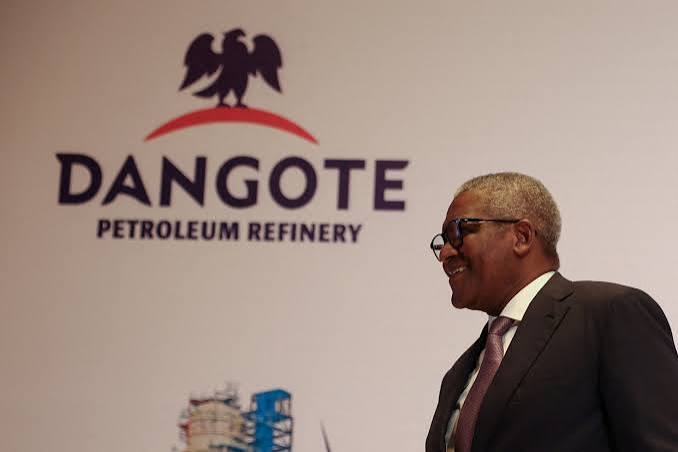
Dangote Petroleum Refinery raised the price of petrol at its loading gantry by ₦85, taking it to ₦1,350 per litre from ₦1,265. The increase is 6.7%.
The refinery attributed the move to a surge in global crude prices and higher product replacement costs. Brent crude, the benchmark for Nigerian oil, was trading at about $107.86 a barrel on Friday according to OilPrice.com, after earlier climbing above $108.
The new price sits above the current petrol landing cost of ₦1,311.36 per litre.
In Simple Terms
The gantry is the loading bay where tanker trucks fill up at the refinery. The gantry price is what those trucks pay — a wholesale price charged to marketers and depot operators, not the price at your filling station.
But almost every other price in the chain is built on it. When it rises ₦85, marketers who buy at the gantry face ₦85 more per litre before they have added transport or their own margin.
In ₦100 terms: for every ₦100 a marketer spent on a litre last week, they now spend ₦106.70. (Derived.)
The Money
Where the increase comes from. Not from the refinery's costs last month, but from what it will cost to buy the next barrel. A refinery sells petrol refined from crude bought weeks ago, then has to replace that crude at today's price. With Brent near $108, replacement is dearer than the original purchase, so the selling price moves up to fund it.
Where it lands. Marketers and depot owners pay it first. They then decide how much to pass to motorists and how much to absorb, which is why pump prices rarely move by exactly the gantry amount.
The import comparison. At ₦1,350 the gantry price is ₦38.64 above the ₦1,311.36 landing cost, about 2.9% higher. (Derived.) Landing cost is what importers measure against, so the domestic wholesale price is now marginally above the imported alternative on paper.
Follow the Money
Who this reaches, and how. Beyond what the report states, this section is Rainingmoney's reading.
Depot owners and marketers absorb the increase first. BusinessDay reports many were already selling higher in anticipation, so some had positioned ahead of it.
Motorists and commercial drivers meet it at the pump, with a lag and not necessarily in full.
Transport operators and logistics businesses carry it as a direct input cost, and fares and delivery charges are where it usually surfaces.
Households meet it twice — once at the pump, again in the price of anything that had to be moved by road.
Importers gain a narrow opening. With domestic wholesale above landing cost, bringing petrol in becomes commercially arguable again.
The Bigger Picture
The year's price record tells the real story. In August the refinery raised the gantry price ₦20 to ₦1,185, after cutting it ₦50 earlier in the same month. In June it cut ₦75 to ₦1,175 as crude eased following a de-escalation of Middle East tensions. In May it raised the price to ₦1,350, reversed that to ₦1,275, then cut to ₦1,200 — one of twelve adjustments between January and May.
Today's ₦1,350 is exactly where May's peak was.
Local refining was expected to loosen Nigeria's dependence on imported fuel economics. What the year suggests instead is that the transmission has become faster rather than weaker: crude moves, replacement costs move, the gantry follows within days, and the depot market follows the gantry — sometimes anticipating it. (Rainingmoney's reading.)
Rainingmoney context: Dangote Refinery's Nigerian share offer is currently open. That is a separate matter from this pricing decision, but it means the refinery's commercial behaviour is under closer watch than usual.
The Jargon
Gantry price — the wholesale price at the refinery's truck-loading bay. Not a pump price.
PMS (Premium Motor Spirit) — the official name for petrol.
Replacement cost — what it costs to buy the next barrel of crude, as opposed to what the last one cost. Refiners price against this.
Landing cost — the all-in cost of bringing a litre of imported petrol to Nigeria, including freight and charges.
Import parity — the point where importing and buying locally cost the same. Above it, imports look cheaper on paper.
Brent crude — the North Sea oil grade used as the pricing benchmark for Nigerian crude.
Depot — the storage terminal where marketers buy fuel before it reaches filling stations.
What Happens Next
Known. ₦1,350 is now the refinery's wholesale reference. Depot owners and marketers are reassessing their selling positions. Replacement-cost pressure is being reported across Lagos, Warri, Port Harcourt and Calabar, with actual depot prices varying by supplier and stock position.
Possible. Pump prices rise, though not necessarily by the full ₦85. If Brent stays near $108, further gantry increases follow; if it eases as it did in June, the price can fall as quickly as it rose. Importers may test the gap now that domestic wholesale sits above landing cost.
Unknown. How much of the ₦85 reaches the pump, and when. Whether the crude rally holds. And the figures the report does not reconcile — see below.
Rainingmoney's Take
Analysis, not reporting.
Two things are worth separating here.
The first is the increase itself, which is unremarkable in mechanism. Crude rose, replacement cost rose, wholesale price rose. That is how a deregulated fuel market is supposed to work, and it is a poor target for outrage.
The second is what the year's pattern reveals, which is more interesting. Twelve adjustments in five months, then a reversal, then a return to exactly the May peak — that is not a refinery setting Nigeria's fuel price. It is a refinery relaying a dollar-denominated commodity price into naira, quickly and in both directions.
For anyone budgeting — a business, a transport operator, a household — the practical conclusion is to treat petrol as a variable cost tied to Brent rather than a fixed cost that occasionally jumps. The stability many expected from local refining was never in the refinery's gift. It was always in the crude market's.
Sources & Verification
- Reporting by RainingMoney Energy Correspondent.
- Landing cost figure from Petroleumprice.ng and Brent price from OilPrice.com, as cited in that report.
The Money Print
Market intelligence before the market opens.
Pan-African capital flows and the stories behind the numbers, on weekday mornings.