
OpinionMedium
Nigeria Just Created Millions of First-Time Shareholders. Nobody Has Told Them What Happens Next.
Applications came from about 120 countries and all 54 African states. Before the shares list, three things will surprise most first-time investors.
By Chiamaka Prudence Published 6 min read Editorial Policy Report a correction
The Dangote Refinery public offer closed on Tuesday 27 October, after a two-week extension, having opened on 14 September. Final allotment figures are still pending.
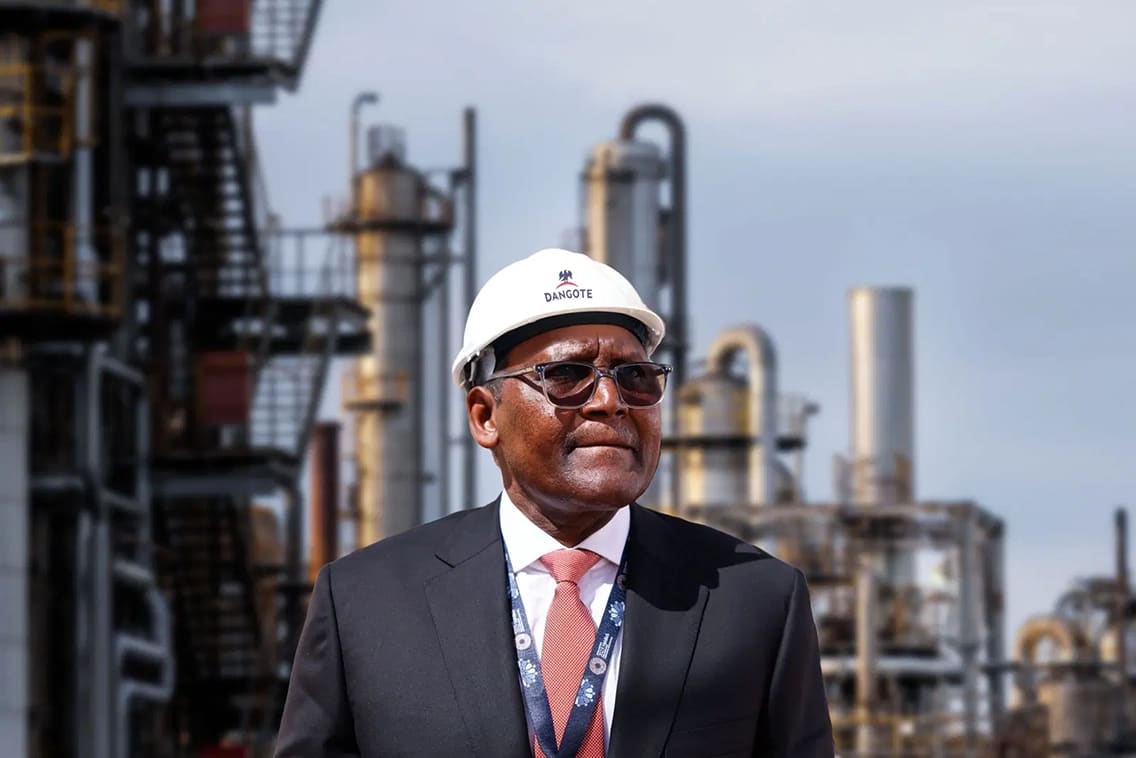
What is known is enough to call it a success on the terms its sponsors set. Applications arrived from about 120 countries across six continents, including all 54 African states. According to people familiar with the books, domestic and retail demand alone covered the $1.6 billion target, with international demand on top. The 30% over-allotment option, which would lift proceeds toward $2.1 billion, now looks near-certain to be exercised. The business is being valued around $47 billion.
Aliko Dangote said the refinery "was built in Africa, by African determination, and its future must create opportunities for Africans," and that Africans "are ready to own and participate in the prosperity created by their own industries." The refinery's chief executive, David Bird, pointed to applications from 120 countries as evidence of international interest.
I argued a fortnight ago that the extension revealed what this offer was really for: not money, which was already oversubscribed, but shareholders. On that measure it has worked emphatically, and the people who designed it deserve to say so.
Now I want to write about the part that has had no campaign, no billboards and almost no coverage, because it is the part that will shape whether this becomes the start of a Nigerian investing culture or a one-off disappointment.
One claim worth getting precise about
The headline circulating is that the offer achieved "100% African participation" because subscriptions came from all 54 African countries.
That is a real milestone and it is also narrower than it sounds. It means at least one application was received from each country. It does not mean African investors own a large share of the refinery, or that participation was evenly spread. The float itself is about 3.3% of the enlarged share capital, rising to roughly 4% if the over-allotment is used. Ninety-six parts in a hundred stay where they were.
I make the point not to deflate anything but because precision is the whole job here. A reader who believes they now collectively own the refinery will draw the wrong conclusions from everything that follows.
Three things that are about to surprise people
You will probably get fewer shares than you applied for.
This is called scaling back, and in an oversubscribed offer it is normal and unavoidable. If an offer receives three times the applications it can fill, somebody has to receive less than they asked for. Allotment rules vary — some offers favour small applicants, some allot proportionally, some do both in tiers — and the basis of allotment has to be cleared by the SEC before anyone is told.
Expect to receive a fraction, and expect that fraction to feel arbitrary. It is not personal and it is not a rejection.
Your money comes back, and it comes back without interest.
The balance of what you applied with is refunded. Refunds on Nigerian offers have historically taken weeks rather than days, and they do not pay you for the time your money was held.
This is the single most common cause of bad feeling in a retail offer, and it is entirely avoidable as an emotional experience if you know in advance it is coming. Do not spend that money before it arrives. Do not assume a delay means something has gone wrong.
Then the price will move, and sometimes it will move down.
Listing on the NGX main board is expected after allotment. From that moment the shares have a market price, and the market price is whatever buyers and sellers agree today — not ₦525, and not whatever the company is worth in somebody's model.
For a very large number of Nigerians this will be the first time they watch a number attached to their own money fall. Some will panic and sell at a loss. Some will conclude the market is rigged. A few will decide that shares are a scam and never return.
That reaction is not stupidity. It is what happens when people are recruited into an asset class with civic language and then left alone with a price chart.
The honest investment position today
The business has got stronger since the offer opened, and I should say so plainly, having been sceptical in September.
Nine-month results published on 13 October showed net income of $4.73 billion against a $117.2 million loss a year earlier, revenue of $22.48 billion against $9.19 billion, and a move from net debt to net cash. The 700,000 barrel-a-day plant reached full crude distillation utilisation in the second quarter. That is a plant that works at scale, which was a genuine open question eighteen months ago.
The caveat is the one I keep returning to, and recent weeks have sharpened it. The gross refining margin rose to $24.50 a barrel in the first half from $13.70. Brent is now above $115, up around 79% over twelve months, and the models point higher still. Refiners worldwide are having an exceptional year because a war has disrupted crude and product markets.
So a new shareholder owns a well-built asset, proven at full rate, earning exceptional margins in conditions that will not last forever. Two of those three are durable. The third is doing most of the work in the profit figure.
Neither bulls nor bears get to skip that sentence.
Who owes these investors something now
Three parties, and none of them has finished the job.
The company. It asked for ten million retail shareholders and is getting something on that scale. A register of that kind carries an obligation to communicate like a retail company: plain-language results, a clear dividend policy stated early, and allotment and refund timelines published before people start asking.
The brokers and platforms. Thousands of accounts were opened in six weeks by people who had never owned a security. Those customers need to be told what a basis of allotment is and when their refund is due, in a message they will actually read, rather than being left to discover it from WhatsApp.
The press, including us. We covered the offer intensively because it was a story. Allotment and the first weeks of trading are less of a story and matter more. If Nigerian financial media reports the opening price and then moves on, we will have participated in recruiting people and then abandoned them.
What to do if you applied
Keep your application receipt and CSCS details somewhere you will find them. Allotment notices and refunds route through the details you supplied. A mismatched name or a dormant bank account is the commonest reason a refund stalls.
Do not decide anything on the first trading day. Opening-day prices in a heavily subscribed listing tell you about enthusiasm, not value. If you intended to hold, hold.
Write down why you bought, today, before the price exists. One sentence. When the price moves against you in February, that sentence is the only defence you have against selling for the wrong reason.
And treat this as tuition. Whatever happens to the price, you have just learned how applications, allotment, refunds, settlement and listing work. That knowledge is worth more over a lifetime than the position itself.
Nigeria has spent six weeks persuading millions of people that owning a piece of a company is a reasonable thing to do. That was the hard part, and it worked.
Keeping them is the part that starts now, and it will be decided by how honestly the next ninety days are explained.
Sources & Verification
- Dangote Petroleum Refinery and Petrochemicals public offer terms and timetable, opened 14 September 2026, extended by SEC approval and closed 27 October 2026
- Company statements from Aliko Dangote and chief executive David Bird on participation across 54 African countries and approximately 120 countries
- Reporting of subscription coverage and over-allotment expectations attributed to people familiar with the books
- DPRP unaudited nine-month results to September 2026, published 13 October 2026
- Brent crude benchmark via Trading Economics, 28 October 2026. Final subscription totals and the basis of allotment had not been published at the time of writing.

Correspondent, OnitshaOnitsha
Chiamaka Prudence
I am a technology and finance enthusiast with a keen interest in digital innovation, emerging financial trends, and the evolving ways technology is shaping businesses and everyday life. I enjoy…
Author profile & archive →The Money Print
Market intelligence before the market opens.
Pan-African capital flows and the stories behind the numbers, on weekday mornings.