MarketsLow
Dangote Refinery's IPO has closed: what the offer was and what is still unknown
Dangote Refinery says applications came from 120 countries for its ₦2.15tn share offer. Here is what an IPO is, what the numbers mean, and what we still do not know.
By Betini Udom Published 7 min read Editorial Policy Report a correction

The share offer by Dangote Petroleum Refinery and Petrochemicals has closed. The company said on Tuesday that investors from 120 countries applied, including all 54 African countries. This article explains what the offer was, what the numbers mean and what the company has not yet told the public.
What happened?
The refinery company sold shares to the public for the first time. This is called an initial public offering, or IPO. Until now, the refinery was owned by a small group of people and companies. In an IPO, a company invites the public to buy a piece of it.
According to the company's statement, the offer opened on 14 September. It put up 4.1 billion ordinary shares at ₦525 each. That is a proposed raise of about ₦2.15tn.
The offer was meant to close on 13 October. After the Securities and Exchange Commission approved an extension, it ran until 27 October. The Securities and Exchange Commission is the regulator that oversees share sales in Nigeria. The company said the extra time gave investors across Africa and other markets longer to take part.
What does ₦2.15tn actually mean?
The figure comes from simple multiplication. Take 4.1 billion shares and multiply by ₦525. The answer is about ₦2,152.5bn, which is roughly ₦2.15tn (derived). The company calls this a proposed raise because it is the amount it would collect if every share on offer were sold at the offer price.
To bring it down to a human scale: at ₦525 a share, ten shares would cost ₦5,250 (derived). The statement does not say what the smallest purchase was, so we cannot say how many shares an ordinary buyer had to apply for.
What is an ordinary share?
An ordinary share is a small slice of ownership in a company. If you own one, you own a tiny part of the business. If the company makes profits, it may share some with owners as a payment called a dividend. If the company's value rises, your share may be worth more. If it falls, your share may be worth less. Nothing is guaranteed either way.
What did the company say about who applied?
The company said applications came from 120 countries across all six inhabited continents. It said this included every one of Africa's 54 countries. It described the offer as the People's IPO and said the response showed Africans want to own the industries on their continent.
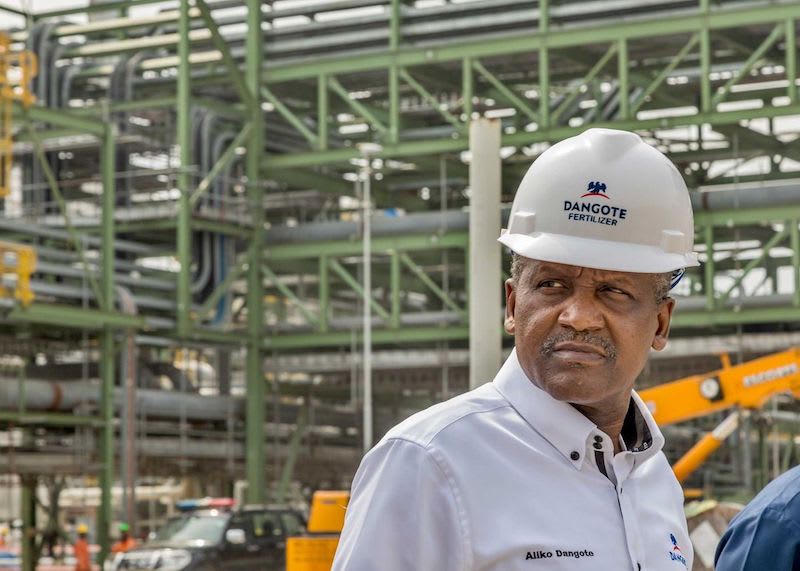
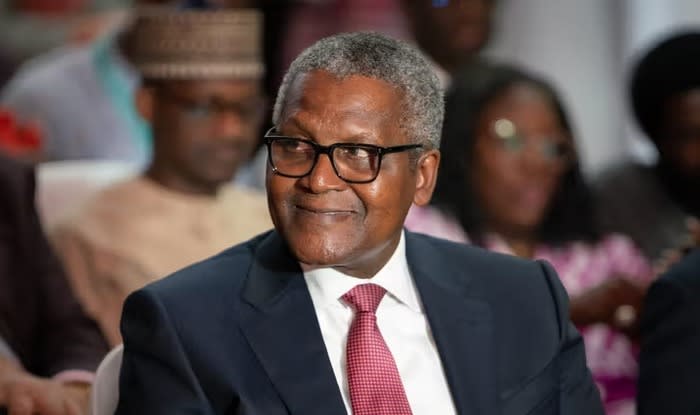
Aliko Dangote, President and Chief Executive of Dangote Industries Limited, said the group did not do the IPO simply because it needed capital. He said the aim was to open ownership to ordinary Africans.
David Bird, the refinery company's Managing Director and CEO, said the international interest reflected confidence in the refinery's operations, scale and long-term growth prospects.
Murat Erden, the group's Chief Financial Officer, said the offer showed African capital markets can reach across borders. He said it connected investors through banks, stockbrokers, fintech platforms and digital channels.
Does applications from 120 countries mean 120 countries bought shares?
Not necessarily. An application is a request to buy shares. It is not the same as getting shares. In many share sales, the number of shares requested is different from the number finally given out. The company has not said how many shares people applied for, how many were given out, or how much money was raised.
The count of countries also tells us where applicants live. It does not tell us how much money came from each place. One country could account for most of the money, and another could have sent a handful of small applications. The statement does not break this down, so the figure is a measure of reach, not of size.
What does the company say about its business?
The group's finance chief said the refinery had US$22.5 billion in revenue and US$5.52 billion in EBITDA in the first nine months of 2026. These are the company's own figures, and we have not seen a filing to check them.
Revenue is the total money coming in from sales before any costs are taken out. EBITDA is a measure of profit before interest, tax and certain accounting charges. It is a rough guide to how much a business earns from its operations. It is not the same as the money left over at the end, because interest, tax and other charges still have to be paid.
One way to read the two numbers together is to divide one by the other. US$5.52 billion divided by US$22.5 billion is about 24.5% (derived). That means roughly US$24.50 of every US$100 of revenue was left as EBITDA. That is a calculation from the company's own figures. It says nothing about the final profit.
Why did the company extend the offer?
The company said the extension reflected its stated ambition to put broad ownership alongside the financial goals of the deal. It did not say whether the offer was short of its target, or whether demand was strong. The statement does not give a reason beyond that. RainingMoney's reading: extensions of this kind can happen for several reasons, and the statement gives no way to tell which applied here.
How does an IPO work from start to finish?
The steps are fairly standard. First, the company and its advisers set the number of shares and the price. Then the regulator reviews and approves the offer. Next, banks, stockbrokers and other partners collect applications from the public during the offer window. When the window shuts, the company counts the applications against the shares on offer. If there are more requests than shares, it has to decide how to share them out. Money for shares not given out is normally returned to applicants. Finally, the shares can start trading on a stock exchange, where their price rises and falls with buyers and sellers.
The statement says the Dangote offer used commercial banks, stockbroking firms, fintech platforms and other partners. It does not describe the next steps. It gives no date for the allotment result or for the start of trading.
What does this mean for my money?
If you applied, the key things to watch for are the allotment result and any refund. The company has not published these in the statement. Check with the bank, stockbroker or app you applied through.
If you did not apply, the offer still matters for the market. A big share sale takes money out of savings accounts, bank deposits and other investments, because buyers need cash to pay for shares. It also gives Nigerians a new company to follow, with its own results and share price. How the refinery's shares behave after trading starts will be watched as a sign of how willing people are to buy shares in large companies.
This article does not tell you whether to buy, sell or hold any shares. The facts above are what the company has said. A share is a risk, and its price can fall as well as rise.
Why is the refinery a big deal?
The refinery is in Lagos. The company describes it as one of the continent's largest private industrial investments, and as part of an effort to cut reliance on imported refined petroleum products. A refinery turns crude oil into products such as petrol and diesel. The company says it is pursuing an expansion programme and a Vision 2030 strategy. The statement gives no detail on the cost or timing of that expansion.
What do we still not know?
- How many shares people applied for, and whether demand was higher than the 4.1 billion shares on offer.
- How much money was actually raised, against the proposed ₦2.15tn.
- How many investors took part, and how much came from Nigeria compared with other countries.
- When the allotment result will be announced, and when shares will start trading.
- What the company plans to do with the money raised. The statement does not say.
- Whether the nine-month revenue and EBITDA figures will be backed by a published filing.
What should I watch next?
Watch for three things. The first is the formal result of the offer from the company and the regulator. The second is the date shares begin trading and the price they open at. The third is the next set of published financial results, which will let readers check the company's own claims against the accounts. Until then, the 120-country count shows the offer had wide reach. It does not yet show how much money came in, or how the shares will perform.
Sources & Verification
- Source: Premium Times
- Editorial note: This explainer is an original RainingMoney Editorial adaption of the report, RainingMoney has added explanatory context.

Founder and Editor-in-ChiefAbuja
Betini Udom
Founder and Editor-in-Chief of RainingMoney. Covers Nigerian, pan-African and global markets, finance and economic policy.
Author profile & archive →The Money Print
Market intelligence before the market opens.
Pan-African capital flows and the stories behind the numbers, on weekday mornings.