EnergyHigh
As Brent Touches $100, the Twin Supply Crisis in Hormuz and Jizan Forces a Complete Reset of Global Refining Economics
With Brent crude reaching $97.66 following Iranian threats in the Strait of Hormuz and drone strikes on Saudi Arabia's Jizan refinery, energy markets brace for multi-quarter structural supply deficits extending into 2027.
By Betini Udom Published 3 min read Editorial Policy Report a correction

Global energy markets have entered a dangerous operational phase as international benchmark Brent crude surges toward $100 per barrel, driven by a rapid transition from speculative geopolitical anxiety to physical infrastructure impairment. At the time of writing, Brent crude stood at $97.66 per barrel, while West Texas Intermediate (WTI) climbed to $93.05 per barrel, marking one of the sharpest multi-session rallies in recent energy market history.
The immediate catalyst stems from severe naval and military escalations across critical Middle Eastern energy corridors. Iranian security officials issued explicit warnings to Washington, threatening "economic warfare" backed by the deployment of advanced anti-ship missiles targeting US naval assets in the Persian Gulf. Mohsen Rezaei, secretary of Iran's Supreme National Security Council, outlined a strategy to establish a strict maritime exclusion zone across the Persian Gulf, effectively imposing a blockade perimeter around the Strait of Hormuz—the arterial transit route for nearly 20% of the world’s petroleum liquids.
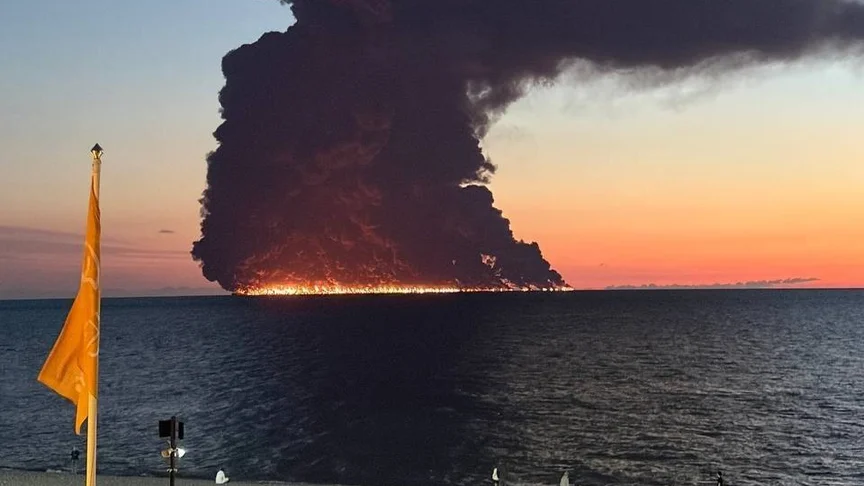
Simultaneously, physical refining infrastructure has come under direct fire. A fresh attack targeted Saudi Aramco’s state-of-the-art Jizan refinery, located on the Red Sea coast. With a total processing capacity of approximately 400,000 barrels per day (bpd), the Jizan facility is a critical node in global product markets, specifically optimized to process heavy crude into ultra-low-sulfur diesel, gasoline, and jet fuel. Previous strikes on the complex by Houthi forces had already highlighted its structural vulnerability; this latest escalation threatens sustained operational outages at a time when global middle-distillate inventories remain near historical lows.
The compounding effect of restricted transit through Hormuz and reduced refining throughput at Jizan creates a structural twin supply shock. When maritime traffic through the Strait of Hormuz is obstructed, alternative bypass options such as Saudi Arabia’s East-West Pipeline or the UAE’s Habshan-Fujairah pipeline—possess insufficient spare capacity to handle the regional export volume of over 20 million barrels per day. Consequently, physical crude and refined products are trapped at the point of extraction, triggering localized storage saturation in the Gulf while causing acute deficit pricing in key import hubs across Europe and Asia-Pacific.
Crucially, major commodity analysts are abandoning expectations for a rapid diplomatic resolution. Institutional research desks are stretching their disruption models significantly further out. ANZ analyst Daniel Hynes noted that markets should not expect a full recovery to pre-war throughput until late Q1 or early Q2 2027. This extended timeline implies that high crude prices and elevated crack spreads—the margin between raw crude and refined products—will not be a temporary spike, but a structural feature of global energy markets for the next 18 to 24 months.
As speculative capital pours into energy derivatives, position data from major exchanges confirms that institutional managers are aggressively expanding net-long positions in Brent. With physical supply chains tightening, energy infrastructure operators, independent refiners, and bulk shipping fleets face an operational environment defined by elevated war-risk insurance premiums, rerouting friction around the Cape of Good Hope, and persistent input cost volatility.
IS YOUR CAPITAL SAFE? (CAPITAL EFFICIENCY & RISK EXPOSURE)
Corporate capital allocated to downstream fuel marketing, aviation fleets, and unhedged logistics infrastructure is facing severe operational drag. As refined product prices outpace raw crude gains, downstream margins are experiencing acute compression. Capital deployed in non-integrated refining or fuel transport assets carries significant downside risk unless protected by long-term Crack Spread Hedges or direct exposure to upstream exploration assets with non-Strait export channels.
Sources & Verification
- Primary Security Directives: Iranian Supreme National Security Council (Statement by Mohsen Rezaei via Reuters)
- Market Benchmarks: Intercontinental Exchange (ICE) Brent Crude ($97.66/bbl) & NYMEX WTI ($93.05/bbl)
- Operational Capacity: Saudi Aramco Jizan Refinery Baseline Data (400,000 bpd processing capacity)
- Institutional Forecasts: ANZ Commodities Research Note (Daniel Hynes) & ING Positioning Metrics
The Money Print
Market intelligence before the market opens.
Pan-African capital flows and the stories behind the numbers, on weekday mornings.